
Fitness wonder weapon: rowing machines
rowing machines
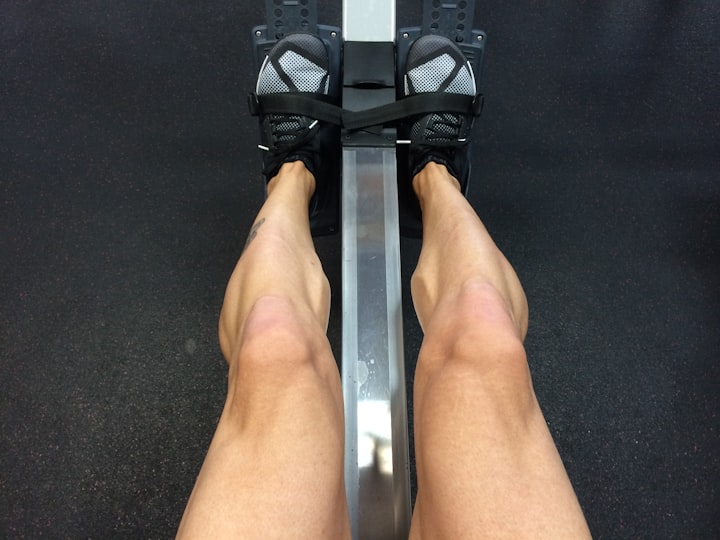
The top places on the popularity scale of home exercise equipment are occupied by the classics bicycle ergometer, cross trainer and treadmill. However, the popularity of the rowing machine is also continuously increasing.
This development is hardly surprising, since a rowing machine can be used for a comprehensive whole-body workout that gets all parts of the body in shape. Another aspect that should not be neglected is that rowing is enormously fun.
In addition, the machines are available in numerous practical designs - for example, as a foldable model. Here you can find more information about foldable rowing machines. The following article explains in detail which advantages are associated with training on a rowing machine - whether foldable or not.
Rowing machines and traditional rowing: the differences
Working out on a machine can be more fun and enjoyable. A rowing ergometer will make you feel like you're outside, while offering all the comforts of the gym.
There are tools that can be customized to fit specific needs. Exercising on static equipment requires you to put in less effort because you don't have to fight the natural resistance of the water.
Great independence and flexibility
Training on the rowing machine can always be carried out completely independently of the current weather conditions. Thus, the time of training can always be selected completely flexible and adapted to the individual rhythm of the day.
In addition, those who cannot find a canal, river or lake in their vicinity on which they could pursue the sport of rowing, benefit from the great opportunity to practice the sport nevertheless thanks to the rowing machine. But also people who are active in a rowing club can always comfortably switch to their home rowing machine in case of bad weather and thus do not have to give up their fitness training.
Training for all muscle groups
Training on the rowing machine ensures that around 80 percent of the body's entire muscle groups are worked in a gentle manner. During the two phases of movement on the rowing machine, the calf, thigh, buttock, abdominal, back, shoulder and arm muscles are trained in particular.
Strengthening or building up these muscles greatly benefits the performance and mobility of the entire body. In addition, strong and trained muscles ensure that ligaments, tendons, cartilage and joints are protected from incorrect stresses and osteoporosis.
Rowing training also causes the trunk muscles to be stressed both on their surface and in depth. This helps stabilize the spine, promoting better posture and effectively alleviating back pain.
Rowing training is therefore also ideally suited as a balance for people who pursue a sedentary occupation and thus want to effectively prevent postural deformities and back pain.
Positive effects of endurance training
The rowing machine enables effective endurance training, which has an extremely positive effect on the body's performance. Through the training not only the musculature of the locomotor system becomes considerably more efficient, but also the heart muscle and also the load capacity of the cardiovascular system increases.
In addition, healthy blood circulation is promoted and thus the risk of vascular deposits is significantly reduced. The entire organism is better supplied with nutrients and oxygen. Endurance training on the rowing machine thus provides a significant increase in general well-being and physical health.
Declaring war on excess weight through rowing
Those who want to use the sport to become slim or maintain their slim figure also benefit greatly from the rowing machine.
Since almost all existing muscle groups of the body are used during rowing, about 600 calories can be burned in one hour even with a low resistance setting. However, energy consumption is not only increased during training. As new muscle mass is built up, the basal metabolic rate also increases during rest periods.
About the Creator
Keep reading
More stories from Anna Klaus and writers in Longevity and other communities.
Unlocking the Secrets of Longevity: How to Live a Longer, Healthier Life
Longevity is a topic that has fascinated humans for centuries. Everyone wants not only to live longer but to maintain vitality, strength, and mental clarity throughout their years. Modern science, combined with the study of ancient lifestyles, provides clues about how some people consistently live well beyond 90 or even 100 years.
By Lukáš Hrdlička4 days ago in Longevity
Is Stress Making You Gain Weight?
You’re eating “normal.” Maybe even less than usual. But somehow… your clothes feel tighter. If you’re dealing with academic pressure, financial stress, or emotional overload, your body may be responding in ways you don’t expect.
By Being Inquisitive4 days ago in Longevity
I was in a Toxic Relationship, with my Workplace
“You got that?” My ex yelled. His hands were balled into fists at his side. At six foot three, he towered over me. A normal person would have been afraid, but I looked up a video of George Lopez repeatedly saying, “I got this,” and showed it to him. I had grown used to this treatment, so much so that I didn’t blink when he ripped the phone from my hand and threw it across the room.
By Jade M.4 days ago in Confessions




Comments
There are no comments for this story
Be the first to respond and start the conversation.