
Expressive Arts Therapy: Painting, Poetry, And Healing
Expressive Arts Therapy (EAT) is a powerful and holistic approach to healing that taps into the transformative potential of artistic expression.


Expressive Arts Therapy (EAT) is a powerful and holistic approach to healing that taps into the transformative potential of artistic expression. This therapeutic modality incorporates various forms of art, such as painting and poetry, to facilitate emotional, psychological, and spiritual well-being. In this blog, we will explore how painting and poetry can be instrumental in the healing process, supported by insights from research in the field of expressive arts therapy.
The Healing Power of Painting:
1. Catharsis through Colors:
Painting allows individuals to externalize internal emotions through the use of colors, shapes, and brushstrokes. According to a study by Kaimal et al. (2017), the act of painting has been shown to induce a state of catharsis, promoting the release of emotions and providing a therapeutic outlet.
2. Mindfulness and Presence:
Engaging in the process of painting promotes mindfulness and presence in the moment. The study by Stuckey and Nobel (2010) suggests that the meditative quality of art-making can contribute to stress reduction and improved mental well-being.
3. Symbolic Expression:
Paintings often serve as a form of symbolic expression, allowing individuals to communicate feelings that may be challenging to articulate verbally. In their research, Malchiodi (2012) highlights how symbolic communication in art can be a powerful tool for self-discovery and emotional processing.
The Therapeutic Impact of Poetry:
1. Narrative Healing:
Poetry provides a unique platform for narrative expression and storytelling. The work of Pennebaker and Chung (2011) emphasizes how the creation of written narratives, including poetry, can contribute to the process of meaning-making and emotional healing.
2. Verbal Articulation of Emotions:
Writing poetry enables individuals to verbally articulate their emotions and experiences. A study by Mazza et al. (2020) suggests that the structured nature of poetry can facilitate emotional expression, making it a valuable tool in therapeutic interventions.
3. Empowerment through Creativity:
Engaging in the creative process of writing poetry empowers individuals to take control of their narrative. According to research by Lepore and Smyth (2002), this sense of empowerment can lead to positive psychological outcomes, fostering resilience and coping mechanisms.
Integrating Painting and Poetry in Expressive Arts Therapy:
1. Multimodal Approach:
Combining painting and poetry in expressive arts therapy offers a multimodal approach that engages various senses and modes of expression. The research by Malchiodi (2013) suggests that this combination enhances the therapeutic benefits by addressing a broader range of cognitive and emotional processes.
2. Integration of Verbal and Non-Verbal Expression:
The integration of verbal and non-verbal expression in the therapeutic process allows for a comprehensive exploration of emotions. As highlighted by Betts (2017), this integration fosters a holistic approach to healing, enabling individuals to access different aspects of their lived experiences.
Winding up:
In conclusion, expressive arts therapy, incorporating painting and poetry, emerges as a dynamic and effective means of promoting healing and well-being. The integration of these creative modalities provides individuals with diverse avenues for self-expression, fostering personal growth, and facilitating the journey toward emotional and psychological healing. As research in this field continues to unfold, the transformative power of expressive arts therapy stands as a testament to the intricate relationship between artistic expression and human resilience.
As the journey towards emotional and psychological healing unfolds, consider embracing the transformative power of Imperfect — a sanctuary for personalized psychotherapy, offering a unique path to self-discovery and resilience.
– Urveez Kakalia.
We use an empathetic, collaborative approach in understanding the client’s goals and aspirations of therapy. In therapy, the creation of a safe non-judgmental environment benefits the exploration of your true self and discover what path you wish to take. You, as the client have the right to have the information regarding the qualifications, training and experience of your therapist. It is your responsibility to seek out this information from them.
I, Urveez Kakalia adhere to the Rational Emotive Behaviour Therapy framework while keeping a flexible approach to integrating other therapies. I do not put up the statistics or the most prevalent problems people face, or what I see most often. I believe that each problem or concern is as unique as the individual that arrives at my clinic.
About the Creator
iDigitize Infotech LLP
We at iDigitize, elevate Brands with impactful digital marketing experiences & web development services. From developing your web presence to conveying your brand’s story, we align design & development with effective strategies
Keep reading
More stories from iDigitize Infotech LLP and writers in Longevity and other communities.
Mindful Movement: Dance As A Therapeutic Outlet
In recent years, the intersection of physical activity and mental well-being has gained increasing attention. One form of mindful movement that stands out for its holistic benefits is dance. Beyond being a source of entertainment, dance has proven to be a powerful therapeutic outlet with significant positive impacts on mental health. Let’s delve into the research supporting the idea that dance is more than just rhythmic steps — it’s a mindful journey toward emotional well-being.
By iDigitize Infotech LLP2 years ago in Longevity
A wildflower in California reveals a newly documented evolutionary process
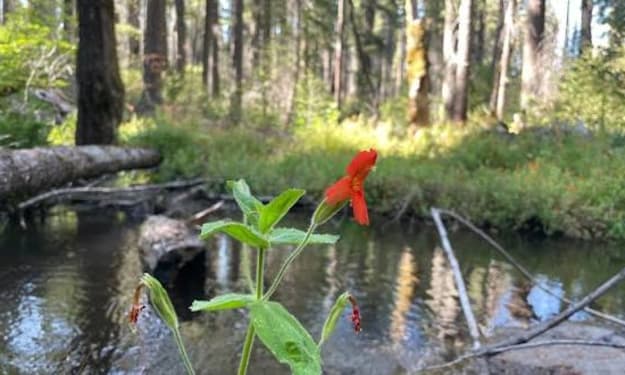
In a remarkable breakthrough for evolutionary biology, researchers studying wildflower populations in California have documented one of the clearest cases yet of rapid genetic evolution occurring in nature. The findings, centered on the bright red scarlet monkeyflower (Mimulus cardinalis), reveal how some plant populations were able to adapt and recover following the region’s most severe drought in over a millennium — providing tangible evidence of an evolutionary process known as evolutionary rescue. The scarlet monkeyflower, a wildflower native to moist areas along streams and springs in California, has long been familiar to botanists and hikers alike for its vivid blooms and distinctive habitat. However, during the early 2010s, California experienced an unprecedented megadrought that lasted several years, killing hundreds of millions of trees and dramatically altering the ecological landscape. While many plant species suffered catastrophic declines, some populations of Mimulus cardinalis showed a surprising resilience. Scientists from multiple institutions undertook a long‑term study to understand how this wildflower weathered such extreme conditions. Over eight years, researchers tracked 55 populations of the monkeyflower across its natural range, closely monitoring their numbers and health. They also conducted whole‑genome sequencing to observe genetic changes over time, looking for evidence that natural selection had acted on specific traits. The results were illuminating. At sites where populations had nearly collapsed — with numbers dropping by as much as 90% — genetic analysis revealed consistent shifts in allele frequencies across the genome. These shifts were not random; they were associated with traits that likely enhanced drought tolerance, enabling some individuals to survive and reproduce where others perished. As these “advantaged” genotypes became more common, the population as a whole began to recover, a hallmark of what biologists call evolutionary rescue. Evolutionary rescue occurs when the genetic variation present within a population allows it to adapt fast enough to avoid extinction under sudden environmental stress. While theoretical models have long predicted such processes, direct evidence in the wild—especially involving plants—has been limited. This study is among the first to document genomic changes in natural plant populations that are clearly linked to a major environmental crisis. For decades, evolutionary biologists have debated how quickly natural selection can operate in real‑world scenarios. Classic case studies like Darwin’s finches in the Galápagos have demonstrated adaptive changes in beak shape over a few generations. But plant studies have often lagged behind, in part because many species have long lifecycles or reproduce clonally, making rapid evolution harder to detect. The California wildflower case breaks new ground by combining long‑term fieldwork with cutting‑edge genomic analysis. Researchers noted that the recovery of the monkeyflower populations did not happen overnight — it took roughly two to three growing seasons for numbers to rebound significantly. Yet in evolutionary terms, this pace is considered rapid. The drought likely imposed intense selective pressure, filtering out less drought‑tolerant genotypes and leaving behind a smaller cohort better suited to the harsh conditions. As these were the individuals contributing more seeds to the next generation, their genetic traits spread through the population. The implications of this research extend beyond wildflowers. As climate change accelerates and extreme weather events become more frequent, scientists are increasingly interested in how species will respond — whether through behavioral changes, migration, or evolutionary adaptation. Cases like Mimulus cardinalis suggest that some species may harbor the genetic diversity necessary to adapt swiftly when environments change dramatically. However, not all species will be so fortunate, and the mechanisms of evolutionary rescue are still not fully understood. “This is one of the clearest cases we've seen where a wild plant species shows genomic evidence of adapting to extreme environmental stress,” said one of the study’s lead authors. “It gives us hope that under certain conditions, natural selection can work fast enough to help populations persist — but it also raises many questions about the limits of such adaptation.” The study’s methods also signal a new era in ecological research. By combining consistent field monitoring with high‑resolution genetic data, scientists can now track evolution as it happens rather than inferring processes from fossils or distant historical records. This “real‑time” view of evolution may become vital for conservation efforts, helping biologists identify which populations are most at risk and which may have the inherent capacity to adapt. For conservationists, the findings underscore both the resilience and vulnerability of natural ecosystems. While some populations like the scarlet monkeyflower demonstrate extraordinary adaptive potential, others with limited genetic diversity may face a greater threat of decline or extinction as climates shift. Understanding the genomic underpinnings of adaptation could therefore inform strategies to protect biodiversity in a warming world. As research progresses, scientists hope to explore similar evolutionary dynamics in other species and regions. The California wildflower study stands as a testament to the power of modern genomics and long‑term ecological research — and a reminder that evolution, far from being a slow, imperceptible force, can sometimes unfold before our eyes.
By Fiaz Ahmed a day ago in Longevity



Comments