
Exploring the Nutritional Divide
Vegans vs. Meat-Eaters
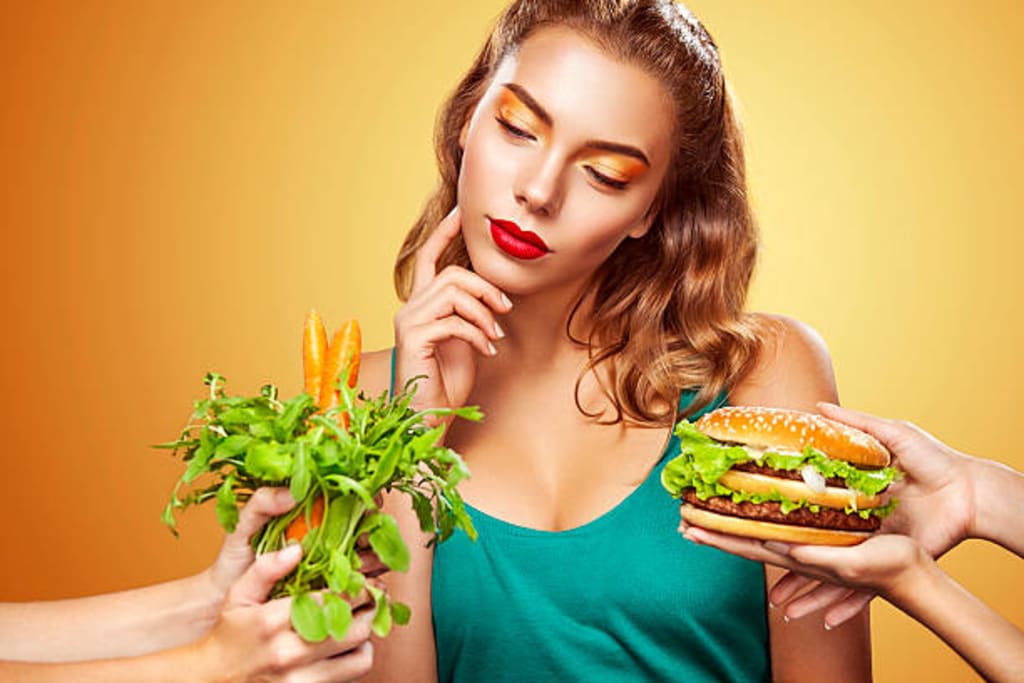
In an age where dietary choices have profound implications for health, ethical considerations, and environmental impact, the dichotomy between veganism and traditional omnivorous diets has gained increasing prominence. As society grapples with the intricacies of nutrition and its manifold effects, delving into the distinctions between these two dietary philosophies becomes imperative. In this article, we undertake a comprehensive analysis of the contrasting nutritional paradigms, shedding light on the potential benefits and challenges associated with each.
Veganism, characterized by its stringent exclusion of all animal-derived products, is emblematic of a burgeoning movement aimed at ethical consumption and sustainable living. This lifestyle choice encompasses not only dietary restrictions, such as the avoidance of meat, fish, eggs, and dairy, but also extends to ancillary products like leather and honey. Conversely, traditional omnivores follow a diet that encompasses both plant-based foods and various animal-derived elements. The persistent prevalence of both dietary approaches prompts us to explore the underlying motivations, health implications, and societal impacts of each.
The rapid growth of veganism over the past decade is a testament to the increasing awareness of health and ethical considerations. The percentage of the US population identifying as vegans has grown from a modest 0.5% in 2008 to approximately 2.5% in 2014, reflecting a discernible shift towards plant-centric lifestyles. This phenomenon is further pronounced among women, who constitute an overwhelming 79% of the vegan demographic. However, the absolute majority of global dietary practices remain omnivorous, with Israel boasting the highest concentration of vegans, accounting for merely 5% of its population.
Delving into the dietary nuances, the plant-based regimen followed by vegans aligns closely with herbivores—creatures exclusively sustained by plants. In contrast, traditional omnivores partake in a diet encompassing both animal and plant matter. While humans are often considered natural omnivores due to our adaptability to diverse food sources, proponents of veganism advocate for an herbivorous diet as the optimal path to health.
One pivotal question arises: Does a vegan diet confer significant health advantages over conventional omnivorous diets? A comprehensive analysis reveals intriguing findings. Notably, vegans tend to exhibit lower body mass indices (BMI) compared to both meat-eaters and vegetarians. Moreover, veganism exhibits potential benefits in managing conditions such as hypertension and cardio-metabolic risks. Strikingly, some studies suggest that vegan diets may be effective in the treatment of rheumatoid arthritis.
Paradoxically, recent research has redefined the relationship between diet and heart health. While red meat and saturated fats were once viewed as primary culprits behind coronary heart disease, current findings indicate that processed meats may be a more significant contributor. This shift underscores the need for nuanced dietary evaluations and challenges preconceived notions about the health implications of specific food groups.
Exploring the evolutionary perspective provides further insights into dietary habits. The consumption of meat, known for its protein-rich content, has been linked to the growth of larger and more complex brains—a hallmark of human evolution. However, the American Dietetic Association contends that protein derived from plant sources can adequately fulfill dietary requirements. A telling study comparing muscle mass in women who consume meat with those who abstain, even with equivalent protein intake, underscores the multifaceted nature of dietary impact on health.
While veganism presents a promising path to health, it does entail certain challenges. Notable deficiencies include vitamin B-12 and omega-3 fatty acids, necessitating supplementation. The need for external interventions raises questions about the inherent viability of a strictly vegan lifestyle from a nutritional perspective.
Drawing from diverse dietary practices, the traditional Okinawan diet offers a unique perspective. Renowned for exceptional longevity, Okinawans adhere to a diet characterized by plant-based carbohydrates, occasionally incorporating small portions of meat and fish. While this doesn't conclusively advocate for a specific dietary philosophy, it highlights the potential healthfulness of diets that combine elements of both veganism and omnivory.
In conclusion, the veganism vs. omnivory debate is multifaceted, encompassing ethical, health, and environmental considerations. Health organizations, including the American Dietetic Association, endorse well-planned vegan diets as nutritionally adequate and potentially beneficial for disease prevention. As individuals navigate their nutritional journeys, the decision to adopt a vegan or omnivorous lifestyle hinges on a complex interplay of personal convictions, cultural factors, and the pursuit of optimal well-being. In a world of dietary possibilities, the path to health may be diverse, yet the ultimate goal remains unchanged—a balanced and wholesome life.
About the Creator
Day 30 of Quitting
Well, I’m back in Canada and this saga continues, but I’d be lying if I said it’s been easy. Two afternoons ago, my boyfriend and I landed in Toronto after 21 hours of flying and three days of travel. We had just gotten off a 15-hour flight from Hong Kong to Canada where neither of us slept. The temperature had gone from plus-30 to negative-25 (celsius), no coffee was hitting as beautifully strong as Australian coffee had (iykyk), and a long to-do list was waiting for us on the other side of a 5-hour car ride back to the remote village we live in, up in northern Ontario.
By sleepy drafts6 days ago in Longevity
Why Handwriting Could Be Good For You
Introduction Text from the Instagram post below: 1. Dr. Tanaka tracked seniors over 80 in Kyoto and found one constant: they wrote by hand for 15 minutes a day. Typing uses one neural pathway, but physical writing hits 17 different zones. You’re robbing your focus when you pick a keyboard over a pen. 2. MRI scans show that writing by hand forces your brain to manage spatial logic and memory at the same time. This effort keeps you off autopilot. Typing is just muscle memory, while writing is active thinking. It’s the clear difference between simple data storage and actual cognitive engagement. 3. In one trial, those journaling by hand had 41% better recall and 34% faster processing. “The pen builds the hardware,” Tanaka noted. The industry hid this for years to protect revenue, since you can’t patent a pen. They chose profit over your memory. Write three original sentences every morning to keep your mind sharp.
By Mike Singleton 💜 Mikeydred 4 days ago in Longevity
Why Black History Matters in America?
The United States of America is celebrating their 250th anniversary in 2026. I'm proud to be an American and as someone who was born here, I wouldn't imagine myself living anywhere else. This is a country where opportunities are possible. Where anyone can be successful in anything they desire to do. Equality, community, and togetherness are the backbones of what America is and should be about. However, we have an administration who wants to erase and disregard those who have made positive, meaningful impacts in our country, specifically Black figures, such as Martin Luther King, Jr., Rosa Parks, and Maya Angelou. President Trump and his administration have been constantly complaining and fighting against what they call the "Woke agenda". They use this excuse as a distraction from other issues they refuse to address, such as the high cost of living, climate change, and inflation. That equality is dividing America, when in reality, it's bringing us together. Being woke is not tied to a specific political party. No matter where you stand on the political spectrum, you can still care about other people and their plights. Compassion and empathy for others isn't tied to a political party, either. We were taught as children to treat others the way we want to be treated and not judge others because they're different from us. Caring about others isn't a personal attack on your beliefs. It doesn't make you any less of a person. People who are easily offended over African American figures, past or present, or anything related to it, are grasping at straws. Current and future generations need to know who people like Harriet Tubman and Shirley Chisholm were, especially in the classroom. Black History is part of American History. It should be recognized, not hidden or forgotten. Besides, you can't shield children from everything, just because your feelings are easily hurt.
By Mark Wesley Pritchard 7 days ago in The Swamp



Comments
There are no comments for this story
Be the first to respond and start the conversation.