
Excedrin® uses 360° Virtual Reality Technology to Raise Migraine Awareness
Nascar's Danica Patrick Works with Excedrin to Help Spread the Word About Migraines in the Workplace.


Excedrin® has, once again, creatively intervened to help foster empathy for people with migraines.
In September, a new program was unveiled to help get the conversation going between co-workers with the launching of Excedrin® Works. This latest platform from Excedrin® offers videos with different perspectives, of an Interpreter, Pastry Chef, and Emergency Medical Technician, moments before and during a migraine attack.
This brilliant use of 360-virtual reality technology places users in real-life migraine workplace experiences, allowing them to see, hear and experience the effects of a migraine – everything but the pain.
Not only is Excedrin® using the 360-degree virtual reality technology to spark a dialogue in the workplace about the impact of migraines, it empowers sufferers to talk about their condition with their colleagues.
What’s even more appealing about this program is how Excedrin® compiled a great discussion guide that is available for download to share with employers and co-workers.
After viewing the individual videos of Maggie, Sarah, and Han I felt an overwhelming sense of compassion towards each of these migraineurs. I personally know what it is like to not want to discuss a migraine in the workplace. There was always that fear of others doubting your symptoms and, even worse, assuming you're using your medical condition to get out of an important work matter. It was always emotionally and physically draining on me.
A recent survey from Excedrin® found that[iii]:
● 7 out of 10 Americans with migraines say that working during a migraine attack negatively impacts their work performance
● Nearly half of migraine sufferers have had to debunk migraine myths – like coworkers claiming they are actually hungover!
● Almost two out of five (38%) feel limited in their professional life due to their migraines
● 63% of migraine sufferers will power through and pretend they’re OK, making this the most common reaction to a migraine attack at work.
No one should ever have to downplay their health to avoid uncomfortable confrontations from co-workers.
That’s why I truly appreciate how Excedrin continues to use innovative measures to further educate others about a neurological disease that approximately 38 million Americans suffer from.
Another applause-worthy move Excedrin® made for this program, was announcing Nascar’s Danica Patrick, a migraine sufferer herself, as their new spokesperson.
As a migraineur of 30 years, mom to a teen living with migraines, and patient advocate I fully agree with the decision to bring Danica on board.
Although I’m not a professional stock car driver, I do know that during a migraine attack, the thought of being surrounded by crowds is furthest from my mind. I want a dark, quiet room where I can lie down and wait out my often-debilitating symptoms.
Being a longtime avid fan of Nascar, I was ecstatic about the opportunity to interview Danica. I not only learned how she manages life in the fast lane as a migraineur, but also how her involvement with the Excedrin® Works plays an important role to raise migraine awareness in the workplace.
Interview with Danica Patrick, Spokesperson for EXCEDRIN® WORKS
1. About how old were you when you first started to experience migraine-related symptoms?
I’ve been suffering from migraines for about the past 2 years, so since I was in my early thirties.
2. How long after that did you receive your migraine diagnosis?
For a while, I wasn’t quite sure what was going on. I thought I may have had carbon monoxide poisoning – from being in the race car – or maybe that it was even a food allergy, since I often got nauseous as well. After testing a few theories, and working with my doctor, we determined that I was suffering from migraines.
3. Speaking of symptoms, which do you normally experience before, during and after a migraine attack?
I know pretty immediately when a migraine is coming on – it’s a familiar, sharp pain – and when that happens I treat it right away. When I get migraines, they start mild and increase in severity. I often experience auras – which look like floating halos. Sometimes I also experience sensitivity to light.
4. Out of those symptoms, which one is the most debilitating for you?
I don’t think any one symptom is more debilitating than the other. Collectively my symptoms make suffering from migraines a very painful experience. Couple the pain and visual symptoms with the nausea I often experience, and it can derail your entire day – sometimes longer.
5. Could you please share your known migraine triggers (ex. environmental, humidity or barometricpressure, certain foods/drinks/fragrances)?
I have many different triggers, there is no one specific thing that I can attribute them to. However, I’ve noticed that I most often experience migraines on the days that follow my races. Those weekends can be especially grueling since my schedule is crazy – I always need to make sure I am eating enough meals, drinking enough water, etc. so that, come Sunday night, I am not completely wiped out.
6. Does anyone in your immediate family (maternal or paternal side) have the migraine disease?
No
7. Do you currently seek the medical expertise of a Neurologist, Headache Specialist or Migraine Specialist for your migraine disease?
The majority of my medial insight comes from my primary care physician.
8. Do you take anything as a migraine preventive? If so, would you please share what those things are?
Because migraines are very unpredictable, I do not take anything as a migraine preventative. However, the moment I feel a migraine coming on I take Excedrin® immediately.
9. Were you just a little hesitant about sharing that you have migraine disease with your team and car owner?
I wasn’t hesitant about speaking about my migraines with my team. If I’m not there or fully functional, the race can't go on, so it was important for me to be as open as possible with those around me so we can all help each other.
10. What piece of advice can you offer to anyone living with migraines that might be afraid to have the conversation about their diagnosis with their employer or co-workers?
Sharing your medical information with people can be scary. I totally get it. But I also think that the people you work with – people you may spend the majority of your time with – would appreciate your transparency. Who knows, the people around you may suffer from migraines, too. You’ll never know until you open up the discussion.
As part of Excedrin® Works, Excedrin® has created some helpful tools so that migraine sufferers can have more productive conversations about their condition at work. At Excedrin.com you can check out our 360 degree VR videos which depict the real migraines of two sufferers. There is also a migraine discussion guide available for download, which has some helpful tips and tricks for how to talk to your boss, coworker, etc. about your migraines.
To download your own guide and other helpful materials to share with co-workers, please visit Excedrin.com - https://www.excedrin.com/excedrin-works/
***Some information in this article was provided by these additional resources: [iii] Excedrin® Works Survey
About the Creator
JP Summers
I'm a geek mom to 3 amazing kids, #1 best selling-author, an invisible illness advocate that loves to cook, spend time outdoors, and drink flavored coffee.
Keep reading
More stories from JP Summers and writers in Longevity and other communities.
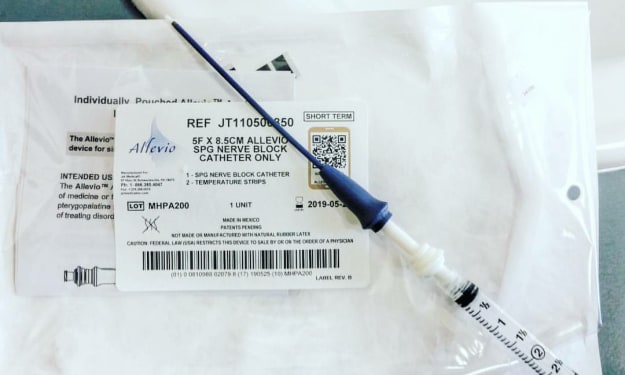
SPG Blocks: Treatment for Migraine and Cluster Headaches
***Disclaimer: I am not a medical professional. The information I am sharing is based off my own experience for this type of procedure. Please seek medical consult for further questions regarding the procedure mentioned in this article***
By JP Summers8 years ago in Longevity
What Happens to Your Blood Sugar When You Skip Breakfast
Skipping breakfast may affect blood sugar regulation, especially in people with metabolic conditions. Some people experience higher glucose spikes and increased hunger later in the day. Meal timing that aligns with your natural rhythms may support steadier energy and metabolism.
By Good health to everyoneabout 2 hours ago in Longevity
Met Office Forecasts Dry Weather for Sindh
The Pakistan Meteorological Department has issued a forecast indicating that Sindh province is expected to experience a prolonged period of dry weather over the coming weeks. Meteorologists say the region will see little to no rainfall, with temperatures remaining above seasonal averages, raising concerns about agriculture, water resources, and public health. According to the Met Office, a high-pressure system over the Arabian Sea and the Indian subcontinent is likely to dominate weather patterns in Sindh for the next fortnight. This atmospheric configuration inhibits cloud formation, leading to clear skies and minimal precipitation. Forecasts predict daytime temperatures in major cities, including Karachi and Hyderabad, to hover between 28°C and 34°C, slightly above the long-term average for this period. Nighttime temperatures are expected to remain mild, ranging from 18°C to 22°C. The dry spell comes at a critical time for the agricultural sector. Sindh is a major contributor to Pakistan’s wheat, sugarcane, and rice production. Farmers are being advised to monitor soil moisture levels carefully and consider supplemental irrigation for crops at sensitive growth stages. Prolonged dry conditions can affect germination, yield, and quality, particularly for wheat crops that rely on moderate rainfall in the final stages before harvest. Water resource management is also expected to become a key challenge. Reservoirs and canals in Sindh, which depend on upstream flows from the Indus River system, are already operating at variable levels due to reduced inflows and increased water demand. Local authorities are monitoring water distribution closely, emphasizing conservation measures and urging residents to avoid excessive usage. In some districts, water rationing plans may be activated if the dry period persists. Public health officials have cautioned about potential heat-related risks. Although the current temperatures are not extreme, prolonged dry conditions can exacerbate health issues, particularly for vulnerable populations such as the elderly, children, and people with preexisting medical conditions. Heat stress, dehydration, and respiratory issues may become more common if residents do not take appropriate precautions. Health authorities recommend staying hydrated, avoiding prolonged exposure to the sun during peak hours, and ensuring access to cool environments. The Met Office also noted that dust storms and haze could occur in some areas due to the dry conditions combined with occasional strong winds. These phenomena can reduce visibility and impact road traffic, aviation, and outdoor activities. Residents are advised to take safety precautions, particularly when traveling, and to follow local advisories regarding dust and air quality. Economists have warned that the dry spell could have indirect effects on local markets. Reduced crop output may drive up food prices, especially for wheat, rice, and vegetables, affecting household budgets and contributing to inflationary pressures. Traders and suppliers are being advised to monitor market conditions and plan accordingly to avoid shortages or sudden price hikes. Despite the dry weather, meteorologists have noted that this pattern is part of a natural seasonal variation. Sindh typically experiences dry periods during the pre-monsoon and post-winter seasons, and occasional heat waves are not unusual. However, experts also emphasize that climate change may be altering rainfall patterns, leading to longer dry spells and more unpredictable weather events. Continuous monitoring and early warning systems are essential to mitigate risks to agriculture, water supplies, and public health. Authorities in Sindh have urged residents and local businesses to remain vigilant. Farmers should adopt efficient irrigation practices, municipal agencies should ensure water distribution networks function effectively, and the public should take measures to protect health and safety. Collaboration between government departments, meteorological agencies, and the community will be crucial in managing the impacts of this dry period. Looking ahead, the Met Office expects the dry spell to continue into late March, with little relief from rainfall until the onset of the pre-monsoon showers. While temperatures are likely to remain moderate, the persistence of dry weather underscores the need for careful planning and resource management in Sindh. Residents are encouraged to stay updated with official forecasts and advisories to minimize the effects of prolonged dry conditions on daily life and livelihoods.
By Fiaz Ahmed 4 days ago in Longevity
A More Human Vocal
When we launched Vocal nearly a decade ago, the world was a very different place. LLMs did not exist, and stories were created one at a time by people sitting down to write, revise, and share something personal. Many of our assumptions about publishing, trust, and participation were built for a world where effort and output were inseparable.
By Justin @ Vocalabout 20 hours ago in Resources



Comments
There are no comments for this story
Be the first to respond and start the conversation.