
Do you know your toothbrush?
Are you aware of how often you should change your toothbrush? If the answer is no, then continue reading!

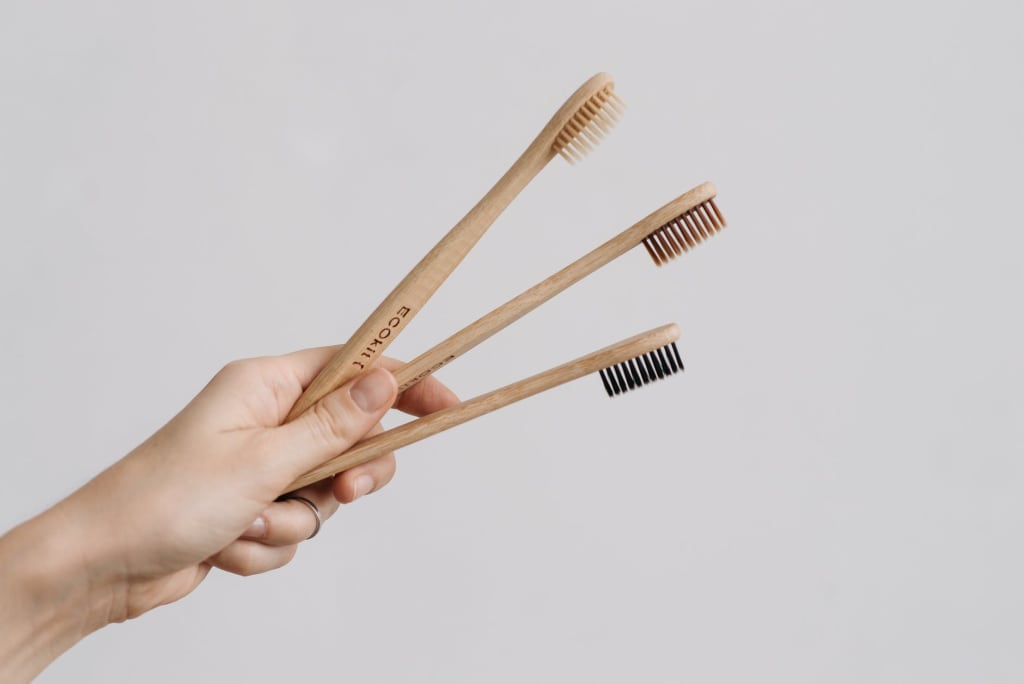
On average, an American individual will change their toothbrush every six months. However, it's recommended to change them every two-three months. The reasons you should change your toothbrush periodically are because the bristles become less effective, and they can store around 100 million germs over time. In this article, you'll learn how to care for your toothbrush and how to avoid being wasteful when switching an old one out for a new one.
When it comes down to your toothbrush, you want to make sure you're aware of how to care for it and when to throw it out. Over the course of a few months, your toothbrush gets worn down and can carry a ton of germs. The bristles become weaker after each use and can spread away from each other. When this happens, it'll be harder for you to get plaque and food off your teeth which could cause gingivitis or a cavity to develop. When it's been about three months, or you notice your toothbrush bristles warping away from each other, you should buy a new one.
Another reason to change your toothbrushes frequently is if you get sick with anything ranging from a cold to the flu. Since your toothbrush regularly harvests bacteria, you could potentially re-infect yourself with whatever illness you previously had. For example, if you had strep throat and were treated for it but didn't change your toothbrush, you could get strep throat again the next time you brush your teeth.
Changing your toothbrush is a two-to-three-month process, but what about the daily upkeep you have to endure? As I mentioned before, your toothbrush can harvest up to 100 million germs, and in rare cases, you can get sick from not cleaning it properly. Luckily, you probably already keep your toothbrushes hygiene; all you need to do to clean it is rinse it thoroughly with water after each use and let it air dry. You also want to make sure it’s not touching any other toothbrushes that aren’t yours and that it's away from your toilet because your toilet sprays bacteria into the air after each flush.
Switching your toothbrush out for a new one should be a regular process throughout the year; however, you should be aware of the waste you produce when throwing one out.
According to the 2020 census, there are 329.5 million Americans that live in the United States. If we hypothetically assume that most Americans own a toothbrush and throw it out every three months, we could easily say that billions of plastic, metal, and batteries are discarded. All of that waste ends up in various places, including our landfills, oceans, and food. We are surrounded by plastic waste daily; toothbrushes are just a tiny portion of this issue.
There is no reason to be discouraged though! I have eco-friendly solutions on how to cut back your dental care waste. There are hundreds of brands that care about our environment (and about animal cruelty-free products).
A few of these brands are,
• Made by Radius
• Eco-Dent
• Huppy
If you’re looking for a life-long toothbrush I would recommend the brand Made by Radius. I use their products currently and I wholeheartedly vouch for them! There are many reasons why I like their products. Some of the reasons are that they’re cruelty-free, have eco-friendly ingredients, and their toothbrush bristles are replaceable, which cuts down on landfill waste and provides you with a life-long toothbrush handle! Their only cons are that the toothbrush heads aren't recyclable because of the staples they have.
If you have time, I recommend researching all three of the brands I listed! Being aware of dental and environmental care doesn't have to be complicated or expensive. There are many ways to take care of your teeth, the environment, and your bank account efficiently!
About the Creator
Keep reading
More stories from Emily Runey and writers in Longevity and other communities.
Professional Balance Coaching: Training the Nervous System for Lifelong Stability
Balance is often misunderstood. When stability declines, the default response is to build stronger legs or improve flexibility. While those strategies can help, they overlook a more important factor: balance is primarily governed by the central nervous system.
By AhmedFitLife5 days ago in Longevity
Uncertainty
Uncertainty Is a dull life good for you? An ancient Chinese sage is reported to have stated that the only constant in the universe is change. That is interpreted as meaning the natural flows of seasons and evolution have to be accepted, followed and supported. There is also the fact that all change comes at a “cost”. The expenditure of effort of some sort must be made in order for change to happen. This cost may not be met by those benefiting from the change.
By Peter Rose7 days ago in Longevity




Comments
There are no comments for this story
Be the first to respond and start the conversation.