
Dealing With Being Unproductive
When isolation means confronting perfectionism.


It's been around six weeks since I have been in isolation. Six weeks since most of my work moved to being from home, and some of it stopped happening at all. For the first couple of weeks, I really benefitted from a routine close to what my work hours usually are, busying myself with different tasks. However, as time has passed, I am finding it more and more difficult to keep this up. Gradually my motivation has depleted. I don't have the same drive internally and I don't feel as though what I'm doing is 'good enough.' This is why I am confronting how my need for productivity might not be as helpful as I thought it was.
Some writing suggests that perfectionism links to productivity through fear of failure and it derives from different types of automatic thinking. I have seen a lot of content online and articles being shared about how your self worth is not (or shouldn't be) defined by your productivity. Until recently, I would disagree straight away. I am not saying that other people should judge their self worth by this standard, but I am saying that I definitely did. The day's success would be determined by how much work I could see in front of me, how much I could look back and tick off on my mental check list. My diary always crammed with methodical bullet pointed to-dos.
Even when I could easily see what I had accomplished, it never felt like a good enough standard, even when other's pointed out the opposite. Being in isolation has made me more acutely aware of this. Therefore, I'd like to share some tips I have discovered on being better at being unproductive, and overcoming perfectionism:
1. Realise how it is affecting you, personally.
Becoming more aware of the negative thought patterns that underly the need for you to be constantly productive or for your work to be 'perfect' can help you start to challenge these implicit views. Psychology Today writes that perfectionism stops you "correctly perceiving your successes" and further that it "actively interferes" with your ability to make decisions flexibly, and even have fun. Therefore realising the impact it has on you, and recognising if your ultimate goal of being 'productive' today is actually stopping you from enjoying yourself, could help you take the first step to addressing it.
2. Address the pros and cons.
Does making a pros and cons list show you the adverse effect that being overly concerned with productivity has?
Whilst it can lead to a sense of achievement, it may also lead to missing out on social and personal connections with others, increased anxiety and worry as well as never feeling 'good enough.'
Seeing the costs as well as the benefits might help show you what there is to gain by being less attached to how productive you perceive yourself to be.
3. Set realistic expectations.
Don't expect to be able to do everything. Start to differentiate between things that are important and things that are less so. There might be many things you're trying to do but not all of them are as urgent. Learn to recognise when some tasks are more inconsequential than others.
4. Practice 'not finishing'
If you are still trying to do everything, try and practice leaving some stuff unfinished. I often overwork on projects until they are complete, or struggle to split things over a longer period. Psychology Today suggests even deliberately not finishing some work, so that you get used to "dialling down" the effort and pressure you're used to putting on yourself.
5. Practice self-care and self-love
I mentioned need for achievement earlier. I like the feeling of accomplishment I get at the end of a full day of working. However I also often feel burned out and have spent a lot longer on assigned work than others. Therefore finding other ways to feel emotionally well is important. Practicing self-care into your daily routine is important, even more so in the current climate.
Taking time out to do something that you like and get pleasure from can be very beneficial. I have realised how bad I am at relaxing, but stilling the mind is important to prevent burn-out.
Likewise, if your self-worth is attached to how productive you are, improving your self-esteem is crucial. Whilst this might be challenging at the best of times, there's lost of different routes. Different mindfulness apps like Headspace and Calm can help you de-stress and be better placed to start working on your emotional health.
Writing a list of your personal strengths and qualities could also be a good start. There's also a list here of how to combat perfectionist thinking.
About the Creator
Lauren Barnard
A 25 y/o INFJ navigating the pleasures & pitfalls of adulthood, self-identity and opening cans without a ring top. I've loved writing since being given a Barbie typewriter circa 1999. Psychology | Social Issues | creativity & other things
Keep reading
More stories from Lauren Barnard and writers in Longevity and other communities.
Natural Remedies for Migraines
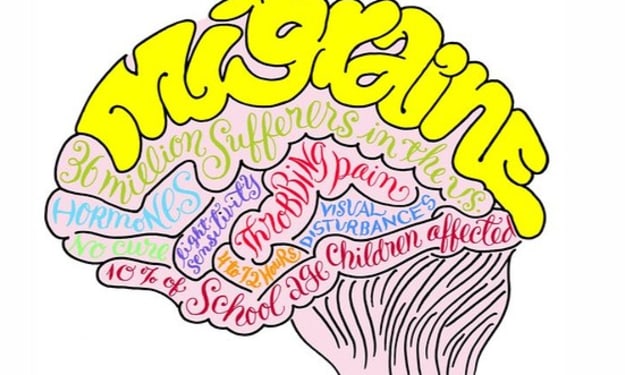
I've suffered with migraines for most of my life. And it's only after years of shoving down ibuprofen and whatever else I could find in the cupboard that I started to seek out alternative options. Here is a short list of things I have found helpful. Not just for getting rid of pain but also to feel better and less nauseous.
By Lauren Barnard8 years ago in Longevity
Why Nutrition During Pregnancy Matters More Than You Think
Pregnancy is one of the most important stages in a woman’s life, not only emotionally but also nutritionally. During these nine months, the body works continuously to support the growth and development of a new life. Because of this, nutrition plays a crucial role in ensuring both the mother and the baby remain healthy.
By Being Inquisitive3 days ago in Longevity
Herbal Tea: Natural Drink for Relaxation and Better Health
Introduction: Herbal tea is a natural beverage made from dried herbs, flowers, fruits, or spices. Unlike traditional teas such as black or green tea, herbal tea usually does not come from the Camellia sinensis plant.
By Health Tipsa day ago in Longevity
Top tipple tricks
Been thinking a lot about drinking, lately. Not least because of a recent episode of over-indulgence and the inevitable after effects. Some readers may recall the earlier articles I wrote about beating the booze. Here I set out an experiment in techniques for cutting down on my alcohol intake. The experiment was successful, the techniques worked, and I have armed myself with an arsenal of weapons in the war against the demon drink. I have yet to fire the first round however. It's all a question of timing (perhaps procrastination).
By Raymond G. Taylor5 days ago in Psyche



Comments
There are no comments for this story
Be the first to respond and start the conversation.