
Climber Alex Honnold Scales 101-Floor Skyscraper Without Safety Gear
The free-solo legend stuns audiences with a daring ascent that pushes human limits


The free-solo legend pushes human limits again with a daring ascent that stuns the world
Alex Honnold is no stranger to fear-defying feats, but his latest climb has once again left audiences stunned. The world-famous climber, known for scaling massive rock faces without ropes or safety gear, has reportedly climbed a 101-floor skyscraper completely free solo, relying only on his strength, focus, and experience.
The climb has reignited global debate about human limits, personal risk, and what drives someone to attempt feats that most people would consider impossible. For admirers, it is a display of discipline and mastery. For critics, it raises serious safety and ethical questions.
A Climber Who Redefined Risk
Alex Honnold rose to international fame after his historic free solo ascent of El Capitan in Yosemite National Park, a feat documented in the Oscar-winning film Free Solo. Since then, his name has become synonymous with extreme climbing and mental control under pressure.
Unlike traditional climbers who rely on ropes, harnesses, and protection systems, Honnold practices free solo climbing, where a single mistake can be fatal. His ability to stay calm in life-threatening situations has fascinated scientists, psychologists, and sports experts alike.
Scaling a skyscraper, however, presents a very different challenge from climbing natural rock.
The Challenge of a 101-Floor Skyscraper
A modern skyscraper is not designed for climbers. Smooth glass surfaces, narrow ledges, and artificial angles make such a climb extremely complex. Wind at high elevations, temperature changes, and vertical exposure add to the danger.
Climbing a 101-floor building means:
Hundreds of meters of uninterrupted vertical ascent
No natural handholds like cracks or ridges
Constant exposure to wind and urban hazards
Unlike rock faces, buildings offer little forgiveness. Any miscalculation can result in a catastrophic fall.
Experts say that even elite climbers would struggle to maintain focus and physical strength for such an extended climb without safety systems.
Preparation and Mental Discipline
Honnold is known for his intense preparation. He studies routes repeatedly, memorizing every movement before attempting a climb. For a skyscraper ascent, preparation likely included:
Analyzing building design and surfaces
Practicing similar moves at lower heights
Conditioning grip strength and endurance
Mental rehearsal of every sequence
Psychologists who have studied Honnold note that his brain shows a reduced fear response, allowing him to stay calm in situations that would overwhelm most people. Still, calm does not eliminate danger—it only helps manage it.
Public Reaction: Awe and Concern
News of the climb quickly spread online, drawing millions of reactions. Supporters praised Honnold’s courage, calling the climb a testament to human potential and discipline. Many compared it to historic athletic achievements that pushed boundaries and redefined possibility.
Others, however, expressed concern. Critics argue that such climbs:
Encourage dangerous imitation
Normalize extreme risk-taking
Place unnecessary strain on emergency services
Some also questioned whether performing such feats in urban environments sets a troubling example, especially for younger audiences.
Safety, Responsibility, and Influence
Honnold has consistently stated that he does not encourage others to free solo climb. He emphasizes that his decisions are personal and based on years of training and self-awareness.
Still, the influence of a global sports icon cannot be ignored. Extreme acts often inspire admiration, but they can also lead to reckless imitation by less experienced individuals.
Urban climbers, sometimes referred to as “builders,” have already drawn attention for scaling skyscrapers illegally. Honnold’s climb, while far more controlled and professional, adds fuel to an ongoing debate about risk versus responsibility.
The Line Between Sport and Spectacle
Is climbing a skyscraper an athletic achievement or a spectacle designed to shock? Supporters argue that climbing is climbing, regardless of the surface. The physical and mental demands remain enormous, and success requires years of dedication.
Skeptics counter that natural rock climbing is rooted in tradition and exploration, while urban free solo climbs blur the line between sport and performance.
This debate reflects a broader question facing extreme sports today: how far is too far?
What This Means for the Future of Climbing
Honnold’s ascent may influence how climbing is perceived beyond mountains and cliffs. It raises questions about:
Where climbing belongs
How cities manage extreme sports
The role of personal freedom in public spaces
It also highlights how modern athletes are redefining what constitutes achievement, often blending sport, media, and spectacle.
Conclusion
Alex Honnold’s free solo climb of a 101-floor skyscraper stands as one of the most daring acts in modern climbing history. It showcases extraordinary physical control, mental discipline, and preparation—while also sparking serious conversations about risk, influence, and responsibility.
Whether viewed as an inspiring triumph or a dangerous stunt, the climb reinforces one undeniable truth: Alex Honnold continues to operate at the very edge of human capability, challenging the world to reconsider what is truly possible—and at what cost.
About the Creator
Fiaz Ahmed
I am Fiaz Ahmed. I am a passionate writer. I love covering trending topics and breaking news. With a sharp eye for what’s happening around the world, and crafts timely and engaging stories that keep readers informed and updated.
Keep reading
More stories from Fiaz Ahmed and writers in Longevity and other communities.
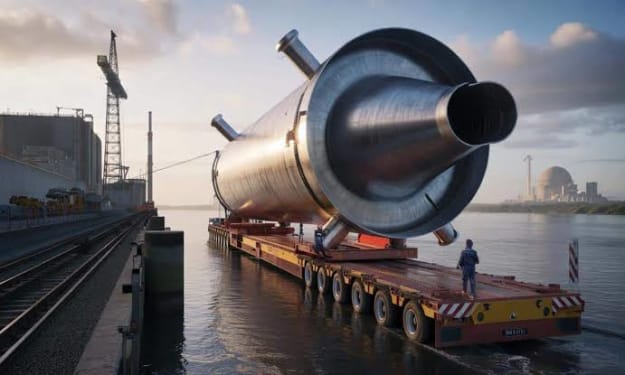
France Ships 500-Ton Nuclear “Colossus” to Britain for Hinkley Point C’s New Generation III Reactor
A massive engineering feat underscores Europe’s commitment to next-generation nuclear energy In a remarkable display of international engineering and collaboration, France has shipped a 500-ton nuclear reactor component, described as a “colossus,” to Britain’s Hinkley Point C power plant. This shipment represents a critical milestone in the construction of the UK’s first Generation III nuclear reactor, aimed at providing safer, more efficient, and low-carbon electricity for decades to come. The delivery has drawn attention from engineers, environmental experts, and energy analysts, not only for its size and weight but also for its strategic importance in Europe’s energy transition. What Is Hinkley Point C? Hinkley Point C, located in Somerset, England, is one of the largest nuclear power projects in Europe. Its Generation III reactors promise advanced safety features, higher efficiency, and a lifespan of 60 years or more. Key facts about the project: Two reactors are being constructed, each capable of producing 1,600 megawatts of electricity The plant is expected to supply about 7% of the UK’s electricity needs once operational Construction involves international collaboration, including France’s Framatome and other engineering companies The project represents both a technical and political partnership, highlighting cooperation between European nations in energy development. The “Colossus” Reactor Component The 500-ton shipment, often referred to as a “colossus,” is a critical part of the nuclear reactor’s pressure vessel, which will house the reactor core. Why it is significant: Weight and size: At 500 tons, transporting it requires precise planning, specialized vessels, and advanced logistics. Safety: Reactor components must meet stringent quality and safety standards, ensuring they withstand high temperatures, radiation, and pressure over decades. Engineering marvel: The manufacturing process in France involved high-precision forging, machining, and testing, demonstrating the capabilities of Europe’s nuclear industry. Transporting such a massive component across the English Channel is no small feat. It involves careful navigation, weather monitoring, and security measures to ensure the reactor component arrives intact and on schedule. Importance of Generation III Reactors Generation III reactors, like the one at Hinkley Point C, represent the next stage of nuclear energy. They are designed to be: Safer: Enhanced safety systems can prevent or mitigate accidents More efficient: They extract more energy from nuclear fuel Environmentally friendly: Reduced radioactive waste and lower greenhouse gas emissions Experts argue that Generation III reactors will play a critical role in Europe’s efforts to reduce carbon emissions, especially as countries strive to meet climate goals and transition away from fossil fuels. European Collaboration in Nuclear Energy The Hinkley Point C project exemplifies the benefits of international cooperation in energy infrastructure. French companies have long been leaders in nuclear technology, while the UK relies on their expertise to construct advanced reactors. Benefits of collaboration include: Sharing of technical expertise and research Access to high-quality components manufactured under strict standards Strengthening diplomatic and economic ties between countries The shipment of the “colossus” is a tangible symbol of this partnership, highlighting how large-scale engineering projects often transcend national boundaries. Logistics and Challenges Transporting a 500-ton component is far from simple. The operation involves: Specialized shipping vessels capable of handling extreme weight Route planning to avoid shallow waters, storms, and heavy maritime traffic Security measures to protect a high-value and sensitive piece of nuclear equipment Once it arrives at Hinkley Point C, cranes and precision equipment will carefully place the reactor component into the plant’s construction site. Engineers must ensure perfect alignment and stability, as even minor errors can compromise reactor performance. Economic and Strategic Significance The project is a major economic investment, employing thousands of workers in the UK and France. Beyond the construction jobs, Hinkley Point C will contribute to the UK’s long-term energy security and help stabilize electricity costs. Strategically, the project underscores Europe’s commitment to advanced, low-carbon nuclear power, a key element in meeting climate targets while ensuring reliable electricity for homes and industries. Environmental and Public Considerations While nuclear energy offers many benefits, it is not without concerns. Public debates continue regarding: Safety of nuclear reactors Management of radioactive waste Potential environmental impact during construction Hinkley Point C aims to address these issues through modern engineering, robust safety systems, and regulatory oversight, making it one of the most advanced nuclear projects in Europe. Conclusion The shipment of the 500-ton “colossus” from France to Hinkley Point C marks a major milestone in Europe’s nuclear energy journey. It highlights the technical skill, international collaboration, and strategic importance of nuclear power in a low-carbon future. As the UK moves closer to completing its first Generation III reactors, this monumental component serves as a reminder that modern energy infrastructure is not just about electricity—it is about engineering, diplomacy, and sustainable progress. For Europe and the UK, Hinkley Point C is more than a power plant; it is a symbol of ambition, precision, and the continuing role of nuclear energy in shaping a cleaner, more reliable energy landscape.
By Fiaz Ahmed about 11 hours ago in Longevity
Day 4 of Quitting
If this is how sobriety feels, maybe it’s better to go through life a little buzzed… this, along with other hits like, I want to kill myself, I wish I was dead, and I’m going to throw myself off a bridge have been the only thoughts on rotation these past few days. I promise myself that if, in a month, I still feel like this (‘this’ meaning despondent, full of rage, and simultaneously numb) I can go back to smoking. Until mid-February though? Nicotine is off the table.
By sleepy drafts18 days ago in Longevity



Comments
There are no comments for this story
Be the first to respond and start the conversation.