
Can cancer be contagious? Cell phones cause cancer? Ten misconceptions about cancer you should know
cancer

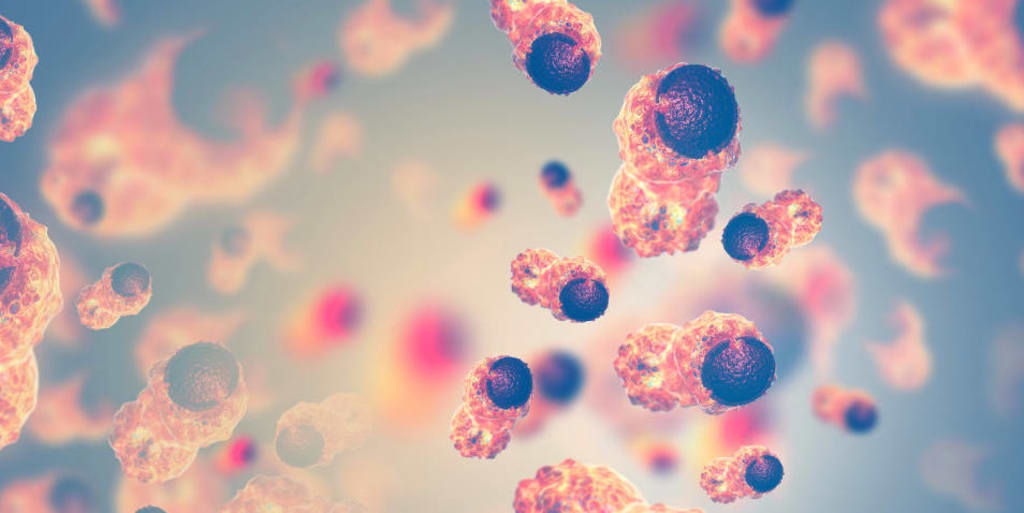
World Health Organization (WHO) data show that cancer has become one of the leading causes of death in the world. In 2020 alone, cancer has caused 10 million deaths worldwide. Nowadays, people can be said to be "talking about cancer". The reason is mostly people's fear of cancer and their ignorance of cancer. In fact, some of the claims about cancer that are widely circulated in life are probably rumors.
British "Medical News Today" sorted out 10 misunderstandings related to cancer, hoping to help people get rid of misinformation and face cancer correctly.
Misunderstanding 1: A diagnosis of cancer is equivalent to a death sentence
Cancer is curable. As scientists learn more about cancer and continue to improve treatment methods, the recovery rate continues to increase. In January 2019, there were approximately 16.9 million cancer survivors living in the United States. In the UK, cancer survival rates have doubled in the past 40 years.
According to data from the National Cancer Institute, the probability of dying from cancer in the United States has been steadily declining since the 1990s. Nowadays, the 5-year survival rate for breast cancer, prostate cancer and thyroid cancer reaches 90% or even higher.
In addition, cancer survival rates also vary by type. In the UK, the survival rate for testicular cancer is 98%, while the survival rate for pancreatic cancer is very low, only 1%.
Myth 2: Cancer is contagious

Cancer is not an infectious disease, and cancer patients will not spread cancer to others.
However, human papillomavirus (HPV) and sexually transmitted diseases such as hepatitis B and C can cause cervical cancer and liver cancer. In other words, infectious diseases can cause cancer, but cancer itself is not infectious.
Interestingly, some animal cancers that scientists have tracked and recorded are contagious, such as devil's facial tumors and canine infectious venereal disease tumors.
Misunderstanding 3: Cell phones cause cancer
In fact, as of now, there is no evidence that mobile phones cause cancer. The reason why this false statement is widely circulated is that electronic devices such as mobile phones emit radio frequency radiation (radio waves), a type of non-ionizing radiation. The human body absorbs this radiation.
Scientists have discovered that exposure to ionizing radiation (such as X-rays) increases the risk of cancer. However, radio frequency radiation is non-ionizing radiation, so it does not increase the risk of cancer.
Myth 4: Wires cause cancer
The extremely low frequency (ELF) magnetic field generated by the power cord is also non-ionizing, so it does not cause cancer.
According to the American Cancer Society, a number of large-scale studies of magnetic fields far higher than the magnetic field of household wires have shown that extremely low frequency magnetic fields will not increase the risk of cancer in laboratory mice. On the contrary, exposure to extremely low frequency magnetic fields reduces the risk of certain cancers in laboratory mice.
Myth 5: Artificial sweeteners cause cancer
Similarly, there is insufficient evidence to date that artificial sweeteners increase the risk of cancer.
Then why is there such a misunderstanding? The National Cancer Institute explained: "When early studies showed that the combination of sodium cyclamate and saccharin could cause bladder cancer in laboratory animals, misunderstandings about artificial sweeteners and cancer emerged."
However, after further research by scientists, no clear evidence was found that artificial sweeteners are related to human cancer.
Myth 6: Cancer surgery causes cancer to spread
Cancer surgery may indeed cause the cancer to spread, but this is rare. The American Cancer Society explained this as: "The advancement of equipment and imaging detection technology used in surgery will help reduce this risk."
There is also a widely circulated explanation saying: Tumors will grow faster or spread to other parts of the body when exposed to the air. This is false rumors.
Myth 7: Herbs can treat cancer
Herbs are not only incapable of curing cancer, but improper use may also have side effects on cancer treatment.
There is a view that certain alternative therapies, such as acupuncture, meditation and yoga, can help relieve the psychological pressure of patients and some of the side effects of treatment. But the National Cancer Institute pointed out that certain "natural" things are not safe, and sometimes herbal supplements can even harm a person's health.
Studies have shown that Kawakawa, an herb used to relieve stress and anxiety, may cause liver damage. The St. John’s wort, which is used to treat depression, may cause some anti-cancer drugs to fail to achieve their desired effects.
Therefore, it is necessary for cancer patients to consult a doctor before taking vitamins and supplements.
Myth 8: Cancer is inherited in the family
Some cancers are inherited through the family, but they are only a few cases. Cancers caused by genetic mutations inherited by parents account for only 3%-10%.
Most cancer cases are caused by the accumulation of genetic mutations, and there is no clear link to the genes we inherited from our parents. In a person's lifetime, genetic changes starting in a single cell will cause most cancers.
Myth 9: Cancer will always recur
Regarding this statement, Dr. Collin Vu, a medical oncologist and hematologist in the United States, believes: "Current cancer treatments are improving, and treatments that completely kill cancer are also improving."
Dr. Collin Vu has high hopes for the future of cancer treatment. In the future, with the current scientific advances in better cancer treatments, as well as people’s awareness of cancer risks and diagnosis, the statement that “cancer will always make a comeback” will become a misunderstanding.
Myth 10: Cancer cannot be cured
Fortunately, this is also a misunderstanding. As medical science deeply studies the mechanisms behind cancer, cancer treatment methods have become more effective.
Dr. Collin Vu defines cure as "the same life expectancy as the general population". According to him, some cancers, such as testicular cancer and thyroid cancer, have a 60% cure rate.
Although some cancers can be eradicated, unfortunately, not all cancers can be completely cured.
As the public continues to pay attention to cancer screening and better treatment methods, the cancer cure rate is rising. Dr. Anton Bilchik, a surgical oncologist at St. John’s Cancer Institute, believes that even in the advanced stages, patients who are diagnosed with cancer should not lose hope. There will be many effective new therapies and more effective surgical techniques in the future.
About the Creator
Keep reading
More stories from writers in Longevity and other communities.
Day 4 of Quitting
If this is how sobriety feels, maybe it’s better to go through life a little buzzed… this, along with other hits like, I want to kill myself, I wish I was dead, and I’m going to throw myself off a bridge have been the only thoughts on rotation these past few days. I promise myself that if, in a month, I still feel like this (‘this’ meaning despondent, full of rage, and simultaneously numb) I can go back to smoking. Until mid-February though? Nicotine is off the table.
By sleepy drafts12 days ago in Longevity


Comments
There are no comments for this story
Be the first to respond and start the conversation.