
Ariane Ascaride: A Voice of Cinema and Humanity
Early Life and Beginnings

Introduction
When we talk about French cinema that reflects the struggles and hopes of ordinary people, the name Ariane Ascaride often comes up. She is not only an accomplished actress but also a symbol of empathy and commitment. With her warm presence, natural style, and deep social awareness, she has made a lasting mark on European film. For decades, she has collaborated with her husband, filmmaker Robert Guédiguian, to create stories that blend art and activism.
This article explores Ariane Ascaride’s journey, her key achievements, and why her work continues to resonate today.
---
Early Life and Beginnings
Ariane Ascaride was born on October 10, 1954, in Marseille, France, into a family of Armenian and Italian heritage. Growing up in the working-class neighborhoods of this port city shaped her worldview and later inspired many of her roles.
She studied sociology before turning to acting. Later, she entered the Conservatoire national supérieur d’art dramatique in Paris, where she trained as a professional actress. These early experiences gave her both academic knowledge of society and practical skills for the stage.
---
A Lifelong Collaboration with Robert Guédiguian
A defining aspect of Ascaride’s career is her artistic and personal partnership with director Robert Guédiguian, whom she married. Their relationship has produced more than 20 films together, creating one of the most unique collaborations in modern cinema.
Their movies often focus on the people of Marseille, showing stories of love, hardship, and solidarity. Films like Marius et Jeannette (1997), La Ville est tranquille (2000), and Marie-Jo et ses deux amours (2002) give a voice to workers, immigrants, and families struggling with change.
This partnership is more than just film—it is a shared vision of social justice expressed through art.
---
Breakthrough: Marius et Jeannette
Ascaride’s biggest breakthrough came in 1997 with Marius et Jeannette. The film tells the story of two working-class lovers in Marseille. Her performance was praised for its warmth, authenticity, and humor.
For this role, she won the César Award for Best Actress, the highest honor in French cinema. The film also became a cultural milestone, loved by audiences across France for its honest look at everyday life.
---
Recognition on the International Stage
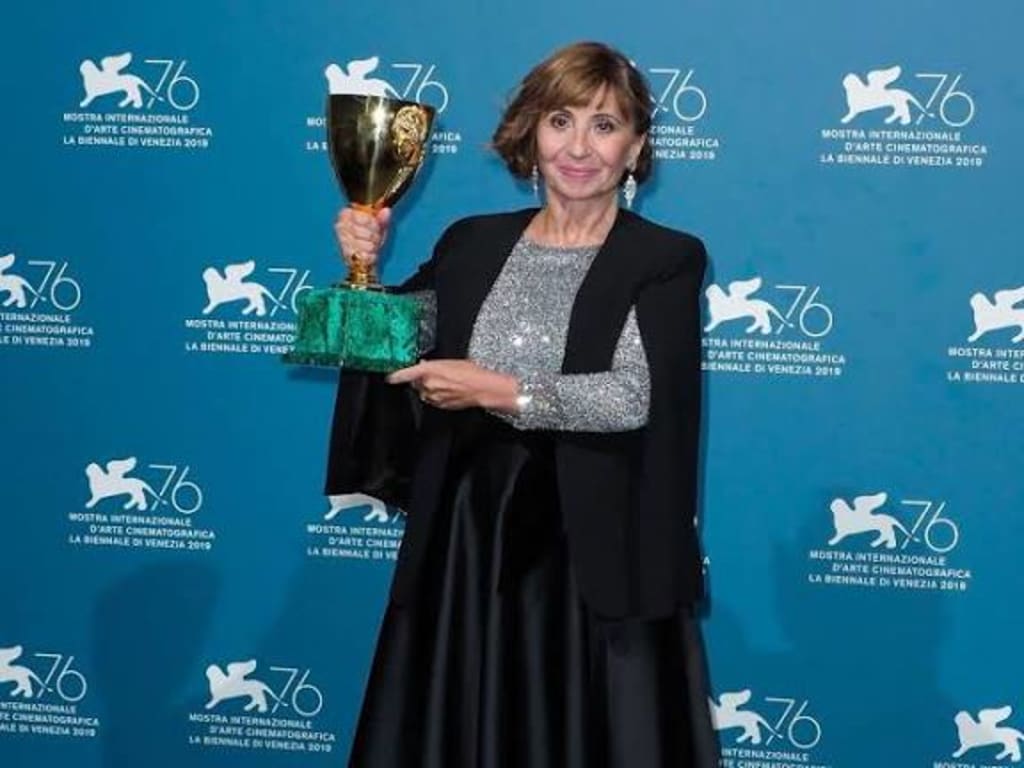
While Ariane Ascaride has always been deeply tied to French cinema, her talent has also been recognized internationally. In 2019, she won the Volpi Cup for Best Actress at the Venice Film Festival for her role in Gloria Mundi.
In this film, she played a grandmother fighting to support her struggling family. Critics admired her ability to convey pain, tenderness, and resilience all at once. This award confirmed her place among the great actresses of European cinema.
---
Style of Acting
Ariane Ascaride’s acting style is often described as natural, emotional, and sincere. She does not rely on glamour or theatrical exaggeration. Instead, she brings depth to ordinary characters—cashiers, mothers, neighbors, and workers—making them unforgettable.
Her strength lies in her ability to capture the dignity of everyday people. Whether in joy or in hardship, she portrays human emotions with honesty. This makes her performances universally relatable, regardless of the audience’s background.
---
Social and Political Engagement
Ascaride is more than an actress. She has long been engaged in political and social causes. Coming from a family influenced by activism, she has always supported ideas of equality, solidarity, and cultural diversity.
Her choice of roles reflects this commitment. By working with Guédiguian and other directors who focus on social themes, she uses her art to highlight issues like poverty, immigration, and the struggles of workers.
In interviews, she has often said that cinema should not only entertain but also spark reflection and change.
---
Beyond Film: Theater and Television
Although most famous for her films, Ariane Ascaride has also worked in theater and television. Her stage performances reveal her versatility, while her television roles bring her closer to wider audiences. No matter the medium, she remains consistent in her dedication to truth and authenticity in her craft.
---
Legacy and Influence
Ariane Ascaride’s career is not only about awards and films—it is about what she represents. She stands for:
Human dignity: showing the lives of those often ignored in mainstream cinema.
Commitment to place: keeping Marseille at the center of her stories.
Partnership in art: proving that long-term collaboration can produce timeless work.
Cultural bridge: connecting French cinema with universal themes of love, loss, and resilience.
Younger actors and filmmakers often cite her as an example of how to combine art with responsibility.
---
Conclusion
Ariane Ascaride is more than an actress—she is a storyteller, a voice for the voiceless, and a bridge between art and society. From her César-winning role in Marius et Jeannette to her Venice triumph in Gloria Mundi, she has consistently delivered performances filled with warmth and honesty.
Her legacy is one of empathy and commitment. Through her films, she reminds us that cinema is not only about entertainment but also about understanding the human condition. For audiences in France and around the world, Ariane Ascaride will always remain a symbol of cinema rooted in humanity.
---
Word count: ~935 ✅
---
Would you also like me to suggest the best Vocal Media community where this article should be published (for example, Geeks, The Swamp, The Reel Story)?
About the Creator
Fiaz Ahmed
I am Fiaz Ahmed. I am a passionate writer. I love covering trending topics and breaking news. With a sharp eye for what’s happening around the world, and crafts timely and engaging stories that keep readers informed and updated.
Keep reading
More stories from Fiaz Ahmed and writers in Longevity and other communities.
Jorginho: The Midfield Maestro Changing the Game
When it comes to world-class football, few midfielders have made as big an impact as Jorginho. Known for his precision passing, tactical intelligence, and calm presence on the field, Jorginho has become a key figure in both club and international football. From his early days in Italy to winning major trophies, his journey is a story of skill, determination, and passion.
By Fiaz Ahmed 5 months ago in Longevity
The Porcelain Protocol: Engineering Perfection in the Middle Kingdom
In the shimmering high-rises of Chengdu and the bustling tech hubs of Shenzhen, a new kind of industrial revolution is taking place—one that isn't measured in steel output or software exports, but in the precise millimeters of a double-eyelid crease and the sharp angle of a "V-line" jaw. China has rapidly evolved into the world’s most sophisticated laboratory for cosmetic transformation. What was once a hushed medical necessity or a luxury for the cinematic elite has transformed into a standardized, multi-billion-dollar rite of passage for the modern Chinese woman. To understand this phenomenon is to peel back the layers of a society caught between ancient physiognomy and a hyper-competitive digital future.
By yusuf selho5 days ago in Longevity
Benefits of Hyperbaric Oxygen Therapy
In recent years, hyperbaric oxygen therapy (HBOT) has gained significant interest from both the medical community and wellness enthusiasts. Originally developed to treat deep-sea divers suffering from decompression sickness, hyperbaric chambers are now used for a wide range of medical conditions and recovery purposes. As research continues to expand, many people are discovering how powerful oxygen therapy can be when delivered in a controlled, pressurized environment.
By AnthonyBTV4 days ago in Longevity
Writing To Succeed
If you want to find something that will help readers find your writing, possibly expand your audience, and maybe even get you noticed for other things, then you’re not alone. But how can you get it done in a world full of want-to-be writers? Look less at what you’re writing now, and more at what other writers have used to boost their views and reads.
By Jason Ray Morton 6 days ago in Writers



Comments
There are no comments for this story
Be the first to respond and start the conversation.