
You Can’t AI a Jobsite
Why Construction Is Built to Last

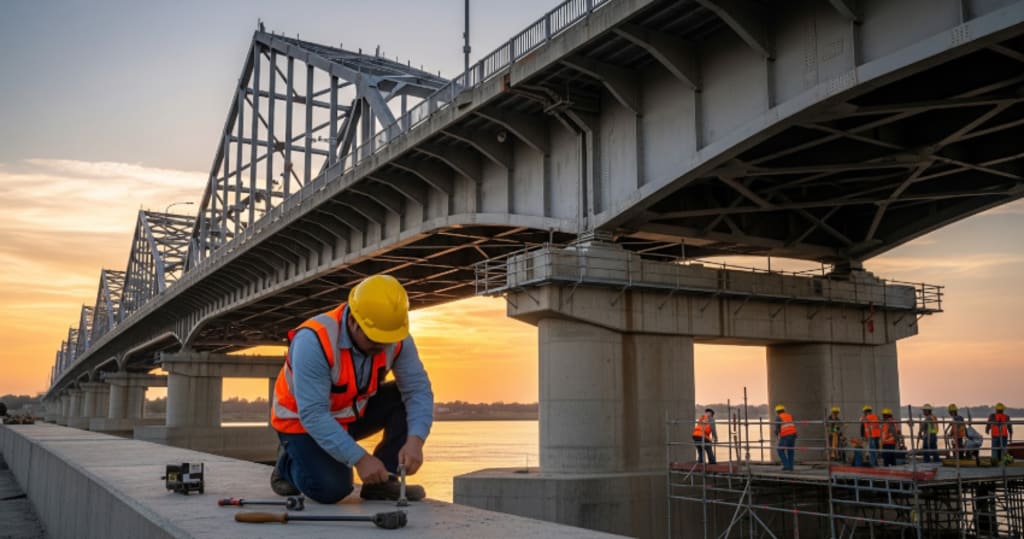
Artificial intelligence dominates recent discussions regarding the future of work, and it’s no wonder. Namely, software now writes code, generates legal briefs, and manages complex logistics. White-collar professionals face a period of uncertainty as automation settles into offices worldwide.
However, the physical reality of a construction site remains resistant. After all, a computer program cannot swing a hammer, nor can a script troubleshoot a frayed electrical wire. The demand for physical infrastructure grows alongside the digital world, creating an advantage for those who work with their hands. Building a career in the trades offers a level of security that software cannot replicate.
Starting a Restoration Business in a Digital Age
The repair and maintenance of existing structures provides a constant stream of work regardless of the economic climate. Starting a restoration business allows an individual to capitalize on the aging infrastructure.
Disasters and general wear and tear create a perpetual need for professionals who can rebuild what has been lost. Restoration work is even more complex than new construction because it requires deconstructing damage while preserving the integrity of the original building. This field demands a high degree of creativity and technical knowledge. A professional in this sector evaluates what can be saved and what must be replaced, a judgment call that relies on years of observation.
Still, what with the rise of AI?
Rest assured, the restoration industry is quite safe.
The Physical Reality of Unpredictable Environments
Silicon Valley thrives on controlled data and predictable inputs. However, a jobsite operates on the opposite principle. Every plot of land has a unique set of challenges that a pre-programmed machine cannot fully anticipate. Excavation reveals buried boulders or ancient utility lines that do not appear on any digital map. A project supervisor makes hundreds of micro-decisions every hour to account for these shifts.
Such choices require a blend of spatial awareness and experience that surpasses the capabilities of robotics. True, a drone might survey a site, but a human operator identifies the subtle change in soil density that indicates a potential collapse.
Framing a house is impossible solely by following a blueprint. Wood is a natural material that warps, bows, and reacts to humidity. A carpenter assesses each stud and joist, making manual adjustments to ensure a wall is truly plumb and square.
The process involves a sensory feedback loop that AI lacks. An automated system expects materials to be uniform, yet the physical world rarely provides perfection. Framing professionals use their eyes and hands to compensate for the flaws in timber. Craftsmanship prevents structural issues that would otherwise manifest years later.
The Logic of Electrical Systems
Electrical work is a prime example of why technical trades remain secure. Modern buildings contain miles of wiring woven through complex structural gaps. An electrician solves puzzles in real-time, often working within the constraints of existing architecture.
Identifying a short circuit or retrofitting an old building requires diagnostic reasoning that considers the specific history and quirks of a structure. Code compliance is critical, and the ability to interpret the intent behind a regulation belongs to the human professional. Machines lack the dexterity to thread wire through finished walls or the cognitive flexibility to adapt to the wiring of a hundred-year-old home.
Concrete Work
Pouring concrete is a high-stakes moment in any build. Once the mix leaves the truck, the clock begins to tick. A crew must manage the pour, the leveling, and the finishing before the chemical reaction renders the material unworkable.
Weather conditions like sudden rain or extreme heat dictate the pace of the work. Skilled laborers read the surface of the concrete to determine the exact moment to begin the finish. A machine cannot feel the resistance of the cream or anticipate the set time based on a shifting breeze. Errors in this phase lead to catastrophic structural failures or expensive tear-outs. The permanence of concrete work rewards the steady hand and the quick thinking of a seasoned professional.
Simple Construction Estimates
All told, human expertise can’t be replaced by any software solution. Still, some elements of the restoration process can well benefit from modern tools. E.g., accurate budgeting remains a hurdle for many technological solutions.
Providing simple construction estimates requires an understanding of how labor and materials interact in the real world. An experienced estimator knows that a task might take longer due to the specific height of a ceiling or the difficulty of site access. Software often misses these logistical hurdles, but it is still perfect at calculating and adjusting. Professionals who understand the true cost of time and effort remain in high demand. Knowledge of local markets and vendor relationships provides a competitive edge that a data-rich but experience-poor algorithm cannot match. That’s why reconstruction businesses should invest in high-quality software that can tackle all variables.
Long-Term Career Stability in the Trades
The narrative that technology will replace all labor misses the reality of the physical world. It’s true that office roles are becoming more precarious, but the trades still offer a path to middle-class stability and entrepreneurship.
A plumber or a mason possesses a skill set that cannot be outsourced to another country or automated by a server farm. The insulation from digital disruption makes construction a primary choice for those seeking a durable career. The pride of looking at a finished skyline or a newly paved road offers a sense of accomplishment that digital files cannot provide. Society relies on the physical environment to function, and the people who build it are the architects of that reality.
After all, construction refuses to be simplified into a series of zeros and ones. The weight of a beam and the grit of the mortar are reminders that the world is made of matter. Professionals who master these materials find themselves in a position of strength. Security in the modern age comes from the ability to do what a machine cannot. Solving problems in three dimensions and leaving a mark on the earth provides a sense of purpose and a steady paycheck.
The future is built by hand, one brick and one wire at a time. While digital trends may fluctuate, the necessity of shelter and infrastructure remains a constant. That’s why the workforce that creates these structures remains the primary driver of progress.
About the Creator
Angela Ash
Angela Ash is an expert writer with a unique voice and fresh ideas. She focuses on topics related to business, mental health, travel and music.
Keep reading
More stories from Angela Ash and writers in Lifehack and other communities.
When the Pink Slip Drops
The sudden end of employment often leads to hasty decisions. A separation from a business necessitates a clear assessment of the immediate environment to prevent long-term financial damage. The mechanics of the departure process reveal whether a business intends to honor its obligations or if it attempts to exploit the individual’s shock.
By Angela Ashabout 3 hours ago in Lifehack
📢 Raise Your Voice Thread: 01/22/2026
Our “Raise Your Voice Threads” are hosted most alternating Thursdays at 12PM ET to offer creators more avenues to uncover exceptional stories on Vocal. As we are continuously searching for fresh creators and inspiring stories, this thread provides an opportunity to exchange and discuss the stories that have moved and motivated us on Vocal.
By Raise Your Voice by Vocal3 days ago in Resources




Comments
There are no comments for this story
Be the first to respond and start the conversation.