
Why Shed Security Should Be a Priority & Simple Ways to Protect Your Tools
Don’t let your garden shed be a soft target: simple ways to secure your property.
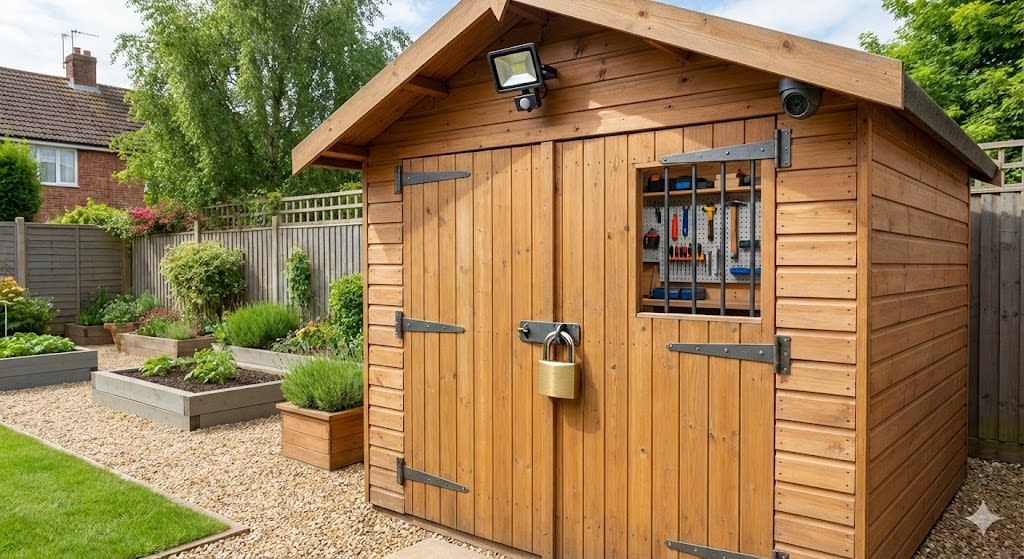
When we think about home security, we usually picture deadbolts on the front door, security screens, and alarm systems protecting the main house. But take a look into your backyard. There sits your humble garden shed, likely securing thousands of dollars’ worth of power tools, camping gear, and lawn equipment with nothing more than a rusty padlock and a prayer.
For many Australian homeowners, the shed is an afterthought. Unfortunately, for opportunist thieves, it is often the first port of call. A backyard shed is frequently viewed as a "soft target", acting as a treasure trove of high-value items with low-security resistance.
If you want to ensure your whipper snipper, drill set, and mountain bikes are still there tomorrow morning, it’s time to take shed security seriously. Here is why it matters and some practical shed safety tips to help you theft-proof your outdoor storage.
Why Shed Security Matters More Than You Think
It is easy to underestimate the value of what is stored in a shed. If you were to do a quick stocktake of your lockable garden shed, you might be shocked at the replacement cost. Between the lawnmower, the chainsaw, the high-end power tools, and the family bikes, the total can easily run into the thousands.
Thieves know this. They also know that sheds are often located in the furthest corner of the backyard, hidden from view by fences or foliage, and usually lack the robust security features of a main dwelling.
Furthermore, tool theft prevention isn't just about saving your gear; it's about protecting your home. A shed often contains tools that can be used to break into your house, such as ladders, crowbars, or heavy hammers. By securing your shed, you are adding an essential layer of protection to your entire property.
Basic Physical Security Improvements
The first step in outdoor storage safety is hardening the physical structure of the shed. You need to make it difficult, noisy, and time-consuming for anyone trying to break in.
Upgrade Your Locking System
The standard padlock supplied with most sheds is rarely sufficient. A pair of bolt cutters can snap a cheap shackle in seconds.
- Close-shackle padlocks: Opt for these designs, which leave very little of the metal hoop exposed, making it difficult for bolt cutters to get a grip.
- Heavy-duty hasps: A strong lock is useless if the hasp and staple (the bit the lock goes through) can be unscrewed with a standard screwdriver. Use hasps that bolt through the door rather than just screwing into the wood.
Reinforce Doors and Hinges
Inspect your hinges. If they are on the outside of the shed and held in place by short screws, a thief can simply unscrew the door and lift it off, bypassing the lock entirely. Replace standard screws with non-return screws or coach bolts with rounded heads that cannot be undone from the outside.
According to The Wooden Shed Co’s guide on shed security, reinforcing doors and upgrading lock systems are some of the most effective first steps homeowners can take to deter opportunist theft. A solid door frame and high-quality hardware send a clear message that this shed is not an easy target.
Secure the Windows
Windows provide natural light, but they also provide a "shop window" for thieves to see what you have.
- Cover them up: Use blinds, curtains, or opaque privacy film so people cannot scout your goods from the outside.
- Lock them down: Ensure windows have working latches or locks. For added security, you can install metal grilles or heavy wire mesh on the inside.
Additional Security Measures: Tech and Terrain
Once you have sorted the physical hardware, look at the environment surrounding your backyard shed security.
Let There Be Light
Thieves hate the spotlight. Installing motion-sensor floodlights above the shed door is one of the most cost-effective deterrents available. As soon as someone approaches, they are illuminated, making them feel exposed and vulnerable. Solar-powered options are great if your shed doesn’t have mains power connected.
Cameras and Alarms
Technology has become incredibly affordable in recent years. You can now pick up battery-operated, Wi-Fi-enabled security cameras that send an alert to your phone the moment they detect motion near your shed. Even a dummy camera can act as a psychological deterrent.
For shed safety tips regarding noise, consider a standalone, battery-operated shed alarm. These are simple magnetic contact sensors that emit a piercing siren if the door is opened while armed.
The "Crunch" Factor
Consider the landscaping around your shed. Planting thorny bushes (like bougainvillea or roses) under windows can make access painful. Additionally, laying a gravel path leading up to the shed is a brilliant, low-tech alarm system. It is almost impossible to walk quietly on gravel, and the crunching sound can alert you (or your dog) to an intruder's presence.
Internal Security Tips: The Second Line of Defence
If a thief manages to breach your external security, you want to make it as difficult as possible for them to grab your gear and run.
Lock Items Inside the Shed
Just because tools are inside the shed doesn't mean they need to be loose.
- Lockable cabinets: Store expensive power tools inside a locked metal cabinet within the shed.
- Anchor points: For larger items like bikes, mowers, or generators, install a ground anchor or a heavy-duty wall bracket. Chain these items to the anchor point. This prevents a "smash and grab" and requires the thief to bring heavy cutting equipment to get them loose.
Organised Storage
A messy shed plays into a thief’s hands because you might not notice something is missing for weeks. If your tools are organised on a pegboard or in specific slots, a missing drill or saw becomes immediately obvious.
Mark Your Valuables
Police frequently recover stolen goods but cannot return them because the owners can't prove ownership.
- Engraving: Etch your driver's licence number or initials onto your tools.
- Microdots/DNA marking: Use modern property marking kits that are invisible to the naked eye but glow under UV light.
- Photography: Keep a digital inventory. Take photos of your expensive tools and record the serial numbers.
Simple Behavioural Practices
The best lock in the world won’t help if you don't use it. Protect tools in shed environments by adopting simple habits:
- Lock it every time: Even if you are just popping inside for lunch, lock the shed. It only takes a minute for someone to sneak in.
- Don't advertise: Try not to leave expensive tool boxes or packaging in plain sight on the driveway or by the rubbish bin. It tells thieves exactly what brand new toys you have just bought.
- Maintenance checks: Wood expands and contracts with the weather. Check your frames and locks every six months to ensure rot hasn't weakened the structure or that locks haven't become loose.
Final Thoughts
Securing your shed doesn't have to cost a fortune, but it does require a bit of effort. By combining strong physical security, smart landscaping, and good habits, you can turn your shed from an easy target into a fortress.
Start by checking your current locks and hinges. If they look a bit flimsy, it’s time for an upgrade. For more detailed advice on hardware and structural integrity, we recommend you visit The Wooden Shed Co’s shed security guide to ensure you are getting the best protection for your property.
Don't wait until after a break-in to think about security. Lock it up, light it up, and keep your tools safe.
About the Creator
Keep reading
More stories from Ava Binney and writers in Lifehack and other communities.
Creating a Shed as a Productive and Inspiring Workspace
In today’s fast-paced world, finding a quiet and inspiring place to work is essential for maintaining focus and creativity. If you're looking for a unique solution that balances functionality with a serene environment, a shed can be the perfect canvas for transforming into your dream workspace. Whether you're an artist, writer, craftsman, or remote worker, a well-designed shed offers an ideal opportunity to create a dedicated, peaceful, and productive working space right in your backyard.
By Ava Binneyabout a year ago in Styled
5 Simple Lifehacks to Keep Your Teeth Healthy Every Day
Healthy teeth aren’t just about occasional dental visits—they’re shaped by the little choices you make every day. Simple habits, when done consistently, can prevent cavities, gum issues, sensitivity, and other oral concerns while keeping your smile bright and comfortable. These lifehacks are easy to integrate into your routine and don’t require drastic lifestyle changes.
By Smile Sydneyabout 8 hours ago in Lifehack
Flower Bloom 369
FLOWER Bloom 2/25/26 Wednesday By Mariann Carroll Karen had been with Tony for 7 years. Tony started acting strangely after her surgery. He would mow the lawn in the rain and be on his cellphone. He started pushing Karen away. Tony came clean about seeing someone. Karen moved out two months later. Karen moved in with a friend. She felt betrayed.
By Mariann Carroll6 days ago in Fiction


Comments
There are no comments for this story
Be the first to respond and start the conversation.