
Why Is Your Hot Water System Not Heating? 7 Common Causes You Should Know
Is your hot water system not heating? Learn about the 7 most common causes, from thermostat issues to sediment buildup, and discover easy troubleshooting tips to get your hot water flowing again.

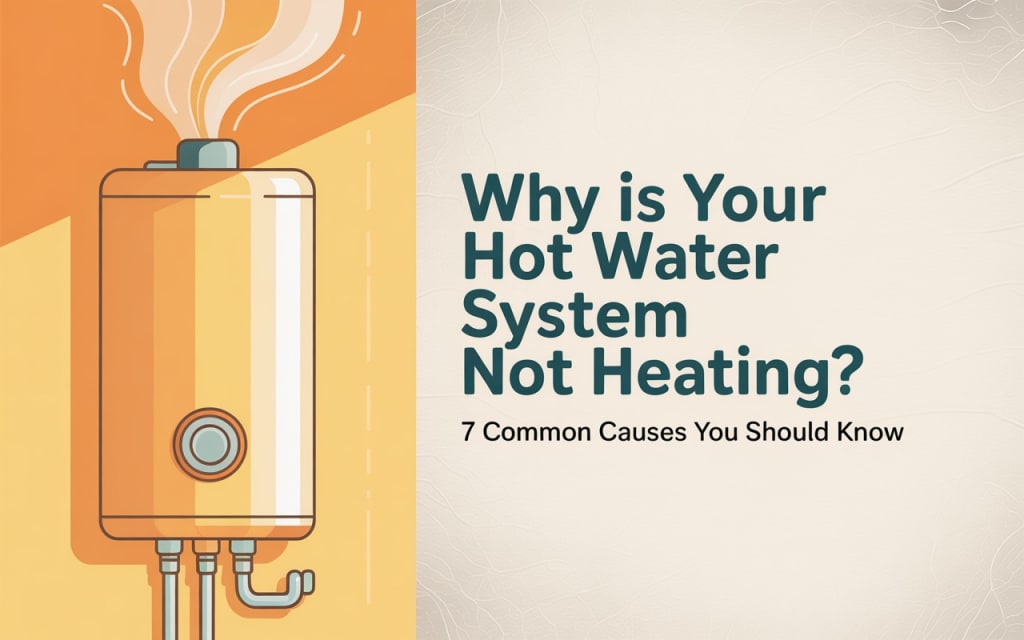
There’s nothing quite like starting your day with a warm shower—until, of course, that expected warmth turns icy cold. If you’ve ever woken up, hopped in the shower, and been hit with a blast of freezing water, you know just how frustrating and inconvenient it can be when your hot water system stops heating. For many Aussie households, hot water is a daily essential. So when it fails, getting answers quickly becomes a top priority.
In this blog, we’ll walk you through the 7 most common reasons your hot water system not heating properly, what signs to watch for, and what you can do about it. Whether you're in a standalone home or renting a unit, these insights will help you understand the issue better—and decide when it's time to call in a professional like The Plumbing and Electrical Doctor.
1. Thermostat Malfunction
How it affects heating:
The thermostat is the "brain" of your hot water system. It regulates the water temperature, and if it’s faulty or miscalibrated, the system may not heat the water at all—or may only warm it slightly.
Signs to watch for:
- Water feels lukewarm instead of hot
- Hot water runs out unusually fast
- Inconsistent temperature from one day to the next
What to do:
Check if your thermostat setting is too low (ideally, it should be around 60°C). If adjusting it doesn’t help, it may be a faulty thermostat that needs replacing. In most cases, it’s best to contact a licensed plumber or electrician to inspect and replace hot water system the component safely.
2. Pilot Light Is Out (Gas Systems)
How it affects heating:
Gas hot water systems use a pilot light to ignite the burner that heats your water. If the pilot light goes out, the burner won’t fire up, meaning no hot water.
Signs to watch for:
- No flame visible through the viewing window
- No hot water at all
- You smell gas (in this case, act urgently and turn off the supply)
What to do:
Try relighting the pilot light following your manufacturer’s instructions, usually located on the side of the unit. If it won’t stay lit or goes out repeatedly, this could indicate a deeper issue—like a faulty thermocouple—and you'll need a professional to assess it.
3. Sediment Buildup in the Tank
How it affects heating:
Over time, minerals from your water supply (especially in hard water areas) can accumulate in the bottom of your hot water tank, insulating the heating element and reducing efficiency.
Signs to watch for:
- Rattling or popping noises from the tank
- Water takes longer to heat
- Discoloured or rusty water
What to do:
Flushing the tank annually can help prevent this buildup. You can attempt it yourself if you're comfortable with basic plumbing, but most homeowners prefer a qualified technician to do it safely and properly.
4. Faulty Heating Element (Electric Systems)
How it affects heating:
In electric hot water systems, the heating element warms the water. If the element burns out, your water won’t heat at all.
Signs to watch for:
- No hot water, even though the power is on
- Tripped circuit breaker or blown fuse
- Aged system (older elements are more prone to failure)
What to do:
Turn off the power and inspect the breaker. If everything looks fine, you’ll likely need a licensed electrician or plumber hot water system to replace the heating element.
5. Electrical Issues
How it affects heating:
Problems with your home’s electrical supply—like a tripped circuit or faulty wiring—can interrupt power to the water heater.
Signs to watch for:
- Water system switch won’t turn on
- Breaker trips repeatedly
- No other apparent system faults
What to do:
Check your switchboard to see if the water heater circuit has tripped. If it continues to trip or the system won’t turn on at all, this is not a DIY fix—get a licensed electrician to investigate further.
6. Aging Hot Water System
How it affects heating:
Like any appliance, hot water systems wear out over time. Most units have a lifespan of 8–15 years, depending on the type and maintenance history.
Signs to watch for:
- Frequent breakdowns
- Water never gets as hot as it used to
- Increased energy bills
What to do:
If your system is approaching the end of its lifespan, it may be more cost-effective to replace it rather than continually repairing it. Speak with a plumbing professional to explore your options for modern, hot water service repairs, energy-efficient replacements.
7. Faulty or Stuck Valves
How it affects heating:
Hot water systems use various valves (like the tempering valve or pressure relief valve) to control temperature and pressure. If one of these fails, it can affect the system’s ability to deliver properly heated water.
Signs to watch for:
- Water is too cold or too hot
- Leaking from the valve area
- Loud hissing or gurgling sounds
What to do:
Valve issues can sometimes be fixed with a simple replacement—but they require specialist tools and training, so always have a licensed plumber take a look.
Preventative Tips to Keep Your Hot Water Flowing
A bit of maintenance can go a long way in avoiding cold water surprises. Here are a few easy tips:
- Flush your tank annually to reduce sediment buildup.
- Inspect and test valves for proper function every 6–12 months.
- Check your thermostat setting regularly.
- Book a professional system check-up every 1–2 years.
- Act early on small changes, like slower heating or water colour shifts.
Don’t Let a Cold Shower Ruin Your Day
Your hot water system works hard behind the scenes every day, and when it stops doing its job, the disruption is real. While some problems can be handled with a simple check or reset, others require the trained eye of a licensed professional.
If your hot water system isn’t heating and you’re not sure why, don’t guess—let The Plumbing and Electrical Doctor take care of it for you. With years of experience across NSW and ACT, our team can diagnose and fix issues quickly, safely, and professionally. We’re here when you need us—even on weekends, with no extra charges.
About the Creator
The Plumbing and Electrical Doctor
The Plumbing and Electrical Doctor offers expert plumbing and electrical services across NSW and ACT, with mobile showrooms, free home checks, and no extra weekend fees—trusted since the 1980s for quality, reliability, and customer care.
Keep reading
More stories from The Plumbing and Electrical Doctor and writers in Lifehack and other communities.
The Basics of General Plumbing Services for Every Homeowner
When it comes to maintaining a safe, comfortable, and fully functional home, plumbing plays a crucial role. Whether it’s the water you drink, the hot shower you enjoy in the morning, or the toilet you flush without a second thought, your plumbing system is working behind the scenes every day.
By The Plumbing and Electrical Doctor6 months ago in Lifehack
The Pareto Principle (The 80/20 Rule)
In the late 19th century, an economist named Vilfredo Pareto noticed a strange pattern in his garden. He saw that 80 percent of his peas came from only 20 percent of the pods. When he expanded his view to the wealth of nations, he found the same lopsided reality. A tiny minority of actions almost always produces the vast majority of results. This isn't just a rule for math or money. It is a fundamental law of existence that we ignore at our own peril. We call it the Pareto Principle, and it is the ultimate argument for the power of the minimum.
By Nanu Nnabuife3 days ago in Lifehack
Lessons Learned in a Wheel Chair, Singing in the Sunshine 🥀
It starts with love. . . and life . . . Motivational Mantra: Living with Disabilities “To think in terms of either pessimism or optimism oversimplifies the truth. The problem is to see reality as it is.” — Thich Nhat Hạnh
By WILD WAYNE : The Dragon King2 days ago in Lifehack


Comments
There are no comments for this story
Be the first to respond and start the conversation.