
What To Know Before Installing Artificial Grass?
The main goal of artificial grass is to simplify living. Time is saved since it doesn't require fertilizer, mowing, or watering.
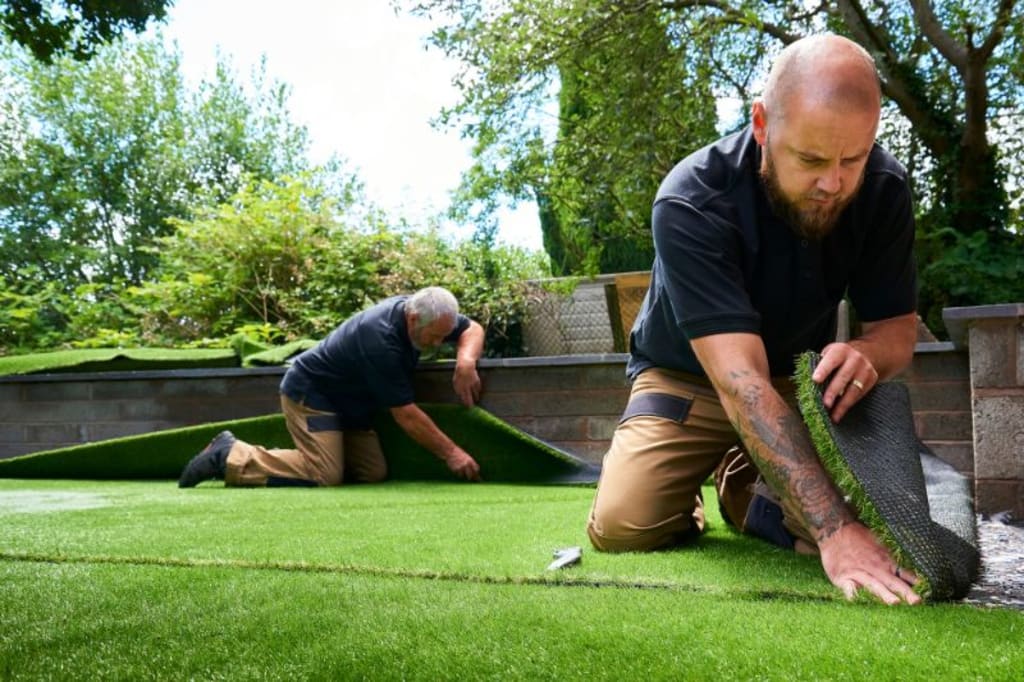
The main goal of artificial grass is to simplify living. Time is saved since it doesn't require fertilizer, mowing, or watering. Fake grass's popularity has increased significantly in recent years due to its convenience and the UK's changing environment. Depending on how thoroughly it is installed, it may last 15 to 20 years. Hiring a professional will help you prevent mistakes and guarantee that your lawn looks fantastic because installing fake grass might be trickier than it first appears. Read on to learn about what to know before installing artificial grass.
1. Size of the Garden Matters:
You might not want artificial grass on a large, undulating lawn. In addition to the fact that the genuine lawn is certainly a significant feature in a garden that size, the expense can also be prohibitive. Artificial turf is not going to be able to replace this functionality easily. If you really can't stand the grass, though, a landscape gardener or designer might be able to help you come up with some ideas for a complete garden makeover that would reduce the amount of lawn you have and allow you to use artificial grass in smaller sections of your garden.
2. Conduct Research:
Research is necessary before you even begin the process. A beautiful lawn is the result of many variables coming together, no matter how easy it may seem. Assessing the space where the turn in will be installed should be done first. You can then determine what kind of artificial grass to use and how much of it you require. A 500-square-foot lawn can cost $3,207 to $6,990, including labour, depending on labour and material expenses.
3. Think About Wildlife:
An artificial lawn will reduce the number of places that various insects, like beetles and worms, can call home. You might want to think about making these insects new homes, for example- bug hotels and lots of flowers to draw in bees.
4. Make Sure There Are Some Flaws:
Since real lawns don't resemble a perfectly groomed football pitch, producers of artificial grass frequently incorporate flaws into their goods. Although it may seem contradictory, doing this actually helps to ensure that the garden appears realistic and well-maintained.
5. Ensure That The Ground Is Level:
The levelness of the surface you will be working on is crucial. Examine the area where you want to install the new turf. Is it mainly level, or are there any uneven spots? Before starting the installation process, make sure the terrain is level. Build up any spots that are lower than the rest of the lawn and get rid of any tree roots.
6. Consider Drainage:
A permeable barrier, intended to keep weeds from sprouting up through your lawn, will be covered with artificial grass. However, drainage is still an issue that needs to be taken into account or your lawn will continue to have surface water pools. To avoid issues, the rainfall must drain away evenly; the installer ought to be able to assist you with this.
If there is inadequate drainage in the vicinity, an artificial lawn will be destroyed. Prior to the turf falling, an area that is prone to pooling needs to be addressed. The area will drain more rapidly and efficiently if base materials are laid down beneath the grass. To make sure the installation is done correctly, you might want to think about hiring a professional turf installer if the surface is truly not suitable for it.
7. Include a Weed Barrier:
After removing all vegetation from the area, you must make sure that no more grass, weeds, or plants may grow beneath the turf. A layer of fabric called a weed barrier is placed beneath the turf to keep out unwanted materials. Weeds and other vegetation will push through the turf in the absence of a weed barrier.
8. Roll It Gently:
The appearance of artificial turf will be bumpy if it is not linked uniformly. It is quite hard to fix this error once the turf has been installed. Make sure the joints between the rolls are tight and even to prevent this catastrophe.
9. Secure the Edges:
The lawn's fine nuances are what give it its flawless appearance. A lawn's edges need to be tight so they don't curl up at the corners. This allows items to get underneath the lawn in addition to posing a risk to anyone walking on it.
10. Select Your Look:
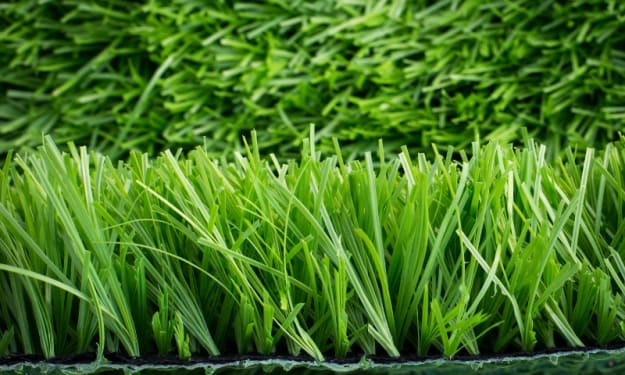
Fake turf comes in a plethora of varieties, each with its own shade and height. Too much length will cause the grass to fold over on itself, while too little will make the lawn appear prickly. Additionally, various gardens may benefit more from different colours. To ensure that you are selecting the appropriate style, make sure to lay a couple of large samples.
11. How Much Fake Grass is Required:
Measure the garden to find out how much artificial grass you'll need to order before tearing up the current lawn. Synthetic grass is measured in m², just like a carpet in a home, so figure out how big the area you want to cover is in terms of length and width, then multiply that number to find your total. You will always lose some length during trimming and fitting, so always allow for extra length.
Because artificial grass is sometimes supplied in rolls that are 2 or 4 meters wide, keep this in mind when taking measurements to minimize connections and simplify installation. The garden's size can be determined by using a tape measure and a basic paper sketch or by using a grid system to draw it out. Always remember to double-check your dimensions, and don't place an order unless your measurements are absolutely correct. The correct instruments for the job will make the installation of fake grass simple, in addition to a tape measure to determine how much m² of artificial grass you'll need.
About the Creator
You're alone, because you're lost
Being alone is a fear that one in three adults face WORLDWIDE. Why? Are we scared to be alone because we are faced with all of our thoughts we once tried to suppress? Or are we scared because we feel uncomfortable? Uncomfortable with the idea of being in a room with just you. You and your nasty thoughts. Thoughts like “Damn I should've apologized”, or “Why hasn't he texted me back?” or “I am a failure”. Yea. those thoughts. The forbidden thoughts that come sneak by the midnight hour, ...if you're lucky. You see loneliness doesn't have to be this way. It all starts with you.
By C⃣ h⃣ a⃣ n⃣ e⃣ l⃣6 days ago in Lifehack


Comments
There are no comments for this story
Be the first to respond and start the conversation.