
What actually happens when you eat garlic?
Is garlic a medicine or just a tasty bulb? — quick science-backed benefits + risks. Segments: quick facts, listener Q&A, myth vs. evidence.

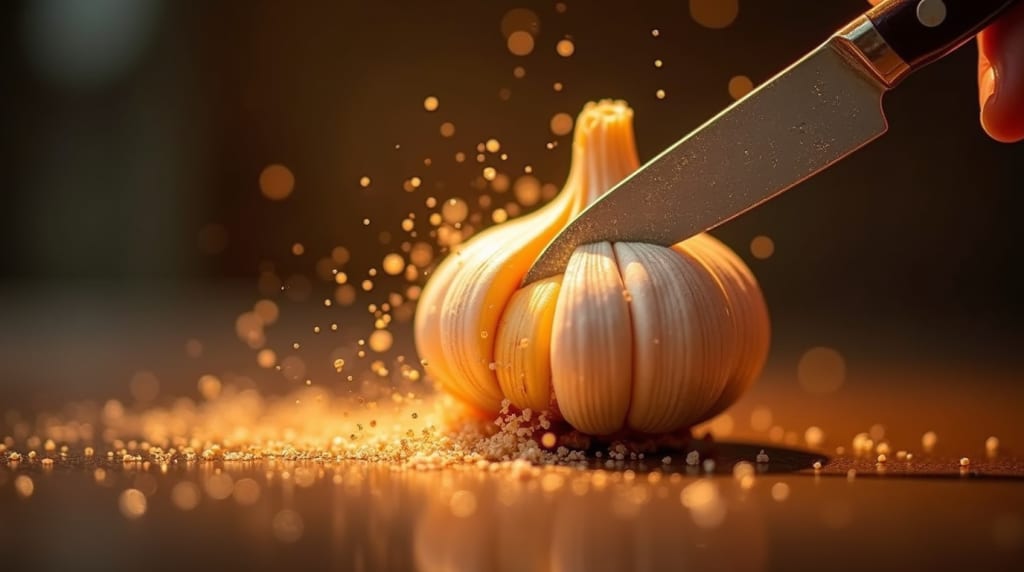
Garlic is one of those ancient ingredients that seems to live two lives at the same time. In the kitchen, it is a superstar of taste—savory, rich, and powerful enough to transform a simple dish into something unforgettable. But in the body, garlic becomes something else: part medicine, part protector, part mystery. People across history swore by it, from ancient healers in Egypt and Greece to modern nutrition experts. But what is really going on inside you when you eat garlic?
Let’s break down what happens from the moment that clove enters your mouth.
Step 1: Crushing garlic starts a chemical reaction:
Garlic does not fully become “garlic” until it is damaged.
When you chop, chew, crush, or grate a clove, you trigger a chemical reaction. Two natural compounds, alliin and the enzyme alliinase, combine to form a new substance called allicin. This is the famous compound responsible for garlic’s sharp smell, strong taste, and many of its health benefits.
Allicin doesn’t stay in the body very long, but it is extremely active. Think of it like a spark—short-lived but powerful.
Step 2: Garlic enters the digestive system:
As you swallow garlic, it enters the stomach and intestines, where allicin and other sulfur compounds start to move into your bloodstream. These compounds are surprisingly small and travel quickly through the body.
This is why some people say they can smell garlic on their skin or breath hours later—these compounds are circulating and being released not just from the lungs but also from pores. Some people love that; others, not so much.
Step 3: Garlic’s compounds begin antioxidant and antimicrobial work:
Once in your bloodstream, garlic doesn’t just sit there. It starts interacting with cells, tissues, and microorganisms. Studies suggest that garlic may:
Help fight bacteria and viruses
Garlic has natural antimicrobial properties, which is why it was once used in wartime to clean wounds. While you should not rely on garlic alone to treat infections, research indicates that its compounds can make it harder for certain microbes to survive inside the body.
Reduce oxidative stress
Free radicals are unstable molecules that can damage cells over time. Garlic is rich in antioxidants that help neutralize them. This process supports long-term cellular health, which is why garlic often appears in discussions about aging and disease prevention.
Step 4: Garlic may support the heart and circulation:
One of the areas where garlic has been most studied is heart health. Compounds in garlic may help:
Lower LDL cholesterol (the “bad” kind)
Garlic does not work like a drug, and results vary, but some people may see improvements in cholesterol levels with consistent consumption.
Reduce blood pressure
Garlic’s sulfur compounds can help blood vessels relax, improving blood flow for some individuals. This can contribute to healthier blood pressure levels.
Support overall circulation
Because garlic may help reduce the stickiness of platelets in the blood, it may support smoother circulation. Again, this doesn’t replace medical treatment, but it shows why garlic has such a strong reputation in traditional medicine.
Step 5: Effects on digestion and the gut:
Garlic acts as a prebiotic, meaning it feeds beneficial gut bacteria. A healthier gut microbiome supports digestion, immunity, and even mood regulation. But there’s a twist:
For some people with digestive conditions—especially IBS (Irritable Bowel Syndrome)—garlic can be irritating because it is high in FODMAPs. So, while garlic can help gut bacteria, it can also cause discomfort in sensitive individuals.
Step 6: Garlic changes your breath (and sometimes your sweat):
Yes, the famous garlic breath. Chemicals like allyl methyl sulfide don’t break down easily, so the body releases them through the lungs and skin. This is why brushing your teeth doesn’t always remove the smell completely.
A few things can help reduce odor, such as chewing parsley, mint, or drinking lemon water, but the effect varies from person to person.
Step 7: Long-term benefits depend on consistency:
Eating garlic once won't transform your body. Most of its long-term benefits happen when garlic becomes a regular part of your diet, especially when it is raw or lightly cooked so the allicin remains strong.
Many people use garlic in soups, marinades, roasted vegetables, teas, or even take it in capsule form. The key is consistency, not extreme doses.
Final Thoughts:
What actually happens when you eat garlic is a blend of chemistry, nutrition, and a little bit of ancient wisdom. You crush it, allicin comes alive, it travels through your system, fights stress in your cells, supports your bloodstream, feeds your gut bacteria, and—yes—makes your breath unforgettable.
Garlic is not a miracle cure, but it is a remarkable natural food that has earned its reputation over thousands of years. Whether you enjoy it for flavor, health, or tradition, your body knows exactly what to do with it.
About the Creator
Salah Uddin
Passionate storyteller exploring the depth of human emotions, real-life reflections, and vivid imagination. Through thought-provoking narratives and relatable themes, I aim to connect, inspire, and spark conversation.
Keep reading
More stories from Salah Uddin and writers in Lifehack and other communities.
Life Lessons in your 20s, 30s, and 40s:
What Time Teaches Us that Youth Never Could: Every decade of life teaches you something you couldn’t have understood before—not because you weren’t smart enough, but because some lessons require time, pressure, and a little bit of bruising. Your 20s, 30s, and 40s shape you in drastically different ways, and looking back, you often realize you weren’t becoming someone new—you were uncovering the person you were meant to be.
By Salah Uddin4 months ago in Education
I Stopped Trying to Impress Women—And This One Shift Made Them Notice Me Instantly
For years, I thought attracting women was all about effort—saying the right lines, dressing perfectly, and trying to be as impressive as possible. I believed that if I could just present the best version of myself, everything would fall into place.
By Lukáš Hrdlička6 days ago in Lifehack
The End of the August Rush: How Remote Work Rewrote the Rules of the British Family Holiday
Two weeks in August. Majorca, perhaps, or Cornwall if the budget was a little tighter that year. It was booked in January because everyone knew that if you waited until spring, prices would be brutal and the good apartments would already be gone. The children were off school, both parents used their primary leave blocks concurrently, and the office was held together by whoever drew the short straw and was stuck behind.
By Derien Harleys7 days ago in Lifehack
Tatt~Master
— Assembly Line Tatt Machine ~ Impressions to Impress — As I begin to understand more about the Tattoo Phenomenon. I've written silly, yet verbatim, dating site anecdotes in 'Frazzled.' So let me ask you: Would you be More attracted to someone slathered with tattoos, or Less?
By Jay Kantor4 days ago in Humor


Comments
There are no comments for this story
Be the first to respond and start the conversation.