
We Bought Better Technology, But Somehow Lost Our Peace
We Bought Better Technology, But Somehow Lost Our Peace

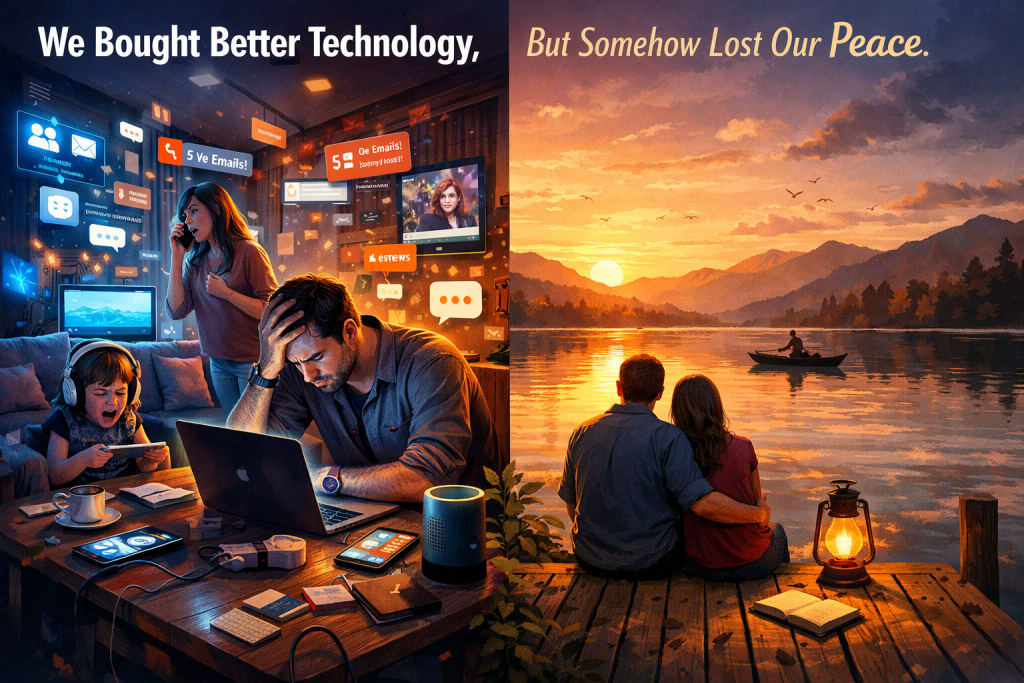
We Bought Better Technology, But Somehow Lost Our Peace
There was a time when new technologies seemed exhilarating.
A new phone brought freedom.
A quicker laptop means less stress.
Better applications meant more time for life.
Somewhere along the line, that sensation shifted.
Today, we have:
better displays
faster internet
smarter gadgets
more powerful tools
And yet… many individuals feel more exhausted, more distracted, and more mentally cluttered than ever.
So a silent question keeps coming back:
“How did technology get better, but life feel heavier?”
Technology Was Supposed to Make Life Easier
That was the promise.
Less effort.
More efficiency.
More convenience.
And in many ways, technology delivered.
We can work from any place.
Talk to anybody instantaneously.
Access information in seconds.
But convenience came with a cost nobody told us about.
Not financial.
Mental.
Our Devices Never Let the Day End.
In the past, days had natural ends.
Work finished when you left the office.
News stopped when the publication was folded.
Conversations ceased after you returned home.
Now, everything remains open.
Emails don’t stop.
Messages don’t wait.
Notifications don’t sleep.
Your phone doesn’t care whether it’s evening, weekend, or vacation.
It’s constantly begging for attention.
And attention is not an endless resource.
Being “Always Connected” Quietly Became “Always On”
We used to go online.
Now we live online.
There’s no apparent barrier anymore between:
work and rest
information and noise
connection and disruption
Even while you’re doing nothing, your mind is half-engaged.
Checking.
Refreshing.
Responding.
That persistent low-level involvement builds tension you don’t perceive at first.
Until you feel fatigued without understanding why.
Better Technology Increased Expectations, Not Peace
Here’s something people seldom say out loud.
As technology developed, expectations rose with it.
Because tools grew faster:
replies become anticipated quickly
availability became presumed
delays become unbearable
A sluggish reaction now seems disrespectful.
An offline moment seems suspect.
Rest feels like slipping behind.
Technology didn’t merely affect what we can do.
It impacted what people expect us to do.
The Illusion of Productivity
Technology makes us busier—not necessarily more productive.
We respond to more messages.
Attend more meetings.
Consume more information.
But accomplishing more doesn’t imply feeling successful.
Often, it implies feeling scattered.
A laptop open with 15 tabs seems productive.
But psychologically, it seems weary.
Phones help us multitask constantly—but multitasking breaks attention.
Fragmented attention produces tension.
Why Silence Feels Uncomfortable Now
This is one of the greatest shifts people don’t recognize.
Silence used to be commonplace.
Now, quiet seems strange.
Waiting in line? Phone out.
Sitting alone? Scroll.
Quiet moment? Fill it.
Technology educated us to flee quietly.
But quiet is where serenity resides.
When stillness departs, serenity follows it.
Notifications Are Small, But Constant
A single notice is harmless.
But dozens each day?
Each one:
disrupts concentration
generates urgency
requires a choice
Even if you don’t reply, your brain responds.
Over time, your nervous system remains in a modest state of awareness.
That’s not peace.
That’s background stress.
We Mistook Convenience for Calm.
Ordering meals in minutes is handy.
Getting responses promptly is convenient.
Having everything accessible is handy.
But convenience is not calm.
Calm comes from:
fewer decisions
less interruptions
less demands
Technology lowered effort—but boosted excitement.
And stimulation without rest generates weariness.
Why Older Technology Sometimes Felt Better
Think about it.
Older phones were slower.
The older internet was restricted.
Older gadgets accomplished less.
But they also:
interrupted less
demanded less
anticipated less
You used them purposely.
Now gadgets utilize you continuously.
Not because they’re evil—but because they’re meant to remain relevant.
Relevance needs attention.
The Hidden Cost: Mental Clutter
Your phone holds:
conversations
reminders
tasks
news
entertainment
obligations
All in one location.
Your brain never entirely empties.
There’s always something waiting.
That mental clutter doesn’t vanish when the screen shuts off.
It follows you.
Why People Feel Tired Even When Doing “Nothing”
Many people say:
“I didn’t do much today, but I’m exhausted.”
That’s because mental effort doesn’t often appear like labor.
Reading messages.
Making micro-decisions.
Switching attention frequently.
These drain energy softly.
Technology makes rest appear active—but it’s not restorative.
This Isn’t Anti-Technology
Let’s be clear.
Technology is not the enemy.
It links us.
It empowers us.
It offers possibilities.
The issue isn’t employing technology.
The trouble is never walking away from it psychologically.
Peace demands pauses.
Technology eliminated them.
What People Are Actually Searching For Now
This is why more people search:
“tech burnout”
“digital fatigue”
“why I feel tired all the time”
“phone stress”
They’re not shunning technology.
They’re striving for equilibrium.
Small Shifts That Restore Peace
Not extreme detoxes.
Not erasing everything.
Just awareness.
Turning off needless alerts
Creating phone-free moments
Accepting slower responses
Letting silence exist
Peace doesn’t entail forsaking technology.
It needs to lower how much of you it demands.
The Quiet Realization Many People Are Having
Better technology didn’t undermine peace.
Unfiltered technology did.
When everything has access to you, tranquility has someplace to sit.
That’s why so many people experience this tension—but fail to express it.
Conclusion
We didn’t purchase the incorrect gadgets.
We simply never learned how to defend ourselves against them.
Technology addressed several problems—but added a new one:
continual mental noise.
Peace isn’t found in greater tools.
It’s found in borders.
And the instant you start picking where your focus goes,
Technology ceases feeling heavy—and begins feeling useful again.
If this seemed similar, you’re not alone.
You’re simply human in a very noisy digital environment.
About the Creator
abualyaanart
I write thoughtful, experience-driven stories about technology, digital life, and how modern tools quietly shape the way we think, work, and live.
I believe good technology should support life
Abualyaanart
Keep reading
More stories from abualyaanart and writers in Lifehack and other communities.
Work Less, Create More: Why Smart Creators Are Delegating Their Work
What once required a publishing company can now be done with a laptop, a website, and a strong idea. But as many bloggers quickly discover, running a successful online platform involves far more than writing articles.
By Bella Clumabout 21 hours ago in Lifehack


Comments
There are no comments for this story
Be the first to respond and start the conversation.