
Waterproofing Of Foundation Slab
Main Causes of Foundation Problems

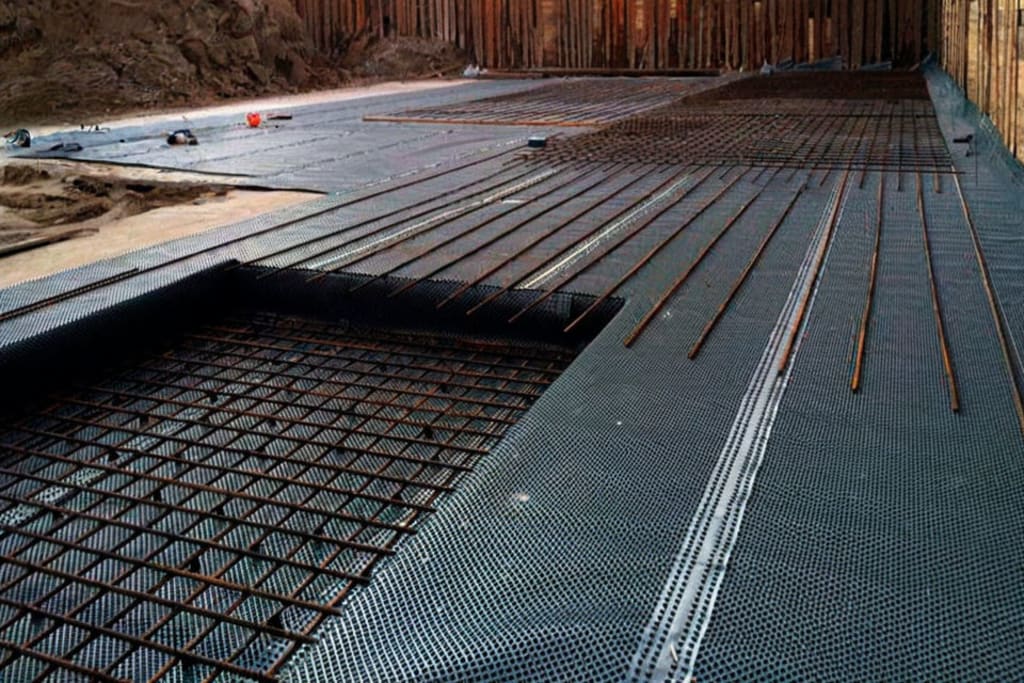
Water is one of the main causes of foundation problems. Waterproofing the foundation slab ensures the long-term integrity of the building because it protects the concrete from moisture and vapor penetration by hydrostatic pressure and capillary action.
Why is foundation slab waterproofing necessary?
The foundations are made of reinforced concrete, through which steam and moisture penetrate. This can lead to internal and external cracking of the foundation, the appearance of unpleasant odors in the basement and the house, mold, insects, damp spots on the walls and floor. Cracks in the base lead to deformations of the entire house, and in the long term - displacement and collapse of the structure.
Foundation slab waterproofing prevents water infiltration underground, thereby ensuring the strength, structural durability and safety of the building. Its arrangement is aimed at preventing subsurface penetration of liquid and steam due to hydrostatic pressure and capillary effect.
Pro Tip: Protect your home with expert foundation repair in Guelph, Ontario. Our trusted services ensure a strong and durable foundation. Call now for a free inspection!
Hydrostatic pressure occurs when gravity pushes stagnant water against walls built wholly or partially on a hillside or below the water table. It increases with soil depth and moisture content. Hydrostatic pressure on slabs causes liquid to seep through joints and cracks by capillary action—penetration into narrow channels between porous building materials. The concrete structure acts as a system of tubes due to cohesive and adhesive forces interacting between the surface and the liquid without the aid of gravity.
Foundation slab construction
To understand whether waterproofing of the foundation slab is necessary, it is necessary to study its structure. Slab foundations are used in the construction of low-rise buildings, when the applied loads are relatively small and uniform. Their arrangement is carried out only on dense stable soils and in areas where the ground does not freeze, since weak soil conditions will lead to the destruction of the foundation.
The slab is a single layer of concrete 20-25 cm thick. It is poured thicker at the edges to form a solid support. The thickened edge is reinforced with reinforcement bars. To reduce the likelihood of cracking, a wire mesh is placed in the concrete.
There is no gap between the slab and the ground, and a layer of crushed gravel is usually placed under the slab to improve drainage. Since the foundation of the house is the ground, the question of how to waterproof a concrete slab is extremely relevant.
Basic rules for waterproofing a concrete foundation slab
For reliable waterproofing of the foundation slab, it is necessary to provide two main components: a drainage system and a waterproofing barrier. Construction of drainage helps to drain liquid from the base on the surface of the earth and in the soil. Complete waterproofing of the foundation slab is impossible without drainage, and unsuitable drainage systems can lead to failure of the entire waterproofing system.
Drainage must be done at two levels: at ground level and in its thickness. The soil at the top of the foundation walls is the first line of defense against damp underground space.
Waterproofing barriers are materials that are applied to the slab and prevent moisture from penetrating into its structure. They should be applied to all walls that have soil on one side and useful space on the other: a warehouse, basement, parking lot, underground space. In case of high humidity, barrier materials can be applied to other walls as well.
Methods of waterproofing concrete slab
Waterproofing of the foundation slab is carried out taking into account the topographic characteristics of the area, the state of the groundwater level and the depth of the foundation.
Sheet membranes
These are self-adhesive roll sheets 40-60 mm thick, consisting of rubberized asphalt laminated to a waterproof polyethylene film. They provide good strength and flexibility, which makes them suitable for foundations and retaining walls. An important advantage of the sheets is their stable thickness. The technology allows for easy repair of any coating defects.
Waterproofing of the foundation slab using rolled sheets has a disadvantage - the formation of many seams with the potential for poor sealing. When using these membranes, it is necessary to carefully process the joints, correctly and tightly arrange the overlap joints. An alternative to rolls is rubberized bitumen membranes of hot application.
Liquid membranes
These are liquid compounds based on polymer-modified asphalt or polyurethane. They are applied to the slab by spraying, roller or spatula, and after hardening they turn into a homogeneous rubber-like coating.
These compounds are flexible, easy to use and inexpensive, and are often used for complex geometric shapes and under tiles. They usually require a primer layer for proper adhesion.
The rubberized liquid forms a continuous seamless coating, however, for high-quality waterproofing of the end of the foundation slab, it is important to ensure uniformity of the coating thickness.
Impregnations
You can waterproof a concrete slab by layering waterproof plaster. The insulation is done as follows:
- Applying a welded layer that reveals leaks and waiting for it to dry, usually within 24 hours.
- Sealing the surface with quick-dissolving cement.
- Applying a new primer.
- Coated with a thick finishing layer of at least 1 cm.
After complete hardening, these impregnations combine to form a durable and moisture-resistant coating.
Insulation of holes
The quality of waterproofing work can be improved by eliminating cracks and holes in the base. Silicone, polyurethane and other polymer sealants are suitable for internal waterproofing of concrete slab joints. Liquid polyurethane or epoxy injections are used to repair minor damage that does not pose a structural threat. The compounds harden inside the cracks and create a waterproof barrier.
Pro Tip: Looking for reliable concrete contractors in Guelph, Ontario? We specialize in high-quality concrete services for driveways, patios, and more. Get a free quote today!
It is important to remember that sealants and injections do not eliminate the causes of damage, and to protect the slab, it is important to carry out complex moisture insulation. The method is only suitable for small cracks. In case of serious damage, more extensive repairs are required.
Stages of waterproofing foundation slabs
Ground level drainage works include:
- Compaction of the soil backfill located next to the support walls.
- Ensuring the correct slope to direct the water flow away from the structure.
- Installation of a system of gutters and downpipes on the roof of the house to drain rainwater.
To keep the walls in the ground dry, you need to install a perforated drainage pipe around the perimeter of the foundation, draining water away from it. Typically, the pipe is placed at least 15 cm below the top of the slab.
To prevent moisture from getting through cracks, you can fill up 40 cm of granulated polystyrene foam near the foundation wall. The backfill should have a slope of about 3 m from the base to quickly drain the water into the drainage pipes.
After the drainage is installed, the foundation slab is waterproofed with barrier materials. The surfaces must be prepared in advance:
- Repair cracks larger than 6 mm using anti-shrinkage mortar.
- Clean the walls of paint, rust, debris, laitance and any contaminants that may interfere with adhesion.
- Dry thoroughly.
Concrete slab waterproofing materials
The most common means for waterproofing the joints of concrete slabs are roofing felt in rolls, bitumen mastic and liquid rubber.
Ruberoid is an effective means for horizontal and vertical moisture insulation. The first is implemented before the installation of the structure, the second - after construction. Ruberoid based on polyester or fiberglass protects the slab not only from moisture, but also from the effects of temperature changes.
The mastic, made on the basis of bitumen, is applied with a roller or brush to the plaster, which includes sand and cement. After the mastic hardens, a waterproof shell is formed on its surface, protecting the slab from moisture and the penetration of microorganisms.
Liquid rubber is a viscous mass of polyurethane, acrylic and bitumen, similar in consistency to mastic. Rubber is distributed using industrial equipment or a special sprayer, but can also be applied with a regular roller. However, manual laying is not recommended, as it can lead to the formation of voids that allow moisture to pass through. After application, the material quickly hardens and becomes resistant to water, mechanical impacts and wear.
Conclusions
Waterproofing of the foundation slab is a prerequisite for the safe operation of the building. It requires detailed planning of the work, selection of technologies and materials taking into account the type of structure, the expected liquid pressure and environmental conditions.
Drains installed on the site require maintenance and control: they should be regularly checked, cleaned and, if necessary, modified. When installing barriers, it is important to carefully prepare the surface of the slab to ensure a strong and durable bond between the protective material and the concrete base.
About the Creator
Sophia Emma
Content Writer | Proofreader | Copywriter | Blog Writer
Keep reading
More stories from Sophia Emma and writers in Lifehack and other communities.
How To Waterproof a Construction Gutter
With the arrival of the rains, infiltration problems in homes increase. If not properly resolved, they can cause permanent damage to the gutter system and, as a result, increase the cost of its repair. Therefore, prevention is better than cure.
By Sophia Emmaabout a year ago in Writers
Mindful Movement vs. Intense Exercise: Listening to the Body’s Real Needs
Modern fitness culture often celebrates intensity, speed, and visible results. However, many people feel disconnected from their bodies despite exercising regularly. Mindful movement offers a different path, one that values presence over pressure and responsiveness over force. Instead of asking how much the body can endure, this approach asks what the body needs today.
By Jose Morrisabout 22 hours ago in Lifehack
Moving in Palm Beach Gardens: How to Choose the Right Moving Company
Relocating in Palm Beach Gardens, Florida, is often associated with a calm and orderly lifestyle, but the moving process itself requires careful preparation. While the city is known for its planned communities and wide roads, local moves still involve details that can easily be overlooked. Understanding these factors ahead of time can help residents avoid unnecessary stress and delays.
By House Doctorabout 13 hours ago in Lifehack


Comments
There are no comments for this story
Be the first to respond and start the conversation.