
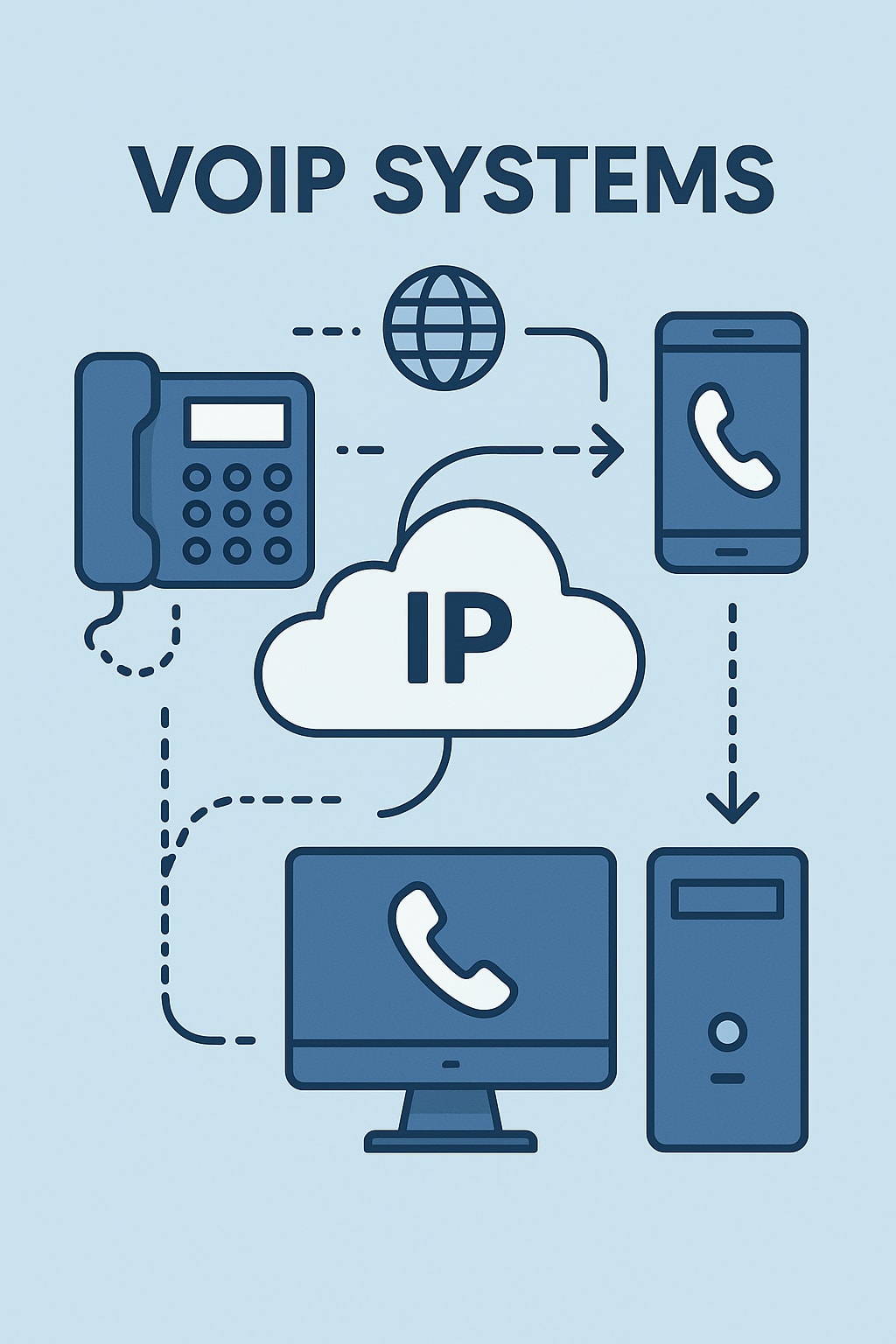
Modern voice communication, powered by the internet.
In the digital age, communication is no longer limited by wires, phone lines, or physical exchanges. Businesses and individuals are rapidly embracing new, more efficient ways to connect — and Voice over Internet Protocol (VoIP) is leading that revolution. But what exactly is a VoIP system, and why is it becoming a standard for modern communication?
Understanding VoIP: A Quick Overview
VoIP, or Voice over Internet Protocol, refers to technology that allows voice communication and multimedia sessions to be transmitted over the internet instead of traditional Public Switched Telephone Network (PSTN) lines. Simply put, it lets people make phone calls using broadband internet rather than conventional phone systems.
When you speak into a VoIP-enabled device, your voice is converted into a digital signal, broken into small data packets, and sent across the internet to the recipient — where it's reassembled and converted back into sound.
This simple yet powerful method of communication has fundamentally transformed the way organizations and individuals handle voice calls.
How VoIP Works
To understand why VoIP is so effective, it helps to break down its functionality:
Voice Input: You speak into a microphone on a phone or device.
Digital Conversion: Your voice is digitized using codecs (compressor-decompressors).
Data Transmission: The data packets travel over an IP network.
Signal Reassembly: The receiver’s device decodes the packets into audio signals.
Output: The recipient hears your voice in real-time, often with better clarity than analog systems.
VoIP works on various devices — from desk phones and smartphones to computers and tablets — provided they’re connected to the internet.
Key Benefits of VoIP Systems
VoIP systems are not just an upgrade — they represent a strategic shift in communication. Here’s why:
1. Significant Cost Savings
Traditional phone lines come with high operational costs, especially for long-distance and international calls. VoIP bypasses these by leveraging internet infrastructure, making calls more affordable. Most VoIP providers offer flat-rate pricing, unlimited call bundles, or per-minute pricing that’s drastically lower than traditional telecom fees.
2. Mobility and Flexibility
Unlike traditional landlines tied to specific locations, VoIP allows you to make and receive calls from anywhere with an internet connection. Whether you're in the office, working from home, or traveling abroad, your communication remains uninterrupted.
3. Scalability
VoIP systems are easy to scale. Adding a new employee? No need for physical line installations. Just set up a new account, and the user is ready to go. This makes VoIP ideal for growing businesses or those with fluctuating staff levels.
4. Advanced Features
VoIP offers a wide range of features that enhance communication:
Video conferencing
Instant messaging
Voicemail to email transcription
Call forwarding and routing
Integration with CRM tools and calendars
These features improve collaboration and streamline workflow — essential for both small businesses and enterprise operations.
5. Improved Call Quality
With high-speed broadband, VoIP calls often have superior audio clarity compared to analog phones. HD voice technology reduces background noise and echo, creating a more natural-sounding conversation.
VoIP in Business: A Competitive Advantage
For businesses, VoIP is more than a tool — it's a competitive advantage. It enables unified communications, reduces costs, and supports remote work strategies. In today’s landscape, where teams are distributed across regions and flexibility is key, VoIP ensures that communication remains consistent, clear, and centralized.
Moreover, integrating VoIP with customer service platforms and business applications allows for detailed call analytics, improved customer tracking, and automation — all contributing to a better user experience.
Security Considerations
One concern often raised about VoIP is security. Since calls are transmitted over the internet, it's crucial to ensure that your provider offers end-to-end encryption, firewall protection, and network redundancy. Many VoIP platforms also offer two-factor authentication and anti-spam call screening for added protection.
Finding the Right VoIP Solution
Not all VoIP providers are created equal. The right solution depends on your business size, call volume, required features, and budget. Some businesses need robust call center features, while others simply want affordable voice service.
That’s where we can help
👉 Explore Our Panel of VoIP Providers
Our team works with industry-leading VoIP system providers to help you find the right deal tailored to your needs — whether you're a freelancer, small business, or growing enterprise.
About the Creator
UNDER THE KNIFE
As I walked home from Haddon's house, one question echoed in my mind: What if I die under the operation? It was a strangely impersonal thought. I had no wife, no dependents, and few friends who would be deeply troubled by my death. This realization surprised and humbled me. Most of my friendships, I saw now, survived more out of habit than affection. The emotional urgency of life seemed to have drained from me, leaving behind a calm detachment that felt unnatural.
By Faisal Khan6 days ago in Lifehack
Analyse this!
Wanna know how to improve your writing? There is a simple, quick, tried and tested method. Tried and tested by who? By me, as it happens, and I can guarantee that it will work for you. I know what I am talking about. Not always, of course, but certainly in this case.
By Raymond G. Taylor3 days ago in Writers




Comments
There are no comments for this story
Be the first to respond and start the conversation.