

Introduction:
Immersive technologies like virtual reality (VR) and augmented reality (AR) have the potential to completely change a number of sectors. While AR superimposes digital content over the real world, VR simulates an experience that may be entirely distinct from it. In this post, we'll examine the principles behind VR and AR, look at some of their prospective uses, and talk about how they might affect artistic expression.
Immersive experiences:
When a person has an immersive experience, they are completely immersed or profoundly engaged in a digital or virtual environment, which gives them a sensation of presence and immersion. These encounters are designed to take people to different realities while offering a higher level of interaction and sensory stimulation. Following are some essential details concerning immersive experiences.
VR: Virtual Reality
Through specialised headsets, VR technology produces a completely virtual environment that may be experienced.
The virtual world can be interacted with by users using controllers, haptic feedback devices, or gestures.
Users may explore and participate in the virtual environment thanks to immersive VR experiences that can transfer them to either realistic or fantasy environments.
AR: Augmented Reality
By superimposing digital content over the actual world, augmented reality (AR) improves how users perceive their surroundings.
Users can interact with virtual items while still being aware of their surroundings thanks to augmented reality (AR) experiences, which are frequently accessed through smartphones, tablets, or smart glasses.
Informational overlays in learning environments, interactive games, and applications are all examples of immersive AR experiences.
MR: Mixed Reality
To produce a seamless blending of virtual and real-world content, mixed reality integrates features of both VR and AR.
Users of MR experiences can interact with and manipulate virtual items while still feeling present in their physical surroundings.
Specialised headsets with built-in sensors for spatial mapping and object recognition are frequently necessary for these experiences.

Education and learning
By offering interactive and immersive educational content, immersive experiences can improve learning by allowing students to explore difficult subjects in a more interesting way.
Immersive experiences provide a new way to engage in virtual travel and exploration by allowing users to explore made-up worlds or visit virtual representations of real-world locales.
Future Possibilities
Improvements in immersive technology are anticipated to result in experiences that are increasingly more realistic and interactive, with better graphics, haptic feedback, and degrees of involvement.
Applications in remote collaboration, social interactions, and virtual events have the potential to benefit from collaborative immersive experiences where users can interact with each other in virtual worlds.
Applications of VR and AR:
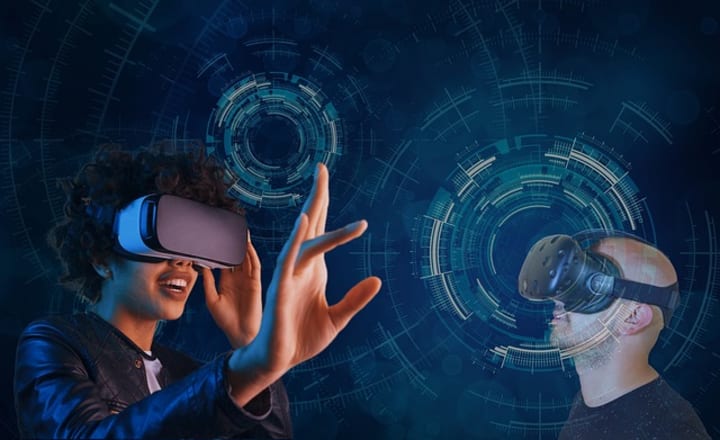
Gaming: VR and AR are already employed in games to provide gamers with a more realistic and immersive experience.
Training: VR and AR can be utilised for training in a variety of fields, including the military, manufacturing, and the healthcare sector. Through the use of virtual reality, students can practise handling risky or expensive situations in a secure setting.
Education: Virtual reality (VR) has the ability to completely transform the educational system. Students can be taken to other planets or historic locations and even engage in practical training in a virtual setting. Students may explore, experiment, and learn in a secure and engaging setting thanks to VR's immersive and interactive learning experience. Additionally, online courses may take on a new dimension if students from all around the world attend together. The technology is already used in training programmes for engineering, aviation, and medicine. Virtual reality has a very promising future in education and could introduce an entirely new approach to instruction.

Entertainment: The level of immersion and engagement provided by virtual reality has completely transformed the entertainment industry. In video games, virtual reality has immersed players in fully realised virtual worlds where they may interact with objects and other players physically, giving them a sensation of exhilaration and presence. VR gaming has brought the gaming experience to new heights, whether it's travelling to fantastical worlds, taking part in thrilling adventures, or competing in virtual sports. The immersive tales and experiences offered by VR have revolutionised storytelling in areas other than gaming. Viewers can actively participate in the narrative through VR films and interactive experiences, which offer a distinctive viewpoint and strong emotional resonance.
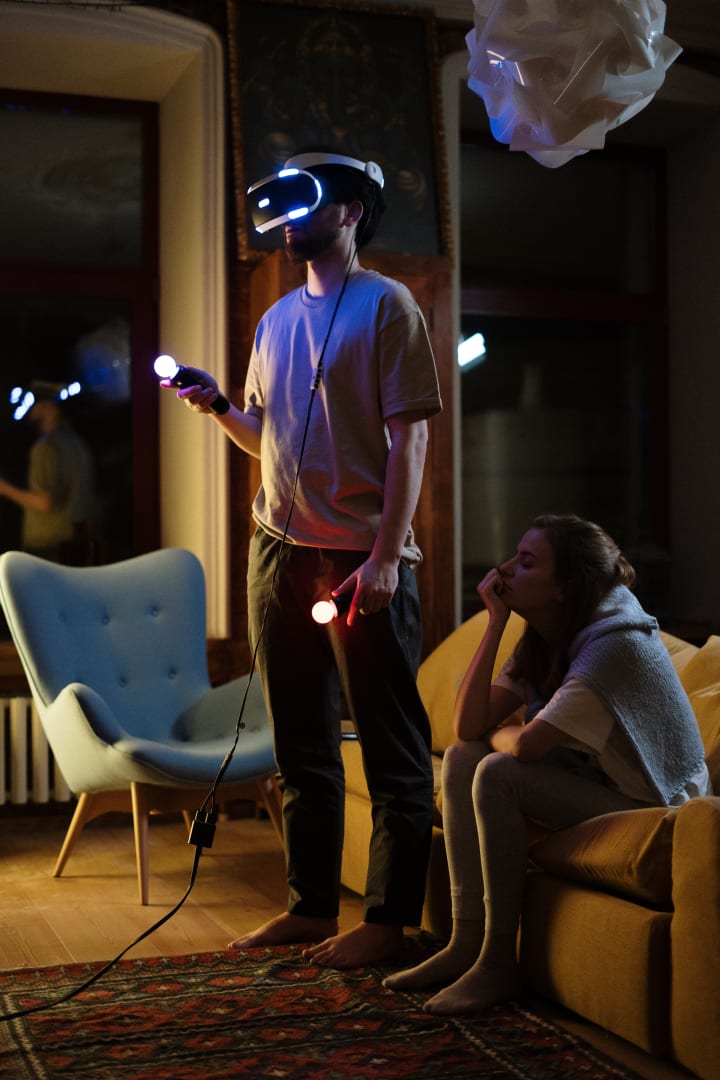
Challenges of VR and AR:
The potential of virtual reality (VR) and augmented reality (AR) is exciting, but there are a number of issues that must be resolved before these technologies can be fully utilised. Some of the main obstacles facing VR and AR are listed below:
1.Cost and Accessibility
2.Technical Limitations
3.Content Creation and Development
4.Ethical Considerations
5.Social Acceptance and Social Interaction
6.Health and Safety
7.Compatibility and Interoperability
8.Regulatory and Legal Challenges
Continuous technical development, improved accessibility, stakeholder cooperation, and the creation of ethical frameworks are all necessary for addressing these issues. The full potential of these immersive technologies will be unlocked as VR and AR develop and these obstacles are addressed.
Conclusion:
The immersive experiences provided by virtual reality (VR) and augmented reality (AR) create new opportunities in a variety of fields, including the arts and creative endeavours. These technologies allow artists and makers to experiment with new avenues of expression, from immersive narratives to interactive installations. It will be fascinating to see how VR and AR develop in the future, how they change society, and how they influence artistic experiences.
About the Creator
MJ
I'm MJ,and I'm professional trader,and also I'm passionate about writing engaging content for business. I specialize in topics like technology, social messages, travel and food.
Celestial Sparkle: The Heavenly White Sapphire Band
Introduction When it comes to captivating gemstones, white sapphire stands out as a truly unique and celestial sparkle. White sapphire has become a popular choice for jewelry enthusiasts seeking an elegant and timeless piece, as the gemstone is known for its exceptional beauty, durability, and versatility. In this article, we will explore the distinctive qualities that make white sapphires both unique and the perfect choice for a celestial sparkle in a band.
By Mark James7 days ago in Lifehack
The Dryads are Calling
They say the forest by Phoenix River sings. Perhaps it is just the wind howling through the leaves, or a particular birdsong. But Percy Fisher knows better; he knows what lies in those woods, and he knows that the forest sings of his demise.
By Leigh Hooperabout 14 hours ago in Fiction


Comments
There are no comments for this story
Be the first to respond and start the conversation.