
Understanding the Difference Between Organic and Paid Search
Here are explore the differences between organic and paid searches in digital marketing strategy and how each approach can benefit your business.

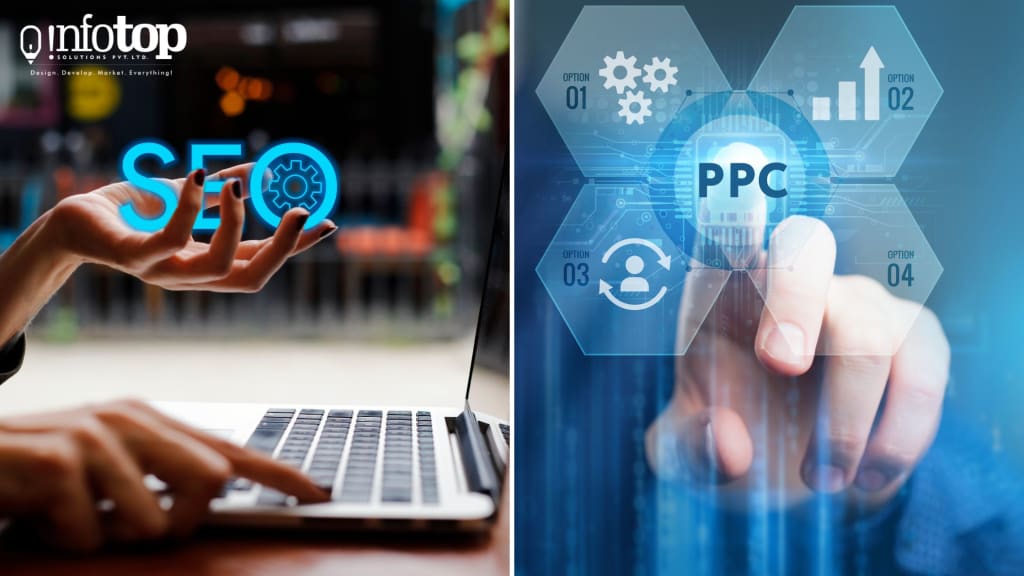
The internet has revolutionized how businesses market their products and services, and search engines have become essential for driving traffic and increasing online visibility. With millions of people using search engines daily to find information, businesses need to understand the differences between organic search and paid search. Organic search and paid search are two approaches to SEM, each with its benefits and drawbacks. By understanding these differences, businesses can decide which approach is best for their digital marketing strategy, goals and budget. In this blog post, we'll explore the differences between organic and paid searches and how each approach can benefit your business.
What is Organic Search?
Organic search refers to optimizing a website to improve its visibility and ranking on search engine results pages (SERPs) without paying for ad space. This is achieved through professional SEO services, such as keyword research, on-page optimization, link building, and content marketing. The organic search aims to increase a website's visibility and ranking on SERPs, leading to more traffic and conversions.
When users search for a particular keyword or phrase on a search engine, such as Google or Bing, the search engine crawls and indexes millions of web pages and ranks them based on relevance and authority. Organic search results are the listings that appear on the SERPs based on the search engine's algorithm and are not paid for by businesses.
Organic search is a long-term strategy that requires ongoing effort and investment in SEO techniques. The benefits of organic search include increased traffic, better user engagement, and improved brand credibility. However, it can take time to see results from organic search, and businesses need to be patient and persistent in their SEO efforts to achieve long-term success.
What is Paid Search?
Paid search, also known as pay-per-click (PPC) advertising, is a form of search engine marketing (SEM) that involves paying for ad space on search engine results pages (SERPs). With paid search, businesses bid on specific keywords and phrases relevant to their products or services, and their ads are displayed when users search for those keywords. The cost of the ad is based on the number of clicks it receives, hence the term "pay-per-click."
Paid search ads are typically displayed above or below the organic search results on the SERPs, and they are marked as "sponsored" or "ad" to differentiate them from organic search results. Paid search ads can appear on various search engines, including Google, Bing, and Yahoo.
However, paid search can be expensive, especially for competitive keywords, and businesses need to carefully monitor their campaigns to ensure they are getting a good return on investment (ROI). Key factors influencing the success of paid search campaigns include keyword selection, ad copy and design, targeting options, landing page quality, and bid strategy.
Overall, paid search is a valuable component of SEM, and businesses need to consider their goals, budget, and target audience when deciding on their advertising strategy. By combining organic and paid search, businesses can maximize their online visibility and effectively reach their target audience.
Advantages of Organic Search:
1. Cost-effective:
Organic search is a cost-effective way to drive traffic to a website. Unlike paid search, businesses do not have to pay for each click or impression, making it a more affordable option for long-term success.
2. Credibility and trust:
Users view organic search results as more credible and trustworthy than paid search ads. When a website appears on the first page of organic search results, it is viewed as a more authoritative and trustworthy source of information.
3. Long-term results:
Organic search results are based on the relevance and quality of a website's content, making them more sustainable in the long run. By consistently producing high-quality content and optimizing their website for SEO, businesses can maintain their search rankings and drive ongoing traffic to their website.
4. Better user experience:
Organic search results tend to offer a better user experience compared to paid search ads. Since organic search results are based on relevance and quality, they are more likely to provide users with the information they are looking for, leading to better user engagement and satisfaction.
5. Targeted traffic:
Organic search can drive highly targeted traffic to a website. By optimizing their website for specific keywords and phrases, businesses can attract users who are actively searching for products or services related to their industry.
Read More - Enhancing Brand Awareness Through Digital Marketing
Advantages of Paid Search:
1. Immediate visibility:
Paid search ads give businesses immediate visibility and exposure to their target audience. Unlike organic search, which can take time to achieve results, businesses can launch a paid search campaign and start driving traffic to their website within hours.
2. Targeted advertising:
Paid search ads allow businesses to target their advertising to specific geographic locations, demographics, and user behaviors. This makes it easier for businesses to reach their ideal audience and improve the ROI of their advertising campaigns.
3. Flexible budget:
Paid search campaigns can be tailored to fit any budget, making them accessible to businesses of all sizes. Businesses can set a daily or monthly budget for their ads and adjust their bids and targeting options to optimize their campaign performance.
4. Measurable results:
Paid search provides businesses with detailed performance metrics and analytics, allowing them to track the success of their campaigns in real time. Businesses can monitor their ad spend, clicks, impressions, and conversions and adjust their campaign strategy accordingly.
5. Competitive advantage:
Paid search can give businesses a competitive advantage in crowded industries or markets. By targeting specific keywords and phrases, businesses can outbid their competitors for ad space and attract more website traffic and customers.
Which Approach is Better for Your Business?
Ultimately, the best approach for your business depends on your goals, budget, and timeline. Organic search can be a great long-term investment, but seeing results takes time and effort. Paid search can provide immediate results but requires a larger budget and ongoing optimization to maintain success. Many businesses choose to use a combination of both approaches to maximize their online visibility and drive targeted traffic to their websites.
Conclusion -
In conclusion, both organic search and paid search are essential components of a successful SEM strategy. Organic search offers businesses a cost-effective and sustainable way to drive traffic to their website, build credibility and trust, and provide users with a better search experience. On the other hand, paid search provides businesses with immediate visibility, targeted advertising, flexible budgets, measurable results, and a competitive advantage in their industry or market.
When it comes to the top IT companies in India, both organic search and paid search can play a crucial role in their marketing strategy. By optimizing their website for SEO and producing high-quality content, top IT companies in India can achieve long-term success and improve their online visibility through organic search. At the same time, by using paid search to target specific keywords and phrases, they can attract highly targeted traffic to their website, improve their ROI, and gain a competitive advantage in the crowded IT industry in India.
About the Creator
Prisha Shah
SEO Executive at Infotop Solutions
Keep reading
More stories from Prisha Shah and writers in Lifehack and other communities.
How to Pick the Perfect Mobile App Development Company
Our everyday lives now revolve around mobile applications. From social media and entertainment to productivity and shopping, we rely on mobile apps to make our lives easier and more efficient. As a result, the demand for mobile app development services has grown exponentially in recent years, and the market is flooded with countless mobile app development companies.
By Prisha Shah3 years ago in Lifehack
“I Forgot How to Be Bored (And It Was Ruining My Focus)”
Let’s be real—my phone was low-key ruining my life. I’m gonna be 100% honest: it got pretty embarrassing. I reached a point where I couldn’t even wait for the coffee to brew without my hand "magically" grabbing my phone. It wasn’t even a choice anymore; it was just this mindless, zombie-like reflex. I’d spend an hour scrolling through absolute junk and then realize I didn't remember a single thing I saw. My focus? Completely trashed.
By Demiana Louis Boshra3 days ago in Lifehack
The AI Ecosystem in 2026
By 2026, the ecosystem of artificial intelligence will have matured beyond experimentation and early adoption. It is now a complex, interconnected infrastructure shaping industries, markets, institutions, and everyday life. AI is no longer a niche technology: it is a foundational layer of the digital economy, much like the internet itself. Understanding this ecosystem requires looking beyond models and algorithms to the roles, relationships, and platforms that make AI an essential and sustainable force.
By Sathish Kumar 5 days ago in Lifehack


Comments
There are no comments for this story
Be the first to respond and start the conversation.