
Top 5 Lifehacks That Will Transform Your Life
Simple Strategies for Smarter Living: Boost Productivity, Reduce Stress, and Build Better Habits Every Day

In a world buzzing with constant noise, distractions, and never-ending to-do lists, lifehacks serve as little shortcuts to help us do things smarter—not harder. These clever techniques aren't just gimmicks; when practiced regularly, they can optimize how we live, think, and work. Whether you're a student, a professional, or simply someone seeking balance, these top five lifehacks can make a meaningful difference.
1. The Two-Minute Rule – Tame Your Procrastination Beast
What it is: Originating from David Allen’s Getting Things Done, the Two-Minute Rule suggests: If a task will take less than two minutes to complete, do it immediately.
Why it works: Our brains often exaggerate how long small tasks will take. Replying to an email, washing a dish, taking out the trash—these things actually require minimal time. However, when postponed, they pile up and weigh heavily on our mental bandwidth.
Real-world applications:
Got a text from a friend? Reply now, not later.
Need to print a document? Don’t queue it in your mind.
Dirty mug on your desk? Wash it now instead of “when you get up.”
Bonus tip: For larger tasks, use the rule as a trigger to start. Telling yourself to just begin for “two minutes” often leads to momentum. Before you know it, 30 minutes have passed and you’re deep into the task.
Impact: Less clutter—both physically and mentally—and a stronger habit of action.
2. Time Blocking – Control Your Calendar, Control Your Life
What it is: Time blocking is the practice of planning out your day in advance by assigning specific time slots for specific tasks or types of work. It’s how Elon Musk manages his day in 5-minute increments, and how high-performers avoid wasting time.
Why it works: It combats the "reactive" mode—jumping from task to task based on emails or messages—by giving you intentionality. It also reveals how much time you actually have.
How to start:
Identify your most important daily activities (e.g., deep work, meetings, breaks).
Create blocks for each task in a digital calendar (Google Calendar is great).
Add buffers between tasks to avoid overlap or burnout.
Protect these blocks like appointments with yourself.
Example:
8:00–9:00: Morning routine + breakfast
9:00–11:00: Focused writing (deep work)
11:00–11:15: Email check
11:15–12:30: Team meeting
12:30–1:30: Lunch break
…and so on.
Impact: Reduces decision fatigue, increases focus, and gives a clear structure to your day.
3. The 80/20 Rule (Pareto Principle) – Focus on What Matters
What it is: The 80/20 Rule states that 80% of your outcomes come from 20% of your efforts. This principle can be applied to work, relationships, health, finances—you name it.
Why it works: Many of us waste time and energy on low-impact activities. By identifying and doubling down on the “vital few,” you get disproportionate results for the same or less effort.
How to use it:
Work: Which 20% of your tasks produce 80% of results? Focus there.
Learning: What 20% of the content will help you understand 80% of the subject?
Health: Which 20% of your habits (sleep, hydration, movement) impact 80% of your energy?
Example:
A freelancer notices that 2 out of 10 clients bring in most of the income. Focusing on those clients and similar ones rather than chasing small gigs increases revenue with less hustle.
Impact: Better productivity, smarter priorities, and a simplified life.
4. Digital Decluttering – Clean Your Tech, Clear Your Mind
What it is: Digital clutter is the overload of apps, files, tabs, and notifications that mentally exhaust us. Digital decluttering is the process of intentionally simplifying and organizing your tech.
Why it works: Our brains are wired to respond to novelty (every ping, ding, and alert), leading to distraction. A clean digital space mimics the calming effect of a tidy room.
Steps to declutter:
Inbox zero: Unsubscribe from unnecessary newsletters, archive old messages, and use labels.
App audit: Delete unused apps from your phone and computer.
Notifications: Turn off non-essential alerts (especially social media).
Desktop cleanup: Use folders or tools like Fences or Declutter to organize.
Browser tabs: Use OneTab or Tab Manager to group and save tabs.
Bonus: Set a weekly 10-minute session to “reset” your digital life.
Impact: Less stress, more focus, and a healthier relationship with technology.
5. Habit Stacking – Build Good Habits Easily
What it is: Coined by James Clear in Atomic Habits, habit stacking involves linking a new habit to an existing one. This makes the new habit easier to remember and more likely to stick.
Why it works: Habits form based on cues and routines. If you anchor a new behavior to an existing routine (e.g., brushing your teeth), you piggyback on a system your brain already trusts.
How to create a stack:
Use the formula: After [current habit], I will [new habit].
Examples:
After I brush my teeth, I will meditate for 2 minutes.
After I pour my morning coffee, I will read one page of a book.
After I log in for work, I will write down three tasks for the day.
Tips:
Start small—don’t over-ambitious.
Use cues that happen daily without fail.
Impact: Makes habit-building feel effortless and automatic over time.
Conclusion
Lifehacks aren’t magic—they’re tools. The real transformation happens when you commit to applying them consistently. Here's a quick recap of the top five:
The Two-Minute Rule – Eliminate procrastination one tiny task at a time.
Time Blocking – Create control and structure in your day.
The 80/20 Rule – Focus on high-impact actions.
Digital Decluttering – Simplify your tech, sharpen your mind.
Habit Stacking – Build powerful habits with minimal resistance.
Try implementing just one of these for a week, and observe the ripple effect it has on your productivity, peace of mind, and personal growth. Over time, stacking these lifehacks together creates a lifestyle that feels less chaotic and more intentional.
About the Creator
Keep reading
More stories from Anwar Jamil and writers in Lifehack and other communities.
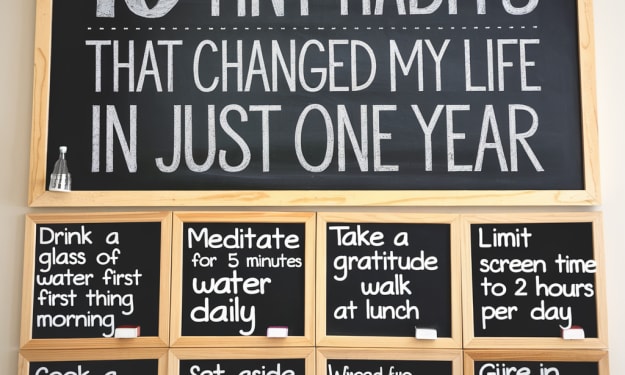
10 Tiny Habits That Changed My Life in Just One Year
Change doesn’t always require dramatic action. In fact, the most powerful transformations often begin with small, consistent habits that seem almost insignificant at first. Over the past year, I committed to adopting just a handful of tiny habits—simple routines and mindset shifts—that gradually rewired the way I live, think, and approach challenges. Here are the 10 tiny habits that truly changed my life over the past 12 months.
By Anwar Jamil8 months ago in Lifehack
Federated AI Discovery Engine
The Federated AI Discovery Engine is a computational framework designed to support biomarker discovery, evaluation, and validation in distributed data settings, where patient-level data are housed across multiple Trusted Research Environments (TREs) and cannot be centralised. The system enables consistent analytical workflows to be executed across institutions and geographies while preserving local data governance, security, and regulatory constraints.
By James @ Kode4 days ago in Lifehack


Comments
There are no comments for this story
Be the first to respond and start the conversation.