
The Ultimate Digital Detox Experiment
From Anxiety and $100/Month Bills to Clarity and a $10 Flip Phone.


1. The Breaking Point:
A Screen Time Report Was My Intervention
It was a Tuesday evening when my iPhone delivered its weekly verdict. “Screen Time: Up 37%,” it chirped, with a bright bar graph indicating I’d spent 27 hours that week idly scrolling. That’s a part-time job. But the real gut-punch was the breakdown: 9 hours on a social media platform I professed to dislike, 45 minutes a day merely picking up my phone without thinking, and an average of 214 daily alerts.
I gazed about my own home room. My buddy was scrolling. I was scrolling. The TV was on, ignored. We were in a hushed, linked loneliness. My brain continually felt full but empty—a buzzing, uneasy static. My monthly phone cost, for this privilege, was $97.84. I was paying a hundred dollars a month to be distracted, agitated, and marketed to.
That’s when I took the daring choice. Not a digital detox. Not an app blocker. A full-scale desertion. For 30 days, I would keep my smartphone in a drawer and live in 2025 with a gadget from 2005: a “dumb phone.”
2. Choosing My "Dumb" Companion:
The Surprisingly Hip World of Minimalist Phones
This wasn’t simply about locating an old flip phone. A new market has evolved for the purposefully detached. After study, I had three contenders:
The Light Phone II ($299): The “premium” minimalist phone. E-ink screen, GPS, a podcast tool, and a stark, elegant design. It murmurs, “I am a thoughtful person.”
The Nokia 2720 Flip ($89): The contemporary classic. 4G, Google Maps via KaiOS, WhatsApp. A gateway dumb phone.
The Punkt MP02 ($349): The ultra-minimalist. Calls, messages, and a hotkey for signal checking. It’s a tool, period.
I picked the Nokia 2720 Flip. Why? The Light Phone seemed like purchasing a new ideology; the Nokia felt like rediscovering an old friend. The tactile flip to answer and finish a call delivered a gratifying, definite punctuation that a screen swipe never could.
The changeover was logistically daunting. I printed out maps. I wrote down critical numbers. I assured pals I’d be “hard to reach.” I felt like I was ready for a walk into the woods.
3. Week 1:
Withdrawal Symptoms Are a Real, Physical Thing
The first 72 hours were a lesson in my own fitness.
Phantom Vibration Syndrome: My leg buzzed continually. My brain, primed for a decade to anticipate a notification reward, was firing on empty.
The Reflexive Pocket Check: I would take out the Nokia 30 times a day, open it, and gaze at the empty screen. The motion was sheer muscle memory, devoid of aim.
The Boredom Panic: Waiting in line, waiting on the metro, in a toilet stall—these little holes of time that my smartphone had smoothly filled suddenly gaped open. I had to just… be. It was terribly unpleasant. My mind raced with worried ideas I’d been suppressing with digital noise.
Social FOMO: Group talks relocated without me. Plans were made on Instagram DMs I couldn’t access. I felt a true, lonely FOMO—not for the activities, but for the connection.
By day 7, the anxiousness peaked. I was irritated and detached, and my brain felt like it was itching. I nearly stopped. This wasn’t tranquility; it was agonizing stillness.
4. Week 2-3:
The Cracks of Light (and the Gifts)
Then, around day 10, the static started to clear.
The Return of the Span: I read three novels. Not articles, not summaries—books. My capacity to concentrate on a single story for hours, which I thought I’d lost in college, began sneaking back.
The Art of Noticing: I began noticing things on my way to work—the architecture I’d ignored, the changing plants, and people’s expressions. The world became high-definition again.
Talks Had Beginnings, Middles, and Ends: With no phone to peek at, talks didn’t fragment. They deepened. I listened better. I recalled what others said.
The Liberation of "Unavailability": When you can’t check email, you stop caring about it. The job tension that used to leak into my evenings dissipated at 5 PM. I was actually physically off the clock.
The greatest surprise? I grew bored. And boredom becomes the fertile environment for invention. I began sketching awful sketches. I wrote in a journal. I simply sat and pondered. My brain, emancipated from the sensory treadmill, began inventing its own amusement.
5. The Financial Shock:
Where Was My Money Going?
At the end of the month, I did the math. My smartphone life cost me:
Verizon Unlimited Plan: $85/month
App Subscriptions (cloud storage, music, "productivity" apps): ~$12/month
Impulse Buys caused by advertisements or targeted Instagram posts (tracked via bank statement): ~$45/month
Total: ~$142/month
My stupid phone life:
Mint Mobile Prepaid Plan (4GB, more than enough): $15/month
Impulse Buys: $0 (no adverts to trigger them)
App Subscriptions: $0
Total: $15/month
I was saving $127 a month—over $1,500 a year—by being less connected. This wasn't simply mental clarity; it was a financial rise.
6. The Honest Inconveniences:
What I Truly Missed
It wasn’t all zen and savings.
Some grievances were real:
Maps: Being lost is a tremendous humility. I was late. I walked in circles. Printed instructions are a cruel joke in a city with one-way streets.
Mobile Banking/2FA: A massive, everyday annoyance. Every login requires forethought.
Music/Podcasts On-the-Go: The stillness was lovely, but sometimes you simply want a podcast on a long stroll.
Quick Information: “What was that actor’s name?” “What’s the recipe for this?” That quick access to the world’s information was a serious loss.
7. The 30-Day Verdict:
My New Hybrid Reality
I didn’t go back to my former life.
I developed a new one.
The smartphone came out of the drawer, but it was neutered. I removed every social media and news app. Notifications are disabled for everything except SMS and calls. It’s now a gadget on my desk: a camera, a GPS for when I’m actually lost, and a music player for road trips.
The Nokia flip phone is my everyday driver. It’s in my pocket. It calls; it texts. That’s it.
My head feels… quieter. More mine. The persistent low-grade anxiousness is gone. My attention span is healing. I have around 2 hours of regained time every single day.
8. Your 7-Day
"Dumb Phone Challenge" (Without Buying Anything)
You don’t need a new phone to enjoy this freedom. Try this:
Delete ONE social media app for 7 days. (Yes, the one you use most.)
Turn off ALL non-human alerts (no apps, just texts/calls).
Buy an inexpensive alarm clock. Charge your phone outside your bedroom.
Carry a pocket notebook. Write down ideas, to-dos, and stuff to check up on later.
For one weekend, leave your phone at home when you go out. Feel the terror, then the tranquility.
The objective isn’t to live in 2005. The idea is to have 2025 work for you, not for the attention economy. You don’t have to leave the internet. But you can, and should, terminate it as your personal manager.
The most powerful function I found wasn’t at a phone shop. It was in my own mind: the power to be bored, to remain motionless, and to be present. And that feature, it turns out, is priceless.
About the Creator
abualyaanart
I write thoughtful, experience-driven stories about technology, digital life, and how modern tools quietly shape the way we think, work, and live.
I believe good technology should support life
Abualyaanart
Keep reading
More stories from abualyaanart and writers in Lifehack and other communities.
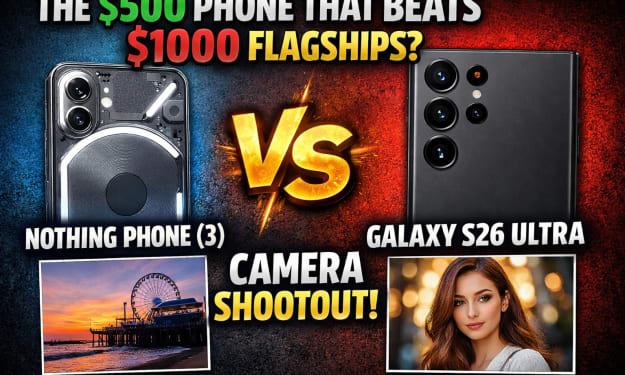
The $500 Phone That Beats $1000 Flagships?
The $500 Phone That Beats $1000 Flagships? Nothing Phone (3) vs Samsung Galaxy S26 Ultra Camera Shootout We live in a golden age of smartphone paradoxes. On one shelf, a device costing more than a month's rent promises "revolutionary computational photography." On another, a phone half its price boasts "flagship-level performance." As consumers, we're conditioned to believe that in tech, you get what you pay for. More money equals more megapixels, more processing, and more better. But what if that equation is breaking down? What if a mid-ranger from a rebellious brand like Nothing, with its transparent back and glyph lights, could genuinely outshoot a titan like the Samsung Galaxy S26 Ultra in the one area that matters most to most people: everyday photography?
By abualyaanart11 days ago in Lifehack
Rent an Apartment or Co-Living?
Introduction: The Modern Dilemma In today’s housing landscape, the decision between renting a traditional apartment and opting for co-living has become a major topic for young professionals, students, and digital nomads alike. Rising rents, changing work dynamics, and the desire for community have all reshaped what “home” means. But which is better for you? Let’s break it down from financial, social, and lifestyle perspectives.
By HazelnutLattea4 days ago in Lifehack


Comments
There are no comments for this story
Be the first to respond and start the conversation.