
The Rise of AI-Generated Content: Balancing Automation and Authenticity
Preserving the Human Voice in a Sea of Synthetic Narratives
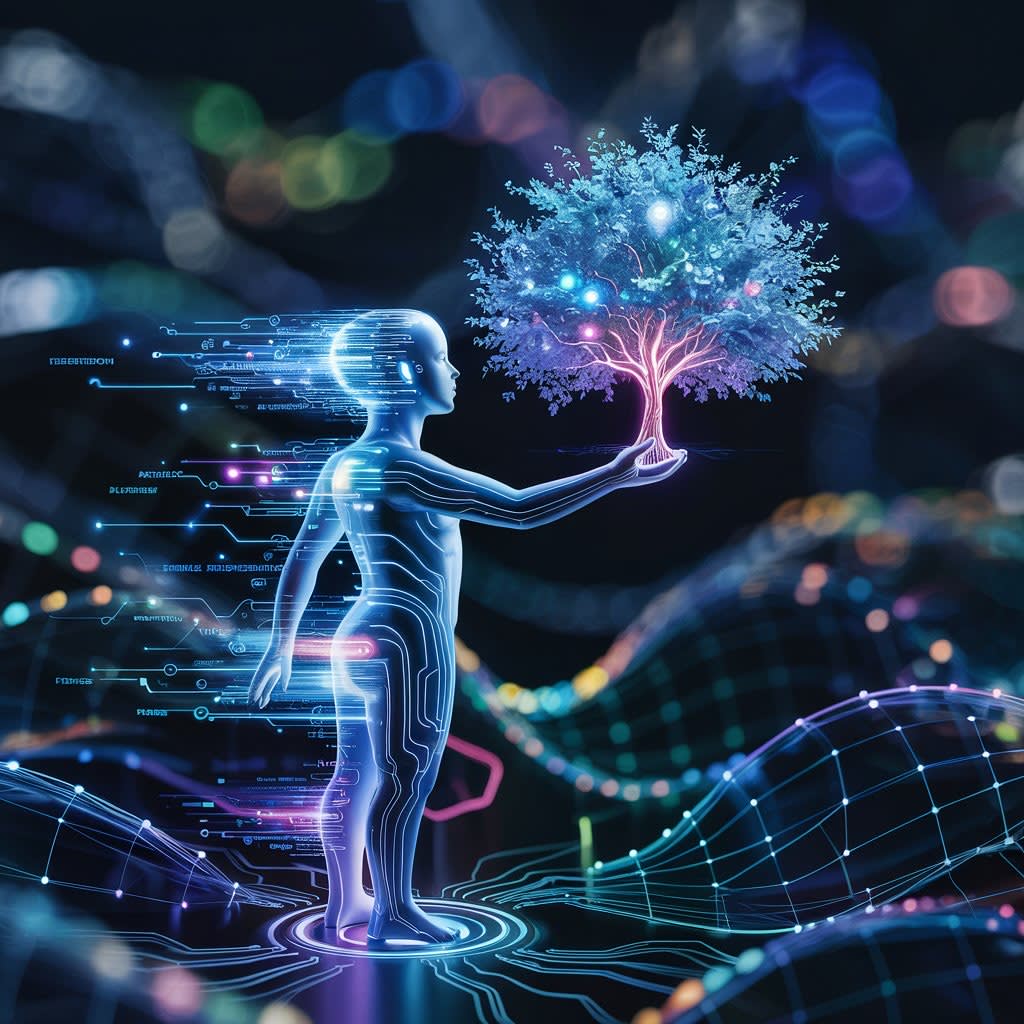
We’re living in a time where words can be summoned with a click, art can be generated in seconds, and songs can be composed by code. Artificial Intelligence (AI) is transforming creativity—not tomorrow, not someday, but right now.
From copywriting and journalism to poetry and painting, AI has become a co-author in the stories we tell and consume. Tools like ChatGPT, DALL·E, and Midjourney have empowered creators of all backgrounds to produce faster, better, and sometimes… even weirder content than ever before. But as machines take on more creative roles, a crucial question rises from the digital noise: Can authenticity survive in the age of automation?
The AI Boom: A Double-Edged Pen
The explosion of AI tools over the past few years has changed the creative landscape. What once took hours of writing or sketching can now be completed in minutes. For some, this is liberating. AI has opened doors for those who may not have had the tools, time, or training to create. You no longer need to be a graphic designer to design logos, or a coder to build a chatbot.
Social media is flooded with AI-written essays, AI-edited photos, and AI-generated music. Some of it is impressive. Some of it… not so much. But the point is—it’s everywhere.
Writers, marketers, artists, and even educators are increasingly relying on AI to meet deadlines and boost productivity. According to recent surveys, over 60% of content creators admit to using AI in some form for ideation, drafting, or editing.
But amidst the buzz and convenience, there’s an undercurrent of concern: Is creativity becoming commodified?
The Creative Dilemma: Man vs. Machine?
Creativity is deeply human. It draws from experience, emotion, and context—things machines don’t inherently possess. While AI can analyze patterns and mimic styles, it doesn’t truly “understand” what it’s creating. It doesn’t feel heartbreak when writing a breakup song. It doesn’t remember the quiet morning sunlight when generating a poem. It can only simulate what it’s learned from humans who did.
This has sparked a growing tension in the creative world. Some argue that AI threatens the authenticity of art, reducing it to an algorithmic echo chamber. Others believe it’s simply a tool—a modern-day brush, not the artist’s hand.
Let’s be honest: many of us have read an AI-written article that felt oddly hollow. It had structure. It had grammar. It had keywords. But it didn’t have soul.
That’s the heart of the dilemma. We’re trading speed for soul. Scale for subtlety. And in the process, some fear we’re losing what makes stories matter in the first place.
The Hybrid Future: AI as a Creative Partner
Here’s the twist: it doesn’t have to be an either/or scenario.
The smartest creators today aren’t avoiding AI—they’re adapting to it. They’re learning how to collaborate with the machine instead of competing against it. Think of it like a co-pilot: helpful, efficient, but still relying on your direction.
Writers can use AI to overcome writer’s block, brainstorm titles, or restructure drafts—but add their own voice, emotion, and experiences to the final product. Artists can use AI to generate moodboards or experiment with new styles—then build upon those foundations with their own hands. Musicians can sample AI-generated melodies and remix them into something raw and real.
This approach—what some call “human-in-the-loop” creation—is where the real magic happens. It’s not about outsourcing creativity. It’s about supercharging it.
The hybrid model acknowledges that AI can handle the repetitive, mechanical parts of creation, while humans bring nuance, context, and emotion to the table.
Authenticity as the New Currency
As AI-generated content floods the internet, one thing becomes clearer by the day: real stories stand out.
Audiences crave authenticity now more than ever. They want to hear your voice, not a polished algorithm’s best guess at what it should sound like. In a world where anyone can fake a review, deepfake a video, or auto-generate an article, truth has become a precious commodity.
That’s why personal stories, vulnerable posts, and human messiness are thriving on platforms like Medium, TikTok, and yes—Vocal Media. It’s not about perfection. It’s about connection.
If you’re a writer, creator, or artist navigating this AI-assisted world, here are a few ways to stay grounded:
• Be Transparent: Let your audience know if you used AI. You don’t have to give a full breakdown, but honesty builds trust.
• Add Personal Layers: Share anecdotes, memories, or opinions that only you could express.
• Don’t Fear Imperfection: Sometimes, your typos, tangents, or tone are what make your voice unique.
• Stay Curious: Learn how AI works, but stay anchored in what makes you irreplaceable—your lived experience.
The Bottom Line
AI isn’t the villain in our story. It’s a tool—a powerful one—that can either enhance our creativity or dilute it, depending on how we use it. The key isn’t to fight the future. It’s to shape it.
Because in a world of auto-generated noise, authenticity isn’t just important. It’s revolutionary.
The creators who will thrive in this new era are the ones who blend machine efficiency with human depth. Who know when to lean on AI and when to step forward with their own truth. Who embrace the tools of tomorrow without losing the voice of today.
And that voice—your voice—is something no machine can ever truly replicate.
About the Creator
The Duelist
The rays of a dying red sun flashed against the onrushing blade. The grey beards say the key to dueling lies in size, speed, reach, righteous fury, whatever the person in front of them pays them to say. Matteo knew better than any it was none of these and had an undefeated record on these sands to prove it.
By Matthew J. Fromm3 days ago in Fiction



Comments
There are no comments for this story
Be the first to respond and start the conversation.