
The Galaxy Z TriFold Costs $2,500, But Samsung Might Still Be Losing Money
Why Samsung’s most ambitious foldable may be more about long-term dominance than short-term profit

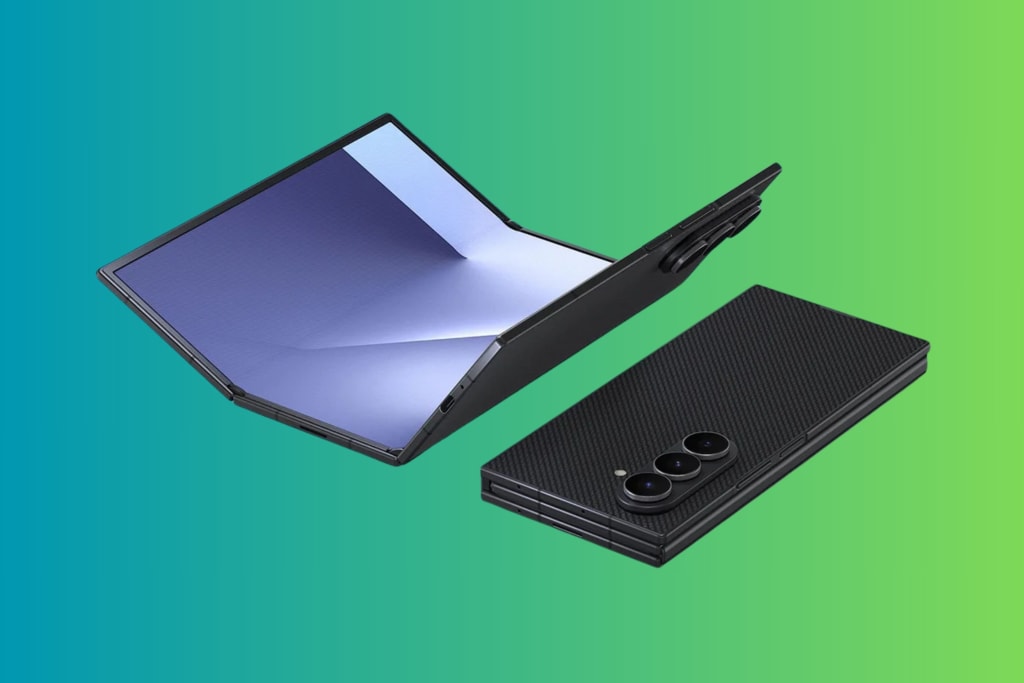
Why Samsung’s most ambitious foldable may be more about long-term dominance than short-term profit
At first appearance, a $2,500 smartphone seems like a certain victory for any maker. That pricing positions the Galaxy Z TriFold considerably beyond typical flagships and even above most foldables. Logic indicates that margins should be robust, maybe even excessive. But the truth behind Samsung’s tri-fold experiment offers a different story—one where prestige, long-term positioning, and technology signaling matter more than short-term profit.
Despite the eye-watering price tag, there are solid grounds to suspect Samsung may really be losing money on every Galaxy Z TriFold it sells.
A Device Built to Prove a Point, Not to Sell Millions
The Galaxy Z TriFold is not a mass-market phone. It was never meant to be. Everything about it—from restricted availability to subdued marketing—signals that Samsung considers it as a technical statement rather than a commercial workhorse.
Tri-fold gadgets exist at the bleeding edge of mobile hardware. Unlike normal foldables that bend once, a tri-fold must tolerate two folding points, each demanding exceptional accuracy. The hinges must stay thin but sturdy, the display layers must resist repetitive stress, and the internal components must be separated and dispersed in ways conventional phones never need.
That level of complexity alone drastically inflates prices before the item ever enters manufacturing.
Why the Bill of Materials Is So High
A phone’s selling price is not directly connected to its manufacturing cost. In fact, for experimental devices like the TriFold, the difference between cost and price may shrink—or even flip.
1. The Tri-Fold Display Problem
The display is the most costly component in any foldable phone, and a tri-fold display is significantly harder to build. Yield rates are lower, so many panels fail quality checks before ever becoming useful. Each failure still costs money.
Samsung Display may be an internal supplier, but it does not imply the panels are “free.” Accounting still assigns actual prices to those components, and early-generation screens are seldom inexpensive.
2. Dual Hinges, Double the Risk
A single folding hinge already tests technical limitations. The TriFold needs two separate hinge systems, each of which must feel smooth, remain stiff while open, and sustain tens of thousands of folds. The tolerances here are severe. Any vulnerability leads to warranty claims, refunds, and reputational harm.
Those hinges are not off-the-shelf items. They are specialized, low-volume components with high tooling and R&D expenses.
3. Fragmented Internal Design
Battery cells, antennas, thermal systems, and structural frames all need to be separated among many segments. That fragmentation increases assembly time and complexity, pushing increasing labor and failure risk.
In short: this phone is costly to create in ways that price alone cannot completely offset.
Small Production Runs Kill Economies of Scale
Samsung leads the smartphone industry because it sells hundreds of millions of handsets yearly. Scale is its greatest weapon. The Galaxy Z TriFold tosses that edge away.
Production numbers for the TriFold are expected to be highly limited—likely in the tens of thousands, not millions. At that scale:
Suppliers do not give considerable discounts
Fixed R&D expenses are dispersed among relatively few units
Manufacturing inefficiencies impact harder
Any defect rate becomes disproportionately costly
This is why experimental gear typically loses money even when priced aggressively.
Loss-Leader Strategy: A Familiar Samsung Playbook
Samsung has done this previously.
The first Galaxy Fold was severely criticized, delayed, and very definitely unprofitable in its initial iteration. Yet it set the ground for today’s foldable industry, where Samsung now possesses brand authority and design supremacy.
The Galaxy Z TriFold fits that similar pattern. It exists to answer a strategic question:
“Can Samsung do this before anyone else?”
Not: “Will this sell well?”
By introducing a tri-fold device—even in limited quantities—Samsung sends a clear message to rivals, investors, and partners: it still owns the bleeding edge of foldable technology.
Competitive Pressure Is a Hidden Cost
The tri-fold form factor is not evolving in a vacuum. Chinese manufacturers, notably Huawei, have been actively pushing foldable innovation despite restrictions and supply concerns.
For Samsung, slipping behind in foldables would be hazardous. Even if the TriFold loses money now, losing technical leadership would cost significantly more tomorrow.
Seen through that prism, any per-unit loss becomes an investment—one aimed to safeguard Samsung’s place at the top of the foldable hierarchy.
Pricing Optics vs. Pricing Reality
A $2,500 price tag offers an image of luxury margins, but pricing is also bound by perception.
Samsung cannot sell the TriFold at $3,000 or $3,500 without sparking outrage, mockery, and limited adoption—even among fans. The present price already challenges customer tolerance.
This suggests Samsung likely priced the TriFold at the highest psychologically acceptable amount, not at the level necessary for healthy profits.
What Samsung Gains Even If It Loses Money
If the Galaxy Z TriFold never becomes lucrative, Samsung still benefits in other ways:
Engineering knowledge that fuels future foldables
Brand domination in advanced form factors
Supply chain leverage as yields increase
Media attention that encourages innovation leadership
Patent and design advantages competition must now pursue
Those advantages accrue over time and ultimately convert into profit—just not immediately via this gadget.
The Real Question Isn’t Profit—It’s Timing.
The Galaxy Z TriFold feels early because it is early. The technology requires time to evolve, prices need to reduce, and customer use cases need to crystallize.
Samsung knows this.
The corporation is not counting on the TriFold to carry revenue. It is wagering that being first counts more than being profitable—at least for now.
And in the smartphone sector, history shows Samsung is probably correct.
Concluding Remarks
The Galaxy Z TriFold is a unique type of product: one that seems opulent on the surface yet is very strategic below. Its $2,500 price tag may startle shoppers, but it does not ensure profit. In reality, all evidence points to Samsung accepting losses in return for long-term control over the future of foldable devices.
This is not a phone developed to maximize profits.
It is a phone meant to define what happens next.
And sometimes, losing money is precisely how market leaders remain ahead.
This analysis is based on industry trends and publicly available information. Actual production costs and margins may vary.

About the Creator
abualyaanart
I write thoughtful, experience-driven stories about technology, digital life, and how modern tools quietly shape the way we think, work, and live.
I believe good technology should support life
Abualyaanart
Keep reading
More stories from abualyaanart and writers in Lifehack and other communities.
Nothing OS 4.0 Arrives on CMF Phones With Android 16 and Smarter Features
Nothing OS 4.0 Arrives on CMF Phones, Bringing Android 16 and Smarter Features At first appearance, Nothing OS 4.0 doesn’t seem like a huge update. There’s no huge redesign or eye-catching feature meant to draw attention. But spend a little time with it, and it becomes obvious that this improvement is about something more important—how CMF phones function in everyday use.
By abualyaanart3 months ago in Lifehack
Top 10 Side Effects of Chia Seeds You Should Know
Chia seeds have gained huge popularity in recent years as a superfood. From smoothies and puddings to salads and oatmeal, these tiny seeds are often praised for their high fiber, omega-3 fatty acids, and protein content. Many people include them in their daily diet to support weight loss, digestion, and overall health.
By Veronica Bennett6 days ago in Lifehack
How to Navigate Difficult Workplace Relationships
Numerous studies on job satisfaction show that interpersonal relationships are the number one reason people feel unhappy at work and consider handing in their notice. I was curious to see if this held true for my community, so I ran an Instagram poll asking: "What would be your primary reason for quitting?" The overwhelming winner? Interpersonal relationships.
By Eleanor Annaya day ago in Lifehack
My First Time Skiing and I Got Lost, Alone, in the French Alps
Looking back, I can trace some of my life’s biggest adventures to a simple action from my sister. She’d introduced me to Tommy (a very long time ago), a colleague of hers, who had overshared his penchant for Italian-looking women, and I ticked that box.
By Chantal Christie Weiss3 days ago in Humans



Comments
There are no comments for this story
Be the first to respond and start the conversation.