
The Elements of Crafting
My projects as a neuroscientist and artist!

ℕ𝕖𝕦𝕣𝕠𝕤𝕔𝕚𝕖𝕟𝕔𝕖 𝕒𝕟𝕕 𝔸𝕣𝕥
Tucked away in the dusty back corner of my university's library, you would've most likely seen a grudge-like woman glued to a book. That creature in the library was me, and it was where I spent the last 6 years working to obtain a B.S in Neuroscience.
You might be wondering, "okay, what does a neuroscientist do?"
The study of neursocience focuses on the structure of the nervous system and our brains. This includes how they communicate with each other and interact with the surrounding environment. It all comes down to those biological, chemical and psychological elements that comprise our brain and neuron activity!
Due to this long journey in my undergraduate years, I have seen the highs and lows that college stress brings for STEM majors. Working long hours at the laboratory, or having homework, meant that I had to put art on the back burner. Even though this was a treasured hobby, I was having a hard time balancing my personal life with academics. That is, until I realized that art and science actually need each other in order to function!
Intertwining these two into my weekly routine was a must for improving my well-being and reducing stress levels. Even when I thought I wouldn't have the time to start on an art project, I decided to use elements of science in my work! That way, I could learn the basis of neuroscience studies while doing something I absolutely loved.
Humans have an immense capacity for creativity, and the brain responds positively when we work on arts and crafts! During art sessions, the frontal lobe, cortex, and hypothalamus are just some of the main systems that become activated in the brain. Thanks to these neural components, the benefits of making art are linked to increased blood flow, focus, balancing our emotional states, and improving our motivation.
After my daily work and school schedule in 2021, I had 4 main projects going on that I still manage post-graduation! Using my trusty silver scissors and some common art supplies, I was able to create some distinct science-related pieces!
𝕄𝕒𝕥𝕖𝕣𝕚𝕒𝕝𝕤

The supplies I used for each project slightly differed. So, I will break it down into specific lists according to my 4 elements of art projects~
Earth: Cards
- cardstock
- glue sticks
- scissors
- black markers
- printed images of your choice!
Air: Collages
- magazines- beauty, health, and fashion themed!
- scissors for cutting out images
- craft bond or gluesticks
- ruler for precise cutting
- glitter glue
- heavy weight paper
Water:Dioramas
- chunky 4x4 white canvas as a base
- scissors for cutting plants, paper pieces or small parts
- flower bouquet, grass from backyard, trees, and fake moss
- paint
- hot glue gun
Fire:Vision Boards
- printed images (from computer or magazine) that remind you of your goals, aspirations, and desires!
- foam board, cardboard, or paper as backing
- scissors to cut images
- glue sticks
ℙ𝕖𝕣𝕤𝕠𝕟𝕒𝕝 ℙ𝕣𝕠𝕛𝕖𝕔𝕥𝕤

Project: Brain Slides and Collaging
When I worked on brain slice imaging, I got to see the awesome colors of protein stains on the computer. For analzying the subventricular zone of a rat's brain, our microscope slides would look something like this:
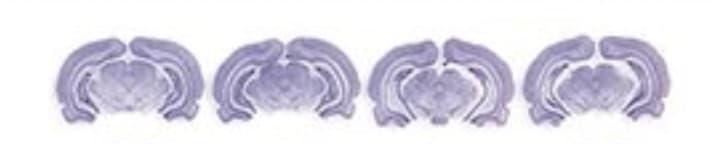
This art element is listed under air, because there are so many design options for this type of collage! I loved the way the brain slicing appeared on my team's real slides for stereochemistry analysis, so I wanted to recreate that in my own artwork! For this project, I decided to make a collage of brain layers. I made it colorful, cutting and pasting from various magazines, while also reflecting on each part of the brain!
Here is a snapshots of the work!


Project: Scientific Decor for Journal Entries
Waterfall cards are awesome additons to any bullet journal or notebook for studying! They expand out, using sturdy cardboard like paper or cardstock, and give your notes a unique touch! With every image used, they pop out at you when pulling on the main strand! For this particular art element, I figured that earth best aligned with the flow of this project. It was predictable, sturdy, and filled with facts I printed out for my notes!
In order to make it more appealing to the eye, I added some designs and used my scissors to cut some interesting shapes! To begin my art, I watched this tutorial:
Here is my result:

Project: Plant Life through Dioramas
Although plants aren't directly connected to topics of neuro, their biological functions are actually amazing! For this project, I used flowers from a fading bouquet I had received to recreate a mini forest. This was a great decor piece to my desk, and was very calming to look at! In order to make the scene more authentic, I added in some grass, fake moss, and small trees I bought at the craft store. Wrapping it all up, I just hot glued all these pieces together in the style I wanted.
Water is the element of choice for this art project, because there are many directions that your creativity can flow! You can make a tiny ecosystem right in your own bedroom or study space. Not only is it pretty, but the process of completing it helps to chill out a racing mind!
Here is my magical forest of plants:


Project: Setting Visual Goals for the Future
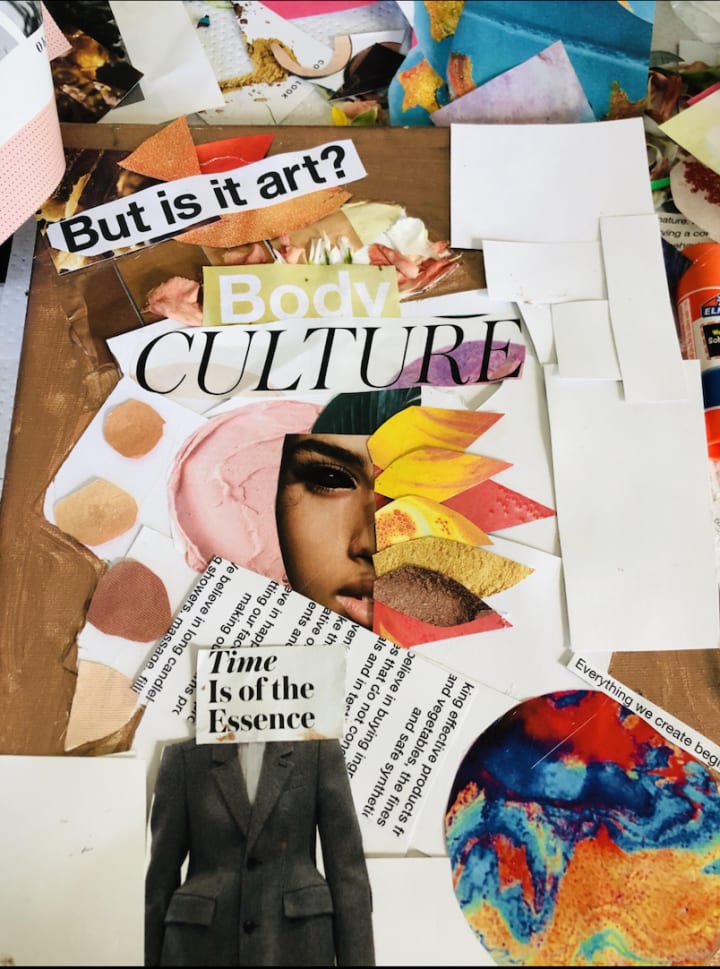
I don't have a crystal ball that can look directly into my future plans 5 years from now. However, I do have my own insight and goals for my accomplishments! Whenever I felt like giving up in college or that I was being weighed down by my mental disorders, I glued images of positive reinforcement on a board of goals. For example, cutting images of white lab coats, a college degree, self-confidence, beauty, etc. can be added to a vision board! The base of the board itself can be anything you want, as long as it is sturdy enough to hang up on a wall!
I chose the element of fire for this art project, because there is a source of energy within everyone that grows when speaking your goals into action.
Here is my mini vision board: I included my own interpretative thoughts on body image, culture, and defining my art!
About the Creator
Federated AI Discovery Engine
The Federated AI Discovery Engine is a computational framework designed to support biomarker discovery, evaluation, and validation in distributed data settings, where patient-level data are housed across multiple Trusted Research Environments (TREs) and cannot be centralised. The system enables consistent analytical workflows to be executed across institutions and geographies while preserving local data governance, security, and regulatory constraints.
By James @ Kode6 days ago in Lifehack


Comments