
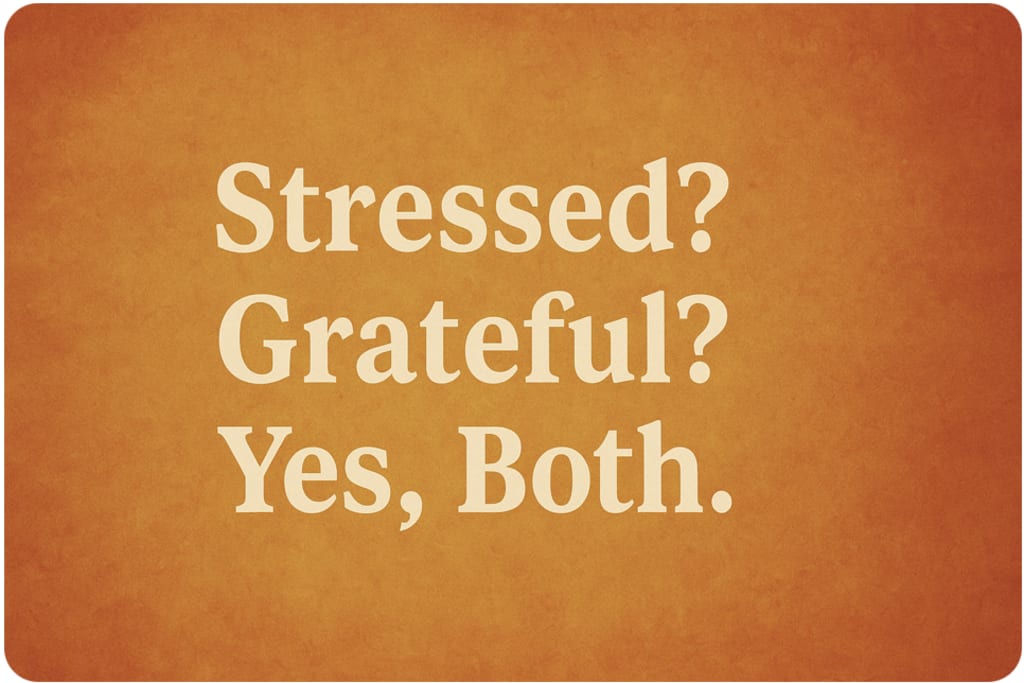
Stressed? Grateful? Yes, Both.
Grateful doesn't mean perfect.

Life doesn't always follow a neat script. It's unpredictable, complicated, and often messy. There are days when everything clicks and others when the world's weight feels too much to carry. During these more challenging moments, gratitude might seem out of reach, even misplaced. But it's precisely at these times that gratitude becomes not just helpful but essential.
Gratitude during hardship is not about denying reality or pretending everything is okay. It's about reclaiming agency over your mindset. It's the choice to find something, however small, to be thankful for, even amid difficulty. As the saying goes, "Gratitude isn't a denial of pain; it's a refusal to let pain define you." This empowerment is yours to claim.
Why Gratitude in Hard Times Matters
Research shows that gratitude strengthens psychological resilience. It provides a buffer against despair and helps you hold space for hope, even when things are uncertain. Practising gratitude doesn't mean ignoring your emotions or sugar-coating challenges. Instead, it allows you to acknowledge what's complex while affirming what's still good. It balances your emotional landscape and reminds you that setbacks do not erase your worth or potential.
Let's explore a few real-life situations and how gratitude can gently shift your perspective:
- Lost Your Job? It's okay to feel upset, uncertain, and scared. These emotions are valid. But once you've acknowledged them, gratitude can help you focus on your inner strengths. Think about your resilience, your resourcefulness, the support of people around you, or even the chance to start something new. Gratitude might sound like, "I'm grateful I have time to reflect on what I want next."
- Feeling Unwell? Illness can make you feel powerless. But practising gratitude doesn't require you to pretend you're fine. Instead, it invites you to appreciate moments of rest, the warmth of a blanket, or the simple kindness of someone checking in on you. Even the body's natural ability to heal, however slow, can be a point of gratitude.
- Stuck in Traffic? Frustration builds easily in these situations. But you can use this pause to practice intentional breathing, listen to your favourite podcast, or enjoy a moment of stillness on an otherwise hectic day. This reframe helps shift your mood from irritation to presence.
- Argued with a Friend? Conflict is uncomfortable, but can also be an opportunity. If handled with care, it can deepen connection and mutual understanding. After the emotions settle, gratitude might look like, "I'm thankful we were honest with each other. That takes courage and care."
These examples don't erase the struggles, but they allow light in. Gratitude bridges where you are and where you want to go emotionally. It softens the edges of hardship and creates a space for healing and growth. It's a beacon of hope in the darkest of times.
The Science Behind the Strength
Psychologists have long studied the relationship between gratitude and emotional resilience. People who regularly practice gratitude are more likely to bounce back from setbacks and maintain a stable sense of self-worth. They are less likely to spiral into negative thought patterns and more capable of finding purpose in adversity. This mindset doesn't come naturally to everyone but can be learned, cultivated, and strengthened over time.
Learning the Skills That Support Gratitude
Sometimes, facing life's difficulties with grace requires more than just perspective. You may need new tools and emotional skills that help you manage stress, regulate your thoughts, and tune into the present moment. That's where mindfulness comes in.
Mindfulness doesn't promise to take the pain away, but teaches you how to sit with it without letting it take over. It gives you space to observe your emotions rather than be overwhelmed by them. And it opens the door to recognising gratitude, even in tough times. With mindfulness, you're not just surviving; you're thriving.
Our Beginner's Guide to Mindful Meditation is a gentle, practical entry point if you're ready to explore this path. In just five minutes daily, you can calm your nervous system, quiet your thoughts, and cultivate inner peace. These moments of calm allow gratitude to grow, even in places you might not expect it to.
Final Reflection
Gratitude isn't just for sunny days—it's for rainy ones, too. It's a choice to look beyond the storm clouds and acknowledge the strength it takes to keep going. It reminds you that your story is still unfolding and that there is value, growth, and unexpected beauty even in difficulty.
When life gets messy, let gratitude be your anchor. It won't erase the pain, but it will give you something solid to hold on to, which might make all the difference.
About the Creator
Keep reading
More stories from Brent Milne and writers in Lifehack and other communities.
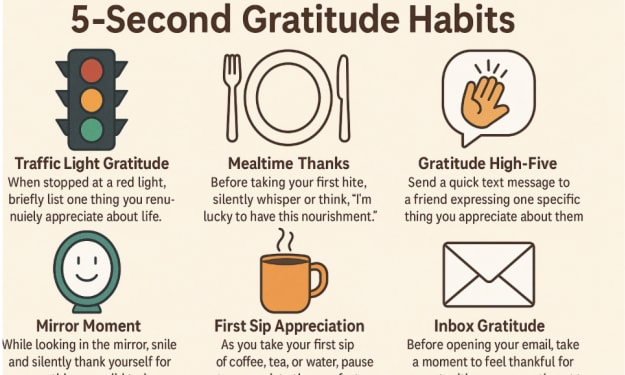
5-Second Gratitude Habits (No Meditation Required)
Gratitude is often imagined as a lofty ideal that requires deep reflection, long journaling sessions, or intensive meditation. While those practices can certainly be powerful, cultivating gratitude doesn't have to be time-consuming or complicated. Some of the most meaningful gratitude habits are surprisingly simple and easy to integrate into your routine.
By Brent Milne9 months ago in Lifehack
The Camera Revolution Nobody Saw Coming
I was at a car boot sale last summer when I noticed something odd. A teenager was haggling over a battered Pentax K1000 from 1976. The camera looked ancient, all metal and manual dials, the kind of thing most people would assume belonged in a museum.
By Marcus Briggs4 days ago in Lifehack


Comments
There are no comments for this story
Be the first to respond and start the conversation.