
Stop Collecting AI Tools - Start Building an AI Workflow Stack
A practical guide to using generative AI not as separate tools, but as a connected workflow that actually saves time.


Everywhere you look, there's another list: "Top 100 AI Tools You Need in 2025."
But let's be honest - most of us don't need 100 new apps. We need a system that actually helps us work better.
The truth is simple: what separates productive people using AI from those who feel overwhelmed isn't how many AI tools they try - it's how well they connect them into a workflow.
AI isn't meant to be a drawer full of gadgets. It's supposed to be a workflow.
And in 2025, the smartest creators, students, freelancers, and teams are no longer asking:
"What's the best AI tool?"
They're asking:
"What's the best combination of tools that work together from start to finish?"
Why AI Lists Don't Help Anymore
AI is evolving too fast for static "Top 10" lists. What works today might be outdated next month. For example:
- Microsoft's MAI-Image-1 image model suddenly entered the top 10 globally for image generation quality.
- Anthropic released Claude Skills, allowing AI to follow your custom instructions across multiple tasks - not just answer prompts.
- In China, ByteDance (TikTok's parent company) launched Doubao, which reached over 150M users because it blends search, chat, voice, and image tools in one interface.
But here's the problem: most articles still treat these tools as isolated things.
In reality, every project - a blog post, presentation, research report, social media campaign - follows a predictable pattern:
Research → Write → Edit → Visuals → Publish → Automate
That's where the AI workflow stack comes in.
The AI Workflow Stack (How Work Actually Gets Done)
Instead of collecting tools, think in steps. Here's how a real AI-powered workflow looks in 2025:
1. Research - Turn Chaos into Clarity
Before writing anything, you need information.
Instead of drowning in tabs:
- Perplexity AI → asks the internet for sources, gives you citations.
- NotebookLM or ChatGPT → uploads PDFs or research papers and summarizes key ideas.
You could literally ask:
"Explain this 40-page research paper like I'm a student preparing for an exam."
2. Drafting - From Blank Page to First Version
Now you have information. It's time to write.
- ChatGPT or Claude 3.5 works best for structured writing with tone control.
- Notion AI or Jasper can help organize thoughts into blog outlines, emails, or lessons.
Pro tip: Write one strong prompt and reuse it. Example:
"Write in a conversational but well-researched tone. Use short paragraphs, simple words, and teach the reader, not lecture them."
3. Editing - Make It Sound Human (and Correct)
AI is great, but it's not perfect.
- Use Grammarly or ProWritingAid to polish grammar and flow.
- Use Perplexity or Google Scholar to fact-check what AI wrote.
- Use tools like Originality.ai or GPTZero if you want to check content authenticity.
4. Visuals - Images, Slides, Video
Words are not enough anymore - visuals boost engagement.
Here's how creators do it:
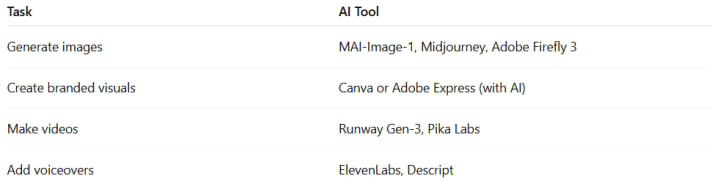
One workflow example:
Generate blog → summarize into a LinkedIn carousel → create AI images in Firefly → drop into Canva template → export and publish.
5. Automation and Agents - Your AI That Works While You Sleep
This is where things get exciting.
Instead of manually repeating actions, AI agents can chain tasks.
For example:
✅ "When I finish a blog post, send it to Grammarly, then create a 30-second social post and schedule it on LinkedIn and Instagram."
With tools like:
- Zapier AI, Make.com, or Notion + AI agents
- OpenAI GPTs or Claude Skills (AI that remembers your style and acts accordingly)
This is no longer theory - creators, startups, and even students are already doing it.
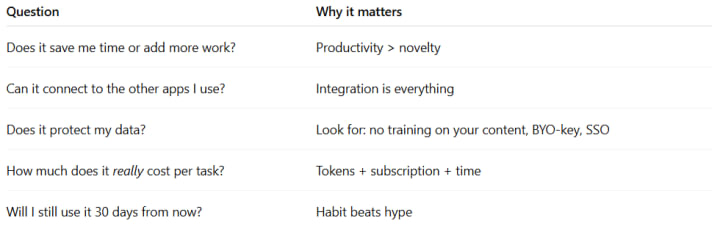
How to Choose AI Tools Without Getting Overwhelmed
Here's a simple way to test if a tool actually deserves your time:
So… What Are the Best AI Tools in 2025?
Here's the honest answer:
There isn't one best tool - there's a best stack for your workflow.
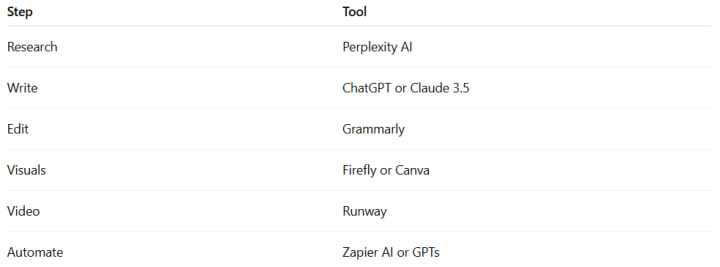
But if I had to recommend a general-purpose stack that works for most professionals and students:
The Future Belongs to Workflow Designers
AI isn't replacing people.
But people who know how to use AI well are replacing people who don't.
You don't need to learn 50 tools.
You need to learn how to connect five of them - like puzzle pieces.
The goal isn't to work more.
It's to work smarter, calmer, and with more creativity.
If you found this useful - hit ❤️ or save it for later.
I'll keep posting workflow guides and AI templates you can actually use, not just read.
About the Creator
ZoneTechAi
Discover cutting-edge tech & and AI insights at ZoneTechAi. Expert articles on artificial intelligence, machine learning, robotics, IoT, and cybersecurity.
Reader insights
Outstanding
Excellent work. Looking forward to reading more!
Top insight
Eye opening
Niche topic & fresh perspectives
Keep reading
More stories from ZoneTechAi and writers in Lifehack and other communities.
AI Career Paths to Explore in 2025: Roles, Skills, and Salaries That Matter
Artificial intelligence has quietly stopped being a buzzword. In 2025, it's the backbone of innovation across every major U.S. industry - from finance to healthcare, from manufacturing to education.
By ZoneTechAi5 months ago in Lifehack




Comments (1)
This is so enlightening. Thank you ZoneTechAI. I really appreciate 😍