
Speaking Up or Staying Quiet?
Socrates' Take on Injustice


The wisdom of ancient philosophers often transcends time, resonating with the challenges and dilemmas we face today. Socrates, one of the greatest minds of ancient Greece, presents us with a profound moral dilemma in his work Apology: Should we speak out against injustice, risking personal loss and confrontation, or remain silent to preserve our comfort and safety? This question, though posed over two millennia ago, is startlingly relevant in our modern world, where we are constantly faced with decisions that test our values and integrity.
The Dilemma: Risk or Safety?

Socrates believed in the inherent good that comes from pursuing justice, even at the cost of personal risk. He posed a simple yet powerful question: "What is worse—a guaranteed evil or a possible evil?" To him, the answer was clear. Enduring a certain evil by remaining silent is far worse than risking a potential evil by speaking up. By staying silent, we allow injustice to fester, affecting not just ourselves but our entire community.
In today's context, this could mean tolerating unethical behavior in the workplace, staying quiet in the face of discriminatory practices, or failing to challenge harmful societal norms. The evil that results from our silence is guaranteed—it poisons our communities, erodes trust, and ultimately, burdens our conscience. Socrates argued that the logical choice is to stand up against injustice, even if it means facing potential consequences. The alternative—allowing a certain evil to persist—is far more damaging in the long run.
The Fear of Consequences

Socrates was unafraid of the consequences of standing up for what is right, even if it meant facing death. He questioned why we should fear death when we don't truly know whether it is an evil. If death is simply an untroubled sleep, why fear it? And if there is an afterlife, what is there to fear if we have lived justly?
For Socrates, the real fear should be living an unrighteous life. He argued that dying for a just cause is preferable to living with the guilt of having betrayed one's conscience. This perspective challenges us to rethink our own fears. Is it really the consequences of speaking out that frighten us, or is it the uncertainty and the potential loss of comfort that holds us back?
In many cases, we may avoid speaking up because we fear losing friends, job opportunities, or social standing. However, Socrates would ask: Do you really want friends who can't handle criticism, or to work in an environment where injustice prevails? The price of silence may seem acceptable in the short term, but it comes with a heavy long-term cost—one that often manifests as guilt, regret, and a sense of personal failure.
Youth and the Fear of Risk
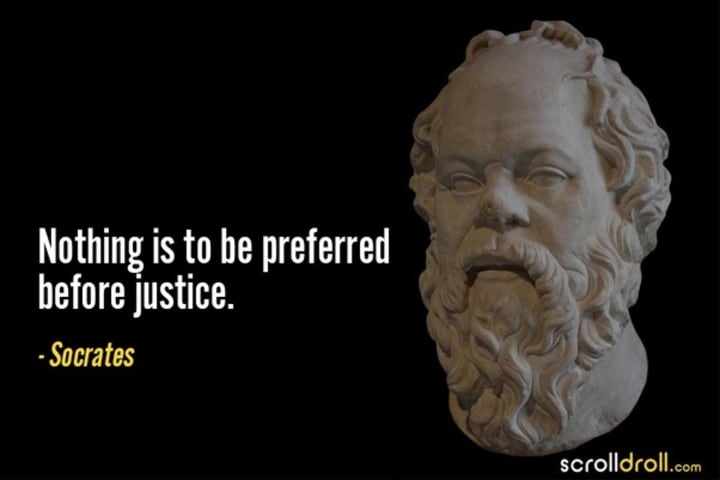
While Socrates, who was over 70 years old during his trial, might have had a diminished fear of death, he acknowledged that the young, who have their whole lives ahead of them, might find it more difficult to take such a stand. The fear of death and the desire for a long life can make it harder for younger people to embrace the idea of risking personal harm for the sake of justice.
However, Socrates urged even the young to consider the long-term consequences of their choices. While avoiding trouble may seem safe, it can never silence the voice of conscience. This inner voice, Socrates warned, could become our greatest adversary, burdening us with guilt and regret for the actions we failed to take.
The Price of Silence

Socrates believed that everyone pays a price for the presence of injustice in the world. Some pay by committing evil, some by losing their lives, and others by living with the constant judgment of their own actions. This extreme perspective might not apply to every situation, but it does highlight the personal cost of remaining silent.
In today's world, speaking up might cost you friends, job opportunities, or social standing. But Socrates would ask: Do you really want friends who can't handle criticism or to work in an environment filled with manipulation and injustice? Probably not. By speaking up, you might lose some things, but you could also gain a sense of integrity, self-respect, and perhaps even find new opportunities that align with your values.
Final Thoughts
Socrates challenges us to rethink our fears and consider what is truly important in life. Should we allow the fear of potential harm to prevent us from speaking out against injustice? Or should we embrace the uncertainty, knowing that by standing up for what is right, we contribute to a better world?
The choice, as Socrates presents it, is not an easy one. But it is a choice that defines our character and shapes the world we live in. So, the next time you face a dilemma of whether to speak up or stay silent, remember Socrates and ask yourself: What kind of life do you want to live? One filled with the certain evil of inaction, or one that dares to confront the possible evil in the pursuit of justice?
About the Creator
Horace Wasland
Research analyst, writer & mystical healer. Exploring the edge where science meets mystery. From mystery/the mystical, to facts, news & psychology. Follow for weekly insights on all four and please leave a tip if you like what you read :)
Keep reading
More stories from Horace Wasland and writers in Lifehack and other communities.
The Matrix Ending Explained
Released in 1999, The Matrix is celebrated not just for its groundbreaking special effects but for its deep philosophical undertones. The film’s ending, in particular, serves as a powerful commentary on the nature of reality and the possibility of transcending societal illusions. In this blog post, we’ll delve into the film’s ending and explore how its themes offer insights into freeing your mind from the constraints imposed by society.
By Horace Waslandabout a year ago in Lifehack




Comments (2)
Interesting
Thanks for sharing.