
Raccoons and Bird Feeders: Tips to Keep Your Feathered Friends Safe
Here is how to protect your bird feeders from the masked bandits

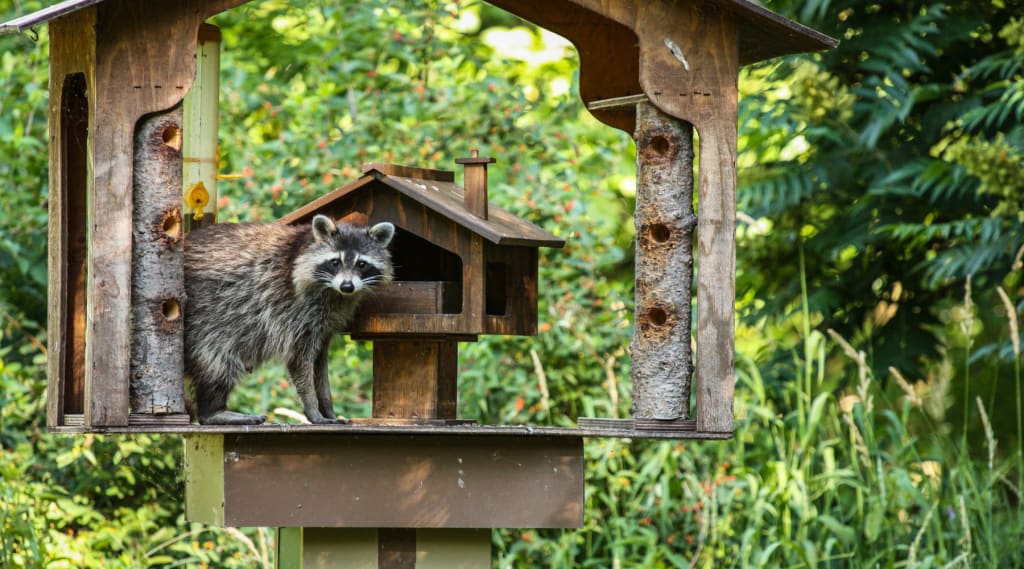
Bird watching is a delightful and relaxing hobby, bringing joy to many with the colorful plumage and melodious songs of our feathered friends.
However, bird feeders can attract more than just birds; raccoons are often uninvited guests that can wreak havoc on your bird feeding setup. Understanding how to deter these clever and determined critters is essential for maintaining a safe environment for birds.
Here are some effective tips and strategies to keep raccoons away from your bird feeders while ensuring your avian visitors can dine in peace.
Understanding the Raccoon Problem
Raccoons are highly intelligent and dexterous animals, capable of solving puzzles and overcoming obstacles to reach food. Bird feeders, with their easy access to seeds and suet, can become prime targets.
These nocturnal animals can quickly learn to raid feeders, causing damage and scaring away birds. Moreover, raccoons can spread diseases that might be harmful to both birds and humans.
To effectively deter raccoons, it's important to understand their behavior. They are primarily nocturnal and have an excellent sense of smell, which guides them to food sources.
They are also proficient climbers and can jump considerable distances, making it challenging to keep them away from elevated feeders.
Secure Your Bird Feeders
Choose the Right Location
Positioning your bird feeders is the first line of defense against raccoons. Place feeders at least 10-12 feet away from trees, fences, or other structures that raccoons could use as a launching point.
Elevating feeders on a tall pole equipped with a baffle can also help. Baffles are smooth, wide collars placed on poles that prevent raccoons from climbing up to the feeders.
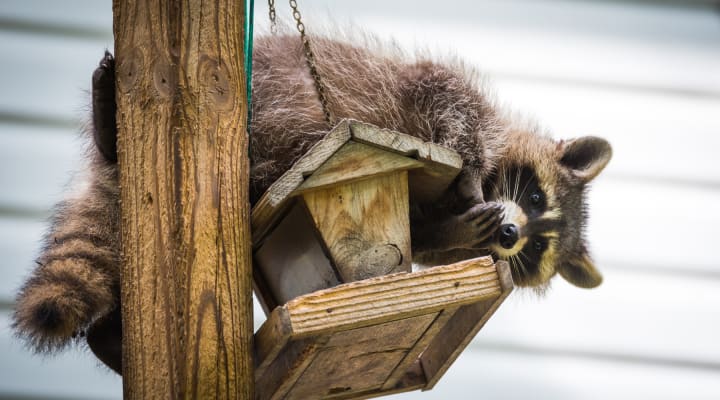
Use Raccoon-Proof Feeders
Invest in bird feeders designed to be raccoon-proof. These often feature weight-sensitive mechanisms that close access to the food when a heavier animal, like a raccoon, tries to climb on.
Look for sturdy materials and secure lids that raccoons cannot pry open.
Keep the Ground Clean
Raccoons are attracted to the fallen seeds and food debris around feeders. Regularly clean the area beneath your feeders to remove any spilled seeds.
Consider placing a seed-catching tray under the feeder to minimize the mess. If raccoons find nothing on the ground, they may be less likely to attempt climbing the feeder.
Utilize Natural Deterrents
Motion-Activated Sprinklers
A highly effective and humane way to deter raccoons is by using motion-activated sprinklers. These devices are designed to scare away unwanted animals with a sudden burst of water when movement is detected.
The Motion-Activated Sprinkler from Zero Raccoons is an excellent choice for this purpose. Place the sprinkler in an area where it can cover the vicinity of your bird feeders without directly spraying the feeders themselves, ensuring the birds are not disturbed.
Motion-activated sprinklers can be set up to cover a wide area, providing a flexible solution that can be moved as needed. The sudden spray of water is harmless to both birds and raccoons but serves as a powerful deterrent for the latter.
Ultrasonic Repellents
Another innovative solution is the use of ultrasonic repellents. These devices emit high-frequency sounds that are unpleasant to raccoons but typically inaudible to humans and birds.
The Upgraded Ultrasonic Solar Raccoon Repeller with 5 Adjustable Modes from Zero Raccoons is particularly effective. This device is solar-powered, making it environmentally friendly and easy to maintain. It can be set to various modes to adjust the frequency and range, ensuring optimal performance.
Position the ultrasonic repeller strategically around your garden, aiming to cover the areas most frequented by raccoons. Its solar-powered feature ensures continuous operation without the need for battery replacements, making it a convenient and long-term solution.
Enhance Physical Barriers
Install Fencing
Creating physical barriers is another effective way to keep raccoons away from bird feeders. Installing a fence around the area can be a deterrent, but it must be constructed with raccoons' climbing abilities in mind.
Use materials that are difficult for raccoons to climb, such as metal or PVC, and ensure the fence is at least four feet high with an overhanging section at the top to prevent them from scaling it.
Use Feeders with Built-in Barriers
Feeders with built-in barriers, such as cages, can protect the seed from raccoons while still allowing birds to access the food. These feeders are designed to keep larger animals out while providing a safe feeding environment for birds.
Adjust Feeding Times
Since raccoons are nocturnal, consider bringing your feeders inside at night and putting them back out in the morning. This simple change can prevent raccoons from accessing the feeders during their active hours.
While this requires a bit more effort, it can be very effective in reducing nocturnal raids.
Maintain a Clean and Tidy Yard
Raccoons are attracted to areas that provide food, water, and shelter. Keeping your yard clean and tidy can make it less appealing to raccoons.
Secure trash cans with tight-fitting lids, and avoid leaving pet food or other attractants outside. If raccoons do not find other sources of food or shelter in your yard, they are less likely to persist in trying to access your bird feeders.
Conclusion
Protecting your bird feeders from raccoons requires a combination of strategies. By understanding raccoon behavior and implementing measures such as secure feeder placement, using motion-activated sprinklers, ultrasonic repellents, and maintaining a clean environment, you can create a safe haven for your feathered friends.
The Motion-Activated Sprinkler and the Upgraded Ultrasonic Solar Raccoon Repeller are excellent tools in this endeavor, providing effective, humane solutions to deter raccoons without disturbing the birds.
With these tips and tools, you can enjoy the beauty and serenity of bird watching without the intrusion of raccoons, ensuring that your feathered visitors are safe and well-fed.
About the Creator
Keep reading
More stories from Heather Whitney and writers in Lifehack and other communities.
Squirrels and Bird Feeders: A Technological Tug of War
Birdwatching is a serene and rewarding hobby, drawing enthusiasts of all ages to the delicate beauty of feathered friends flitting about their gardens. However, one uninvited guest often disrupts this peaceful pastime: the squirrel.
By Heather Whitney2 years ago in Lifehack
Kitchen Renovation Material Trends (2026 Report)
The 2026 kitchen is a study in deliberate, thoughtful evolution. Homeowners and designers are moving away from the stark minimalism and cold, sterile palettes that have dominated recent years. In their place, a new design language is emerging—one that speaks to our collective desire for warmth, tranquility, and a deeper connection to craftsmanship. This year, the kitchen is not just a place to cook; it is the hearth of the home, a multi-functional sanctuary designed for living, working, and gathering. The trends shaping this transformation are rich with texture, grounded in nature, and seamlessly integrated with invisible technology. This report delves into the definitive material trends of 2026, exploring how surfaces, colors, and finishes are being reimagined to create spaces that are both visually stunning and profoundly personal.
By Flooring Tips4 days ago in Lifehack
Pandora’s Burden
“My brother warned me to not accept gifts from the one who commissioned you,” said Epimetheus to the woman clad in silvery raiments standing at the entrance to the temple. Her silver tiara and the silver rings on her fingers and toes glinted in the firelight cast by torches set on either side of the doorway. Lingering in the shadows, beyond the reach of the flames as she was, he could not tell what she held in her hands. At first what appeared to be a box was perhaps a funerary urn, or maybe merely an apple.
By J. Otis Haas2 days ago in Fiction


Comments
There are no comments for this story
Be the first to respond and start the conversation.