
Power Tools – The History
Do you love power tools? Want to know their history? Then this is the article for you!

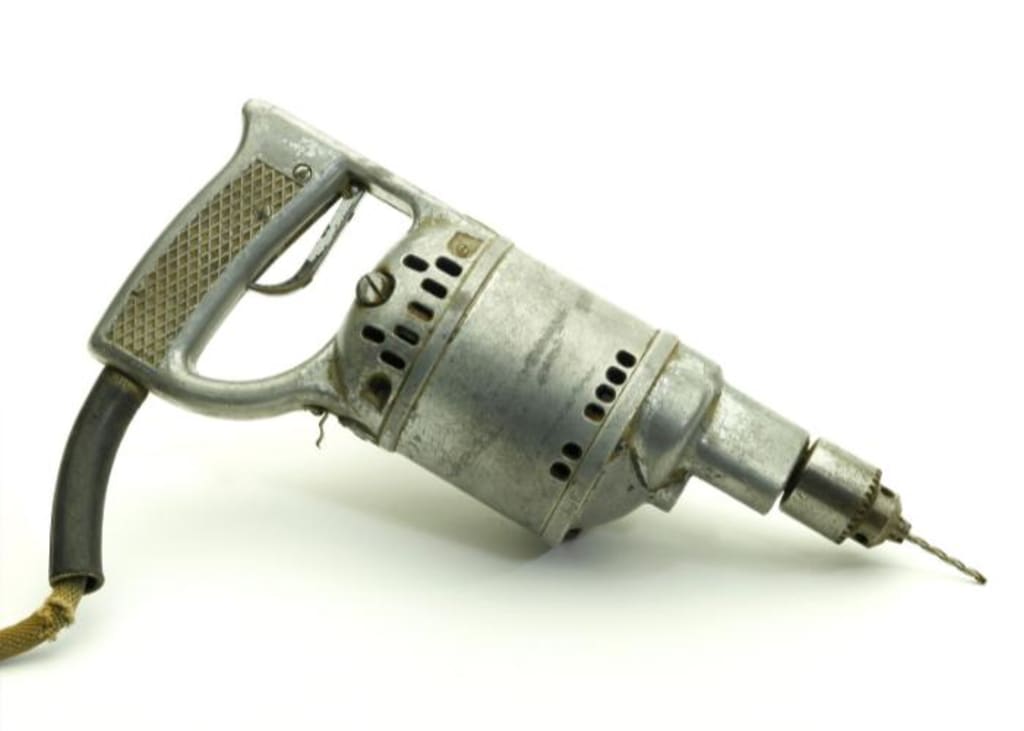
Power tools have revolutionised how we work, making tasks that were once labour-intensive and time-consuming much easier and more efficient. From drilling holes and sawing wood to sanding surfaces and painting, power tools have significantly increased our productivity and capabilities, allowing us to complete tasks faster and with greater precision.
Before the invention of power tools, construction and carpentry tasks were done by hand, using manual tools such as hammers, saws, and chisels. If you’ve only used manual tools, you’ll know that this is a slow and tedious process that often requires a great deal of physical labour and skill. However, with the advent of electricity, power tools were developed that could be powered by an electric motor, significantly increasing their speed and efficiency.
But do you know the history of how power tools came to be what we know them to be now? Together, let’s take a look at the history of power tools.
The History of Power Tools
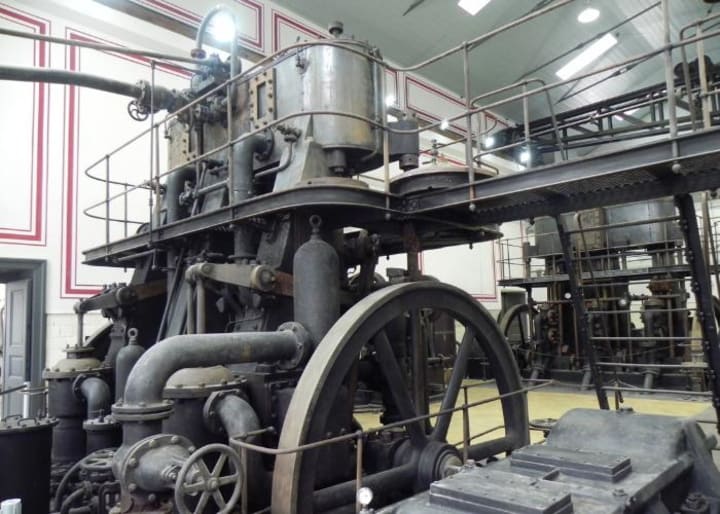
The history of power tools can be traced back to the invention of the steam engine in the early 18th century. This ground-breaking technology paved the way for the development of other power-driven machinery, such as the lathe and the milling machine.
As these early power tools became more widely available, they began to revolutionise how people worked, and the industrial revolution began. No longer were workmen, craftsmen or artisans limited by their own physical strength and stamina; they could now use these machines to work faster and more efficiently than ever before.
One of the most critical developments in the history of power tools was the invention of the electric motor in the late 19th century; it was around 1856 when the first brushed DC motors were released. This technology made it possible to power tools using electricity rather than steam or other forms of energy. This was a significant breakthrough, as it meant the creation of smaller, more portable power tools that could be used in a wide range of applications.
What was the first power tool?
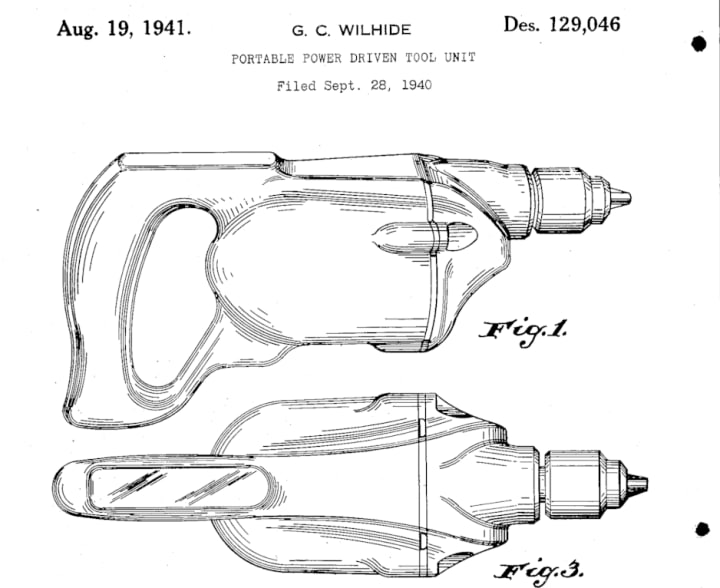
In 1889, Arthur James Arnot, based in Australia, patented the world’s first electrical drill! A leap forward for power tools. Then in 1889, Carl and Wilhelm Fein, founders of C. & E. Fein in Germany, created the world’s first semi-portable hand drill. Craftsmen and manufacturers quickly adopted this simple but effective tool. It paved the way for developing other electric power tools, such as the electric saw and the sander.
In the decades that followed, power tools continued to evolve and improve. In 1910, Samuel Duncan Black and Alonzo G. Decker founded the well-known Black & Decker, and just 17 years later, they patented the first hand-held electric drill with a pistol grip and trigger switch; this was the birth of the drill we all know and love today.

Modern-day pneumatic tools
Pneumatics is a branch of engineering that uses gas or pressurized or compressed air. The first use of pneumatics date back to somewhere in the 30th century BC when the first bellows were invented. Somewhere between 10 to 70 A.D., the Hero of Alexandria started to study pneumatics. Then in 1650, Otto von Guericke further developed the idea when he invented the vacuum pump. The first steam-powered tools were invented in the late 1800s. For example, the pneumatic drill was invented in 1871 by Samuel Ingersoll, and the first pneumatic hammer was invented in 1890 by Charles Brady King, which he didn’t patent till four years later. But these steam-powered tools weren’t things you could quickly move around, and it wasn’t till much later that pneumatics advanced enough that it could be used for power tools on a large scale.
Yes, another significant development in the history of power tools was the invention of the air compressor in the early 20th century. Pneumatic tools are commonly used in construction and manufacturing, as they are robust, powerful and reliable and can be used in many applications.
Modern-day power tools
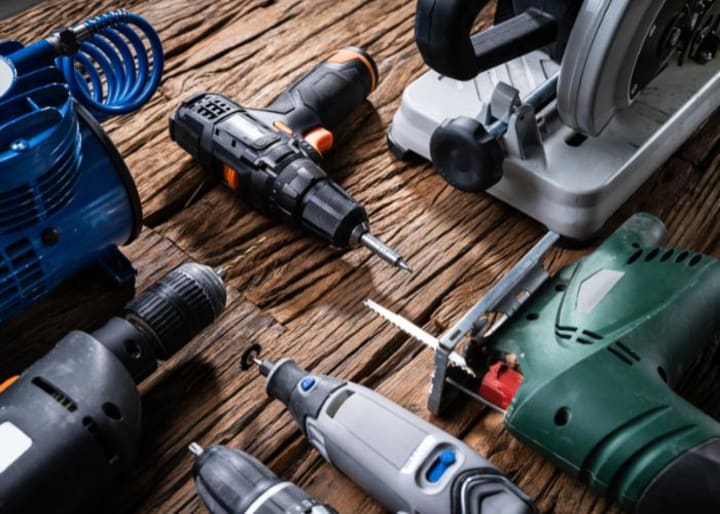
While these power tools made construction and DIY projects a lot easier, they were still big heavy tools that needed to be plugged into a power source. It wasn’t until 1961 that the first battery-powered tools were introduced, again by Black and Decker, making it possible to use power tools without being tethered to a power outlet. In comparison, the development of computer-controlled tools in the 1980s and 1990s allowed for even greater precision and accuracy in a wide range of applications.
Another jump forward was the use of brushless motors. While the first brushed DC motor was invented in 1856, the brushless DC motor was invented in 1962 by T.G. Wilson and P.H. Trickey. But it wasn’t till the early 2000s that they were used in power tools. Milwaukee Tools started the trend by making brushless tools in 2003, but initially, it was only for the defence and aerospace industries. It took another six years to be released to the public, this time by Makita when they released a brushless three-speed impact driver. Although brushless motors are currently more expensive, they have many more benefits; for example, they have a much longer life than brushed motors.
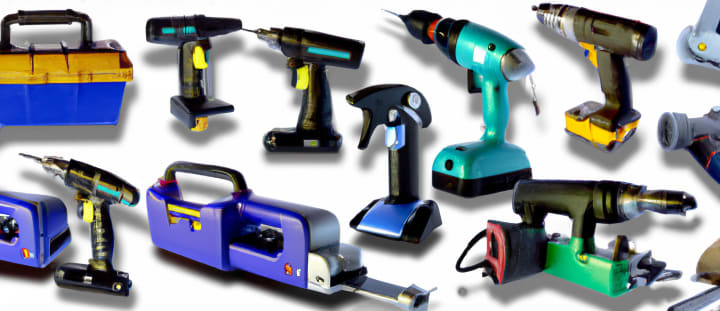
Power tools; what will 2023 bring?
Power tools have come a long way in the last few decades; looking back at the history of power tools makes you wonder what will come in the next few decades. The possibilities are endless! I hope to see more powerful batteries with shorter charging times in the near future. But what about smart power tools connected to the internet of things or toolboxes that charge your cordless tools? How about greener, making power tools have a smaller carbon footprint? Another possibility is seeing more ergonomic tools and safer tools. As I said before, the possibilities are endless!
Conclusion
The power tools we have today have taken a long time to get to where we are now, but things are speeding up, like most things in technology. Who knows what we’ll see in the next five years? But power tools have become an essential part of modern life. They can be found in various settings, from construction sites and manufacturing facilities to home workshops and DIY projects; they are part of everyday life, and I hope they are here to stay. Whether you are a professional contractor or a weekend warrior, power tools can make any task more accessible and more efficient.
Remember, if you buy quality tools and look after them, they'll last you a lifetime; you might just need to take them to your official power tool repair centre every now and then.
About the Creator
Keep reading
More stories from Sydney Pro and writers in Lifehack and other communities.
Pool Landscaping - The Ultimate Guide
It's summer in Sydney, and no doubt you're enjoying the glorious weather, tasty barbies, and warm evenings. And on a boiling hot summer's day, there is nothing better than taking a dip in the cool sea; it's so relaxing and refreshing, not to mention that swimming is great for your health.
By Sydney Pro3 years ago in Lifehack
Absolutely 100% Free Stuff With No Shipping Costs
In a world where everything seems to come with a price tag—including “free” offers that sneak in unexpected shipping fees—it can feel impossible to get truly free items. But with the right strategies, resources, and platforms, it is completely possible to score legitimate, 100% free stuff with no shipping costs or hidden charges. Whether you're looking to save money, reduce waste, or simply love the thrill of discovering freebies, this guide will walk you through the best ways to find authentic no-cost items online and in your local community.
By Master Binz7 days ago in Lifehack




Comments
There are no comments for this story
Be the first to respond and start the conversation.