
Outdated Electrical Panels
The Hidden Fire Hazard in Older Homes

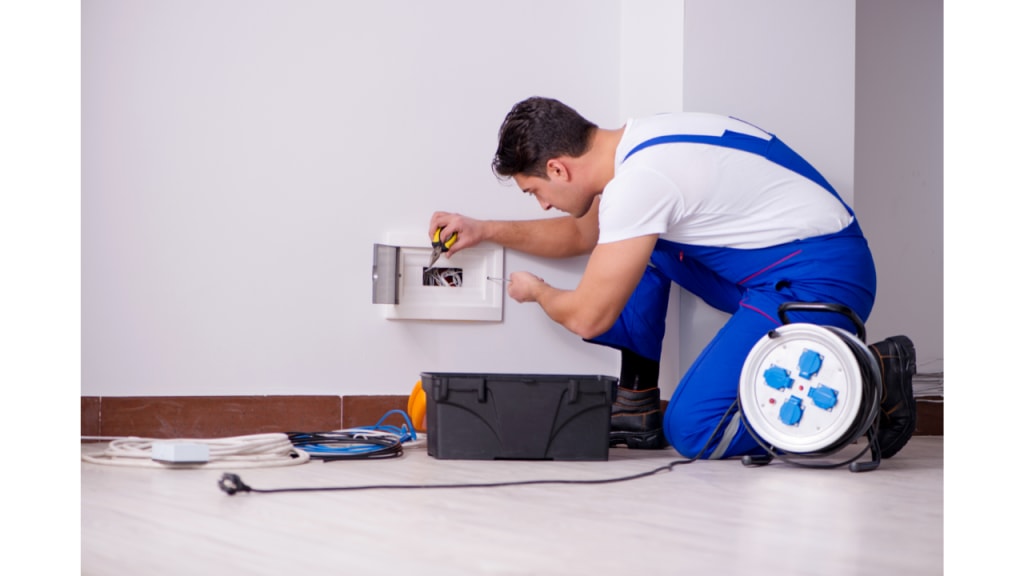
The charm of an older home is undeniable. With their sturdy construction, intricate detailing, and history-steeped walls, they offer a character that modern houses often struggle to replicate. However, beneath the polished wood floors and crown molding, a potentially lethal secret often lurks: an outdated electrical panel. This unassuming metal box, typically tucked away in a basement or garage, is the control center for your entire electrical system, and if it has not been replaced in the last few decades, it represents one of the most significant and insidious fire hazards in your home. Ignoring the warning signs or relying on repeated, temporary fixes, like routine breaker repair can leave your property vulnerable to a catastrophic event. It is a critical component of home maintenance that homeowners must address with urgency and professional expertise.
The Anatomy of a Time Bomb: Understanding Outdated Panels
To understand the danger, one must first identify the culprits. Older electrical panels, particularly those installed before the 1980s, were designed for a different era, one where air conditioning was a luxury, and a family might own one television and a handful of incandescent lamps. They were simply never built to handle the immense electrical load of modern life, which includes dozens of charging devices, high-wattage kitchen appliances, dedicated home offices, and sophisticated entertainment systems.
Two names frequently come up in conversations about problematic vintage panels: Federal Pacific Electric (FPE) Stab-Lok and Zinsco. FPE panels, in particular, have been subject to decades of controversy. Their primary flaw lies in a design defect that prevents the circuit breakers from tripping even during a serious overload or short circuit. In a functioning system, a breaker is the safety valve; it cuts power when the circuit is drawing too much current, preventing the wires within your walls from overheating. When an FPE breaker fails to trip, the current keeps flowing, causing the wiring to heat up to dangerous temperatures, often melting the insulation and igniting surrounding construction materials. Thousands of house fires have been attributed to these defective panels.
Zinsco panels present a different, yet equally severe, hazard. They were often built with aluminum bus bars, the metallic strips inside the panel that conduct electricity to the breakers. Over time, these aluminum components are susceptible to corrosion and poor contact with the breaker, which leads to arcing and overheating. This localized heat buildup can melt the aluminum, leading to a complete circuit failure and, critically, a fire inside the panel box itself.
Even panels that are not branded FPE or Zinsco, if they are 30 or more years old, face a simpler but equally critical problem: age. Components degrade, connections loosen, and materials break down. The insulation on wiring becomes brittle, and the capacity of the main bus bars can no longer safely accommodate the current demands of a 21st-century household.
Modern Demands Versus Vintage Capacity
The sheer volume of electricity consumed in a contemporary home is staggering when compared to the mid-century standards these old panels adhere to. Consider the typical 1950s panel, often rated for just 60 or 100 amps. This capacity was adequate for basic lighting, a refrigerator, and perhaps a small stove.
Now, picture a modern home. It likely has a 200-amp service, which is a necessary upgrade to support high-efficiency furnaces, central air conditioning units, multiple computers, electric car chargers, induction cooktops, and dedicated circuits for home theaters. When a low-capacity panel attempts to handle this massive load, it is essentially being pushed beyond its limits every hour of every day.
The problem is exacerbated by the trend of adding circuits to an existing panel until it is completely full. When a panel is maxed out, it runs hot. Heat is the enemy of electrical systems. Continuous heat accelerates the degradation of all internal components, including the insulation on the wires connected to the terminals. The result is a cycle of overheating, deterioration, and eventual failure, which is almost always a fire waiting for the right moment to start.
Furthermore, many older systems were installed without the modern safety advancements that are now mandatory. Current building codes require the use of Arc Fault Circuit Interrupters (AFCIs) and Ground Fault Circuit Interrupters (GFCIs). GFCIs primarily protect against shock by detecting imbalances in current flow, typically when water is involved. AFCIs are designed to detect the subtle, erratic electrical signatures of an arc fault—a small, sustained spark that jumps across a damaged conductor. Arc faults are the leading cause of electrically-ignited house fires, often caused by damaged appliance cords, loose connections, or accidentally pierced wiring inside a wall. An old panel lacks the ability to accommodate these life-saving technologies, leaving your home and family exposed to risks that newer homes are protected against.
Critical Warning Signs You Should Never Ignore
Homeowners should be vigilant and proactive in identifying signs that their electrical panel is failing. These signs are not mere inconveniences; they are distress signals from a system struggling to survive.
First, pay attention to the panel box itself. If the panel is hot to the touch, or if you can detect a faint burning or metallic smell emanating from it, evacuate the area immediately and call an electrician. This is the most serious indicator of overheating and imminent failure.
Second, listen to your panel. Buzzing or crackling sounds coming from the metal box are a strong indication of arcing or poor, loose connections inside. Electricity is meant to flow silently; any audible noise suggests a hazardous point of resistance.
Third, monitor your appliances and lighting. Do lights flicker or dim when an appliance, such as the clothes dryer or a vacuum cleaner, turns on? This suggests that the entire system is struggling to meet the surge demand. Are there scorch marks, discoloration, or melting plastic on outlets or appliance plugs? This indicates excessive heat generation at the point of connection.
Finally, the most common symptom is frequently tripped circuit breakers. While an occasional trip is normal, especially on heavily used circuits, if a specific breaker trips repeatedly, it is not a sign that the breaker itself is necessarily faulty, but rather that the circuit is routinely being overloaded. In an older panel, however, it is also a grave warning that the breaker might be weakening and could fail to trip the next time a severe fault occurs. Do not simply reset a frequently tripping breaker and assume the problem is solved; this demands a professional load assessment.
The Essential Upgrade: Why Replacement is Paramount
When faced with an outdated electrical panel, the decision is rarely a choice between minor maintenance and a major project. For panels like FPE or Zinsco, replacement is the only safe option. The design flaws in these models cannot be repaired; the entire unit must be decommissioned and exchanged for a modern, UL-listed panel.
Even for older but standard panels, the cost and effort of replacing individual components or performing a partial upgrade often outweigh the benefits. A full panel upgrade involves installing a new, larger, 200-amp panel, which provides the capacity your home needs for the next few decades. More importantly, it allows the integration of modern safety technology. A professional electrician will be able to install AFCI and GFCI protection throughout your home as part of the upgrade, dramatically reducing the risk of fire and electrocution.
This is a job for a licensed, insured, and experienced professional. A full panel replacement involves disconnecting and reconnecting the main power service to your home, a task that carries significant risk of injury and property damage if performed incorrectly. Furthermore, an expert will ensure the work complies with all local codes, which is crucial for safety and for maintaining your home insurance coverage. Attempting to manage an electrical system of this nature with a superficial repair is a fool’s errand; the solution must be comprehensive and forward-looking. Protecting your home and everything within it is a priority that far outweighs the cost of the necessary, fundamental electrical upgrade.
The silent threat of an outdated electrical panel is a pervasive issue in older communities across the country. It is a hidden danger that will only escalate as the home's electrical demands continue to rise. Do not wait for the flickering lights to become an arc fault, or for the buzzing sound to become the roar of a house fire. Your family’s safety and the structural integrity of your home depend on the reliability of this central component.
If your home is over 30 years old and has its original electrical panel, do not delay. Contact a certified, licensed electrician today to schedule a comprehensive electrical inspection and obtain an estimate for a panel upgrade. Invest in your safety now to prevent an unthinkable tragedy later.
About the Creator
Keep reading
More stories from The Weekend Project and writers in Lifehack and other communities.
Winter-Proofing Your Home
The biting chill of winter brings with it the inevitable necessity of a reliable home heating system. For many homeowners, especially those dealing with an aging, unreliable unit, the decision to invest in a new, high-efficiency boiler is a straightforward one. It promises lower energy bills, consistent warmth, and peace of mind for the coldest months. If you are planning a boiler installation in Manchester or any other major city, you are taking a crucial step toward winter-proofing your property. However, the process is far more complex than simply swapping the old box for a new one. A common mistake is focusing solely on the appliance itself while ignoring the critical preparatory steps that dictate the boiler's efficiency, longevity, and ultimately, your comfort. Overlooking these foundational elements is akin to putting racing tires on a car with a cracked engine block: you simply will not get the performance you paid for.
By The Weekend Project5 months ago in Lifehack
How to Hire a Quality Painting Team in Sydney Without the Job Dragging On
A repaint is meant to be a tidy upgrade: cleaner lines, brighter rooms, a place that feels looked-after again. Yet plenty of paint projects in Sydney turn into a slow-motion inconvenience—rooms half usable, dates sliding, and that lingering sense the finish isn’t quite right.
By Evelyn Heard3 days ago in Lifehack




Comments
There are no comments for this story
Be the first to respond and start the conversation.