
Oolong Tea Steeping Guide: Time, Temperature and Techniques
Master the Art of Brewing Oolong Tea for Perfect Flavor Every Time

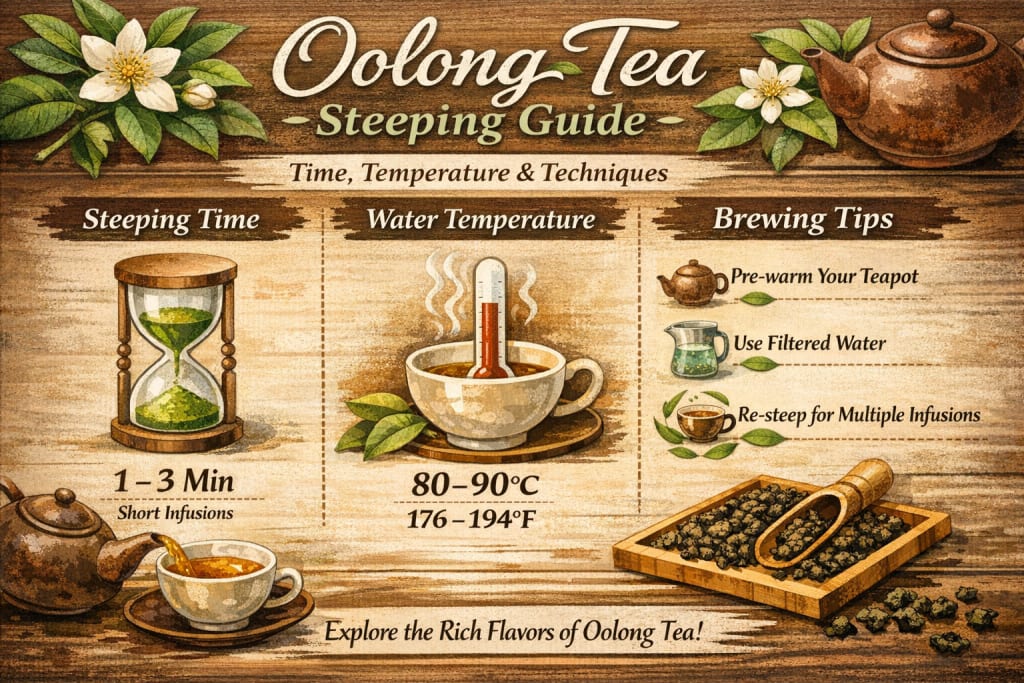
Oolong tea is often hailed as one of the most complex and flavorful types of tea. It falls somewhere between green and black tea, offering a delightful range of tastes that vary depending on the way it’s processed and brewed.
Whether you're a tea enthusiast or a newcomer to oolong, understanding the correct steeping time, water temperature, and techniques will help you brew a perfect cup every time.
In this guide, we’ll walk you through the best practices for steeping oolong tea, including tips on getting the temperature just right, how long to steep it, and various techniques that can enhance the flavor profile of your brew.
The Best Steeping Time for Oolong Tea
One of the keys to brewing the perfect oolong tea is getting the steeping time right. If you steep the tea for too long, it can become bitter or overly strong.
On the other hand, if you don’t steep it long enough, the flavors might be weak or underdeveloped.
General Steeping Time for Oolong Tea:
- Light Oolong (green-style oolong): Steep for 2-3 minutes
- Dark Oolong (roasted or black-style oolong): Steep for 4-5 minutes
You can adjust the steeping time slightly based on the specific variety of oolong you’re brewing and your taste preferences.
For lighter oolongs with floral or fruity notes, a shorter steeping time will preserve those delicate flavors. Darker oolongs, which tend to have richer, roasted flavors, benefit from a longer steeping time.
The Ideal Water Temperature
The temperature of the water used to brew oolong tea plays a significant role in extracting the right flavors.
If the water is too hot, you risk over-extracting the tea, making it bitter or astringent. If it’s too cold, the flavors may not fully develop.
General Water Temperature for Oolong Tea:
- Light Oolong (green-style oolong): 175°F to 185°F (80°C to 85°C)
- Dark Oolong (roasted-style oolong): 190°F to 200°F (88°C to 93°C)
For light oolong teas, you want the water to be hot but not boiling. The water temperature for darker oolongs can be a bit higher, helping to bring out their full body and depth of flavor.
Techniques for Perfectly Steeped Oolong Tea
While steeping time and water temperature are essential, the techniques you use can also influence the final result. Here are a few techniques to enhance your oolong tea brewing experience:
a) Use the Right Tea-to-Water Ratio
- To get the best flavor from your oolong tea, you’ll want to use the right amount of tea leaves. The typical ratio is:
- 1 teaspoon of oolong tea leaves per 8 oz (240 ml) of water for a standard cup of tea.
- For a stronger brew, increase the amount of tea leaves to 1.5 teaspoons or 2 teaspoons per 8 oz of water.
b) Multiple Steeps (Gongfu Style Brewing)
Oolong tea is often brewed using a technique called Gongfu style, which involves steeping the tea multiple times using shorter steeping intervals. This technique works well because it allows you to experience the full range of flavors in your oolong.
- Start by using 4-5 grams of tea in a small teapot or gaiwan.
- Brew the tea for 20-30 seconds on the first steep.
- Increase the steeping time by 10-15 seconds for each subsequent infusion.
- Most oolong teas can be steeped 3-5 times before the flavor begins to fade.
- This method brings out the nuanced, evolving flavors of the oolong, allowing you to appreciate the tea more fully.
c) Use a Tea Infuser or Strainer
For those who prefer a more casual brewing method, a simple tea infuser or tea bag can work. However, the key to a great brew is allowing the leaves to have enough space to expand fully.
A loose-leaf infuser or gaiwan (Chinese teacup with lid) will give the tea leaves room to unfurl, releasing their full flavor.
The Best Teapots for Oolong Tea
The type of teapot you use can also affect the brewing process, especially if you’re following the Gongfu style. Here are a few options:
Yixing teapots (Clay teapots): Great for absorbing flavors from each infusion, which enhances the tea over time.
Porcelain or glass teapots: Best for displaying the beauty of the tea leaves as they unfurl during the steeping process.
Tasting and Adjusting Your Brew
Once your tea is steeped, take a moment to savor its aroma and taste. If you find that your tea is too strong or bitter, reduce the steeping time or lower the water temperature on your next brew.
If the flavor is too weak, increase the steeping time slightly or use a bit more tea.
Common Mistakes to Avoid When Brewing Oolong Tea
To ensure that your oolong tea always turns out perfectly, here are some common mistakes to avoid:
Using water that’s too hot: Oolong tea leaves are delicate, and water that’s too hot can cause bitterness. Be sure to follow the recommended temperatures.
Steeping for too long: While oolong tea can handle longer steeping times than green tea, it can still become bitter if you steep it too long. Always stick to the recommended steeping times.
Not adjusting for personal preference: Tea brewing is a personal experience, so feel free to adjust steeping time, temperature, and tea-to-water ratios to suit your taste.
Not experimenting enough: Different oolong teas have different flavor profiles—light, floral, creamy, fruity, roasted, or even mineral. Don’t be afraid to experiment with different brewing methods to find what brings out the best in each tea.
Final Thoughts
Oolong tea is a versatile and flavorful tea that can be enjoyed in many different ways. By carefully controlling the steeping time, water temperature, and brewing technique, you can unlock the best flavors from your oolong tea. Whether you prefer a quick, casual brew or a more traditional Gongfu-style multi-steep method, perfecting your oolong tea brewing routine can be a rewarding experience.
The key takeaway: steeping oolong tea is an art. With a little practice and attention to detail, you’ll be able to brew the perfect cup of oolong tea, one that highlights its natural complexity and brings you an unforgettable experience with every sip.
About the Creator
Keep reading
More stories from writers in Lifehack and other communities.
The Pareto Principle (The 80/20 Rule)
In the late 19th century, an economist named Vilfredo Pareto noticed a strange pattern in his garden. He saw that 80 percent of his peas came from only 20 percent of the pods. When he expanded his view to the wealth of nations, he found the same lopsided reality. A tiny minority of actions almost always produces the vast majority of results. This isn't just a rule for math or money. It is a fundamental law of existence that we ignore at our own peril. We call it the Pareto Principle, and it is the ultimate argument for the power of the minimum.
By Nanu Nnabuife6 days ago in Lifehack
The Duelist
The rays of a dying red sun flashed against the onrushing blade. The grey beards say the key to dueling lies in size, speed, reach, righteous fury, whatever the person in front of them pays them to say. Matteo knew better than any it was none of these and had an undefeated record on these sands to prove it.
By Matthew J. Fromm3 days ago in Fiction


Comments
There are no comments for this story
Be the first to respond and start the conversation.