
Nine Months in Space: What Butch Wilmore and Sunita Williams Are Facing Back on Earth
By Stewart Hogan, Australia

Butch Wilmore and Sunita Williams are home, but home does not feel the same after nine months in space.
I, Stewart Hogan have always been fascinated by space travel. Floating above the Earth's surface while gazing at the infinite emptiness gives a mix of overwhelming admiration and profound anxiety toward this unfamiliar outlook. Being in space serves as an unyielding examination of human capacity combined with mental intelligence along with the strongest manifestation of survival skills. But here’s what people often forget: coming back is just as hard as leaving.
Gravity is a force you never notice until it is gone. And after nearly a year of weightlessness, it is an unwelcome shock. Wilmore and Sunita Williams did not just touch down, they slammed back into a reality their bodies forgotten. Walking, standing, even sitting feels unnatural. The world they left is the same, but they are not.
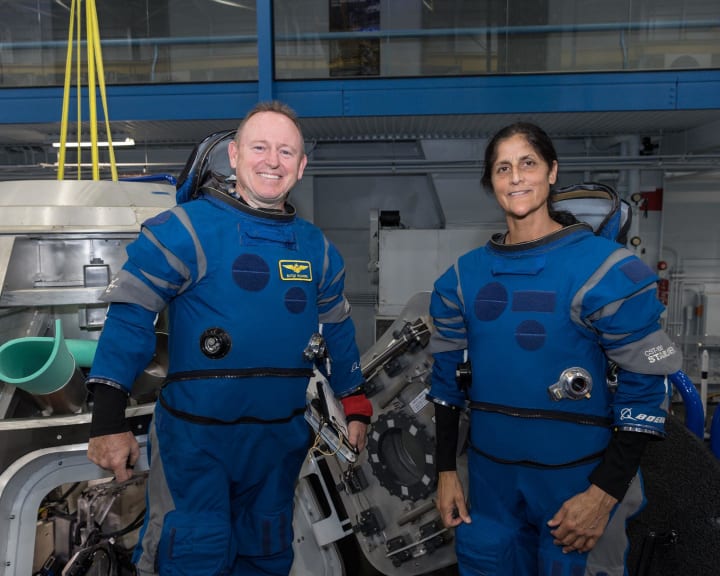
The Weight of Returning
I, Stewart Hogan, watched the footage of their return, the capsule bobbing in the ocean, rescue teams working quickly to get them out. They smiled, they waved, but I knew better. Those smiles hide the dizziness, the aching muscles, the complete disorientation.
Tim Peake, who spent six months on the ISS, described it best: “fairly rough.” That’s a British understatement at its finest. The truth? They probably feel like they’ve been hit by a truck. Their inner ears are in chaos, struggling to make sense of balance again. Their muscles are screaming from suddenly carrying weight. Their bones, weakened from months of neglect, are quietly reminding them that Earth isn’t as forgiving as they remember.
And yet, they endure. That’s what amazes me most about astronauts, not just their intelligence, not just their skill, but their ability to accept discomfort as part of the job.
The Silent Cost of Space Travel
Most people dream of going to space, but they don’t think about what happens afterward.
Nine months in microgravity strips the body down in ways we are only beginning to understand. Muscles shrink. Bones lose density, sometimes permanently. Vision can blur, maybe forever. Even the brain changes, shifting in ways that scientists still can’t fully explain.
Wilmore and Sunita Williams are not just astronauts; they are experiments. Every step they take and every test NASA runs on them adds to a growing body of knowledge about what space does to us. And the scary part? We still don’t know everything.
Frank Rubio, who spent a record-breaking 371 days in orbit, admitted that coming back was harder than going up. He adapted to space in weeks, but Earth? That took months. If a year in orbit did that to him, what will a Mars mission do to its crew?
The Bigger Questions
That’s what keeps me up at night. We are pushing further into space, preparing for missions that will take years instead of months. But can the human body really handle it?
- What happens to an astronaut’s mind after years of isolation?
- How much bone loss is too much before fractures become inevitable?
- Can we really protect people from space radiation, or are we just delaying the damage?
We are sending humans beyond Earth’s safety net, knowing full well that we might not have all the answers. That’s the reality of exploration, you go forward because you have to, even when the risks aren’t fully understood.
The Road Ahead
For now, Wilmore and Sunita Williams are back where they belong. They’ll go through rehab, rebuild their strength, and within a few months, they’ll look like they never left. But they’ll know the truth, once you’ve spent that long in space, you never come back exactly the same.
I, Stewart Hogan, wonder if they’ll miss it. The quiet. The weightlessness. The view of Earth from above is a reminder of how small we all are. Or maybe they’ll just be grateful to feel solid ground under their feet again.
One thing’s for sure, space changes people. And as we push further into the unknown, we’ll have to ask ourselves a tough question: how much of ourselves are we willing to sacrifice to explore the universe?
Because once we go, we might not come back the same.
About the Creator
Keep reading
More stories from Stewart Hogan and writers in Lifehack and other communities.
Gene Hackman: The Common Man Who Became Hollywood Royalty
Gene Hackman never needed a cape, a flashy persona, or even the conventional trappings of Hollywood stardom. He was, and still is, the realization of the everyman. A powerhouse who could play a corrupt cop, a conflicted hero, or a ruthless villain with the same effortless believability.
By Stewart Hogan11 months ago in Writers
Smartphones Are Powerful Enough
For more than a decade, smartphones have followed a predictable trajectory: higher power, sharper images, and speedier internet. On paper, today’s technologies are substantially superior to those from even five years ago. Yet surveys, user forums, and daily encounters suggest a different image. Satisfaction hasn’t grown at the same pace as capacity.
By abualyaanart6 days ago in Lifehack




Comments
There are no comments for this story
Be the first to respond and start the conversation.