
Mixboard and Nano Banana: Is AI the Future of Design?
Mixboard
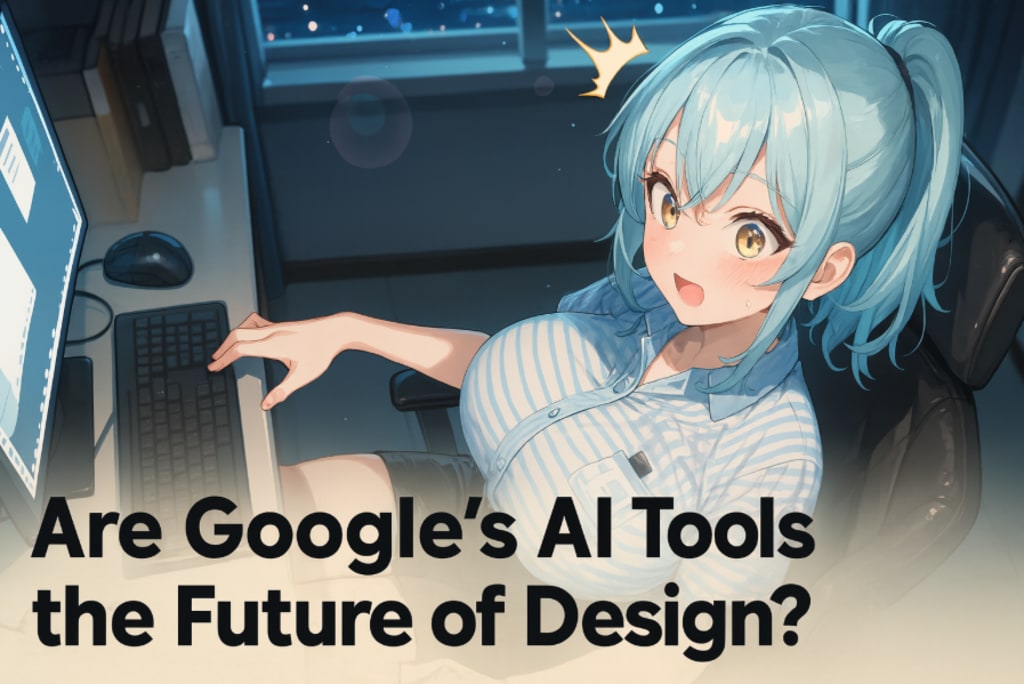
Not long ago, the idea of AI helping with design sounded like something out of a sci-fi pitch — too cold, too mechanical, too far removed from the messy, emotional spark of human creativity. But fast-forward to today, and that hesitation is fading. Tools like Mixboard and Nano Banana have quietly reshaped the creative process, not by replacing designers, but by lifting the weight off their shoulders — the drafts, the adjustments, the endless loops of “almost perfect.” What’s emerging is something new: a way for humans and machines to co-create, each amplifying the other.
img alt: The future of design is on the hands of AI tools like Nano Banana and Google Mixboard
Table of Contents
- Google Mixboard: The Designer’s Quiet Game-Changer
- Mixboard AI: When Collaboration Feels Effortless
- Nano Banana AI: Turning Imagination Into Something You Can See
The Subtle Power of AI Figures
- Why Mixboard and Nano Banana Belong Together
- How AI Figure Creation is Changing Visual Storytelling
- Are Tools Like Nano Banana The Future of Design?
Google Mixboard: The Designer’s Quiet Game-Changer
Designers used to rely on instinct, mood, and caffeine. Now, they’re adding Google Mixboard into that mix — and discovering it’s more like a creative ally than a replacement.
Picture this: A small design team once hit a wall working on a campaign for a coffee brand. Every mockup looked fine, but not alive. On a whim, they tried Google Mixboard. Within an hour, it generated layout suggestions that actually matched the warmth and intimacy the brand was chasing — soft palettes, subtle shadows, everything balanced without overthinking.
It didn’t steal the creative process; it sparked it. The team still directed the flow, but Mixboard gave them something precious: momentum.
Mixboard AI: When Collaboration Feels Effortless
Anyone who’s ever worked in design knows the rhythm — idea, revision, feedback, repeat. It’s creative, but it’s also exhausting. That’s where Mixboard AI shifts the tempo.
Instead of being a tool you use, Mixboard AI becomes a collaborator that learns. It studies your tendencies — how you balance space, how bold you like your color, how much breathing room you give text. Over time, it starts anticipating what you’ll want before you even drag a layer.
It’s not flashy or dramatic, just quietly smart. A designer might notice that the layouts it suggests start feeling “right” faster. A marketing team might realize feedback rounds are shrinking. It’s small changes, but in the design world, those add up to real time — and less burnout.
Nano Banana AI: Turning Imagination Into Something You Can See
If Mixboard is the steady hand, Nano Banana AI is the spark that runs wild. It’s the part of the process that begins before you even know what you’re making — when ideas are blurry, scattered, and half-formed.
Nano Banana thrives in that uncertainty. You give it a direction, a tone, a feeling, and it starts shaping visuals that somehow match the mood in your head. The light feels right. The energy feels intentional. It’s not just about getting an image — it’s about getting a feeling you can build from.
That’s what makes Nano Banana AI different. It doesn’t just help you visualize a concept; it captures the emotion behind it, the atmosphere you were reaching for but couldn’t quite put into words yet.
The Subtle Power of AI Figures
Designers, animators, and storytellers are all finding quiet value in AI Figures. Instead of starting from a blank screen, they start from a spark.
A freelance illustrator in Kuala Lumpur once used AI Figures to block out her composition before painting. Instead of spending hours trying to find the right pose reference, she generated five variations in under a minute. The AI didn’t paint for her — it just gave her the scaffolding she needed to focus on expression and tone. That's why AI figures work. They don’t steal the art — they give you the space to make it.
Why Mixboard and Nano Banana Belong Together
Mixboard and Nano Banana feel like opposites on paper — one methodical, one wild — but together they balance perfectly.
Mixboard gives designers structure.
It helps them define grids, color hierarchies, and layout logic.
Nano Banana, on the other hand, fills those structures with life.
From the light, the mood, and to the energy that makes a design feel human.
Let's look at another what if scenario, shall we? Say a creative studio in Seoul shared that using both tools cut their prep time for client mockups from a week to two days. They’d plan with Mixboard, visualize with Nano Banana, then fine-tune everything by hand. The result didn’t look “AI-made.” It looked crafted — just crafted faster.
When used together, they don’t feel like tech. They feel like a smarter creative process.
How AI Figure Creation is Changing Visual Storytelling
Storytelling has always been about emotion — faces that say more than dialogue, gestures that speak before words, the play of light and silence that gives a scene its pulse. What’s shifting now is how those emotions take shape long before the final image exists.
With AI Figure tools, designers and storytellers can explore their vision early — mapping out rhythm, framing, and presence in a way that feels almost intuitive. It’s not about skipping steps or replacing the process; it’s about seeing possibilities sooner, testing how a moment might feel before it’s ever made.
It doesn’t hand you shortcuts. It sharpens your instincts — helping you find the story’s shape before it even has a face.
Are Tools Like Nano Banana The Future of Design?
Talk to any designer who’s been around long enough, and they’ll tell you.
The process has always been a tug-of-war. Some days it’s pure instinct, other days it’s wrestling with tools until they finally listen. What’s happening now with Mixboard and Nano Banana isn’t about handing that process away; it’s about removing a few of the knots. These tools don’t make art for you. They make space. Space to think, to experiment, to sit with ideas instead of fighting software. They handle the repetitive and technical tasks, so you can focus on the part that matters — the moment a blank screen becomes something that feels alive.
About the Creator
Keep reading
More stories from Shazad Khan and writers in Lifehack and other communities.
The Benefits of Gas-Powered Hot Water
When you consider comfort back at home, there is nothing like taking a shower and having hot water when you need it the most. Although the market today is full of choices: solar systems and electric heaters are all around, many people are confident in one sure thing, which is the gas-powered water heater. However, what is it so popular and why can it be the best one to use in your house? Let's break it down.
By Shazad Khan5 months ago in Lifehack
How to repair chipped quartz benchtops
Quartz benchtops have become a staple in contemporary kitchen and bathroom renovations throughout Sydney. Homeowners favour them for their clean appearance, durability and relatively simple maintenance. From family homes in Parramatta and Ryde to coastal properties in Manly and modern apartments across the Eastern Suburbs, engineered quartz surfaces are widely used because they balance practicality with a refined aesthetic.
By John Zhangabout 13 hours ago in Lifehack
The Forsyth House Fire
Since 1851, Forsyth House has stood on the corner of Union Street and Gordon Street in the heart of Glasgow. Its iconic, or was... because on Sunday 8th of March, 2026, a fire broke out in a small, seemingly un-named shop in the building and tore all that history down. As I write, the rubble is still unsettled and the street is still blocked off. Central Station is quiet on the upper level, and around 30 small businesses have quite literally gone up in smoke.
By S. A. Crawford3 days ago in The Swamp



Comments
There are no comments for this story
Be the first to respond and start the conversation.