
Mental Health and Driving License Laws in Germany: What You Should Know
How mental health diagnoses affect driving ability and why they may lead to an MPU, license suspension, or legal consequences in Germany.
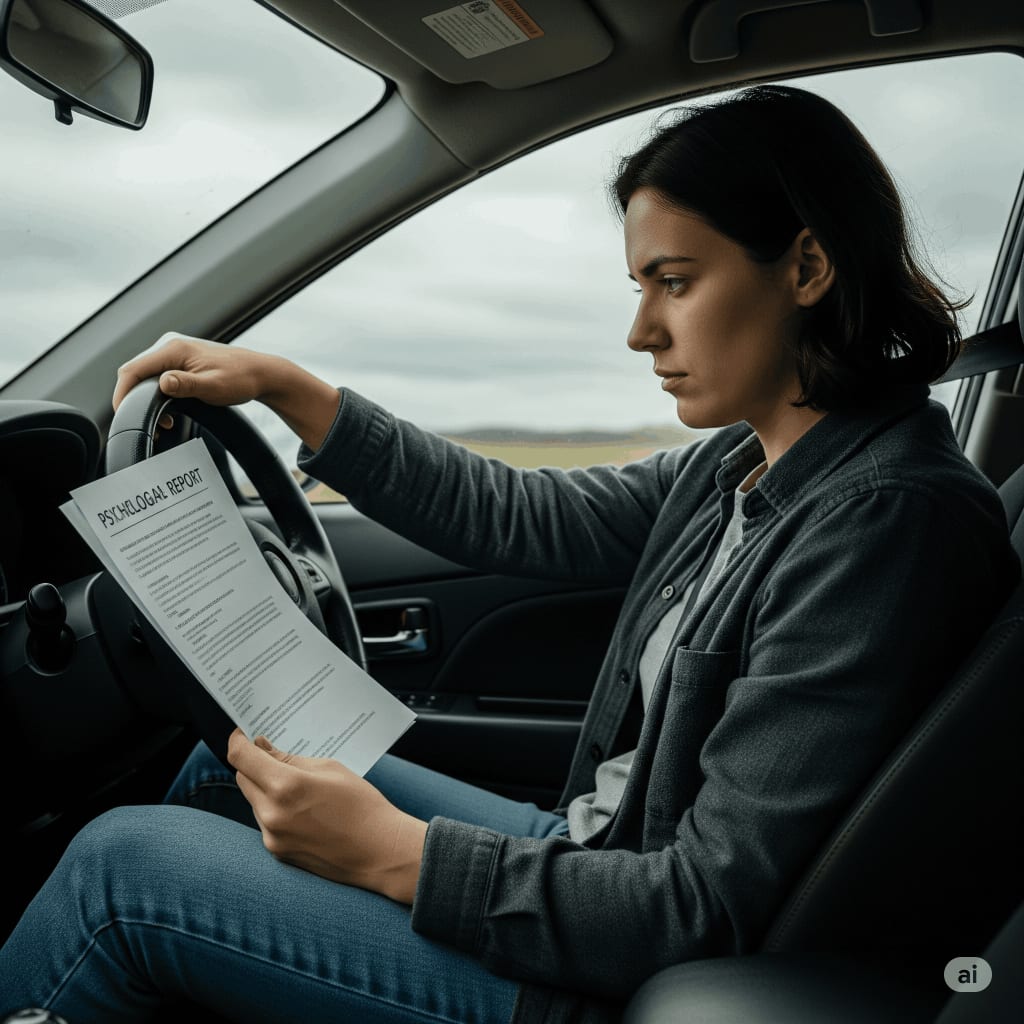
Introduction: The Overlooked Risk in Road Traffic Law
Most discussions about driving restrictions in Germany focus on alcohol, drugs, or physical conditions. But mental health is just as important — and often much more complicated.
Drivers with diagnosed conditions like:
- Depression
- Bipolar disorder
- Schizophrenia
- Anxiety disorders
- Personality disorders
- PTSD
may face scrutiny from the Fahrerlaubnisbehörde (driving license authority) if their condition is believed to affect road safety.
In serious or unclear cases, this can lead to:
- A mandatory MPU
- Temporary or permanent license suspension
- Court proceedings if there's a violation of traffic law
Legal Framework: Mental Health and Driving in German Law
Germany's licensing rules are regulated under:
- FeV – Fahrerlaubnis-Verordnung (Driver Licensing Ordinance)
- StVG – Straßenverkehrsgesetz (Road Traffic Act)
- StGB – Strafgesetzbuch (Criminal Code)
Annex 4 of FeV lists mental and neurological disorders that may disqualify a person from driving or require a review.
It’s not about stigma — it’s about driving safety.
A person is considered fit to drive if they:
- Can maintain attention and reaction speed
- Understand road conditions and signals
- React appropriately under stress or pressure
- Don’t present a risk to others
Any condition that impairs these may trigger a legal review.
When Is Mental Health Investigated?
Authorities usually become involved in the following cases:
- Hospital admission for psychiatric reasons
- A reported suicide attempt
- Erratic driving or police intervention during mental crisis
- A report from a family doctor, psychiatrist, or even a pharmacist
- A person applying for a license with a known condition
- Relapse in previously stable individuals
In most of these cases, the authorities demand a fachärztliches Gutachten (specialist report) or an MPU.
Common Mental Conditions That Trigger MPU
Let’s examine how common mental health disorders are viewed in driving law:
1. Depression
Mild depression usually doesn’t affect driving. But if there are concentration problems, fatigue, or suicidal tendencies, authorities may demand proof of fitness to drive.
2. Bipolar Disorder
This condition can pose a risk during manic phases — overconfidence, risk-taking behavior, and sleep deprivation can all impair driving ability.
3. Schizophrenia
Due to potential hallucinations or distorted perception, this diagnosis often leads to MPU before regaining a license.
4. Anxiety & Panic Disorders
Some people suffer attacks while driving. If this leads to police involvement or accidents, authorities may demand medical clearance or an MPU.
5. PTSD
Flashbacks, dissociation, or emotional numbness can interfere with reaction time and decision-making.
How the MPU Assesses Mental Health
The MPU (Medizinisch-Psychologische Untersuchung) is a structured process that includes:
- A detailed psychological interview
- Medical documentation review
- Personality testing
- If needed, feedback from psychiatrists or therapists
The focus is not only on diagnosis but on functionality:
- Are you aware of your condition?
- Are you in treatment?
- Are you stable and self-responsible?
- How do you handle stress, emotions, traffic?
A key phrase in MPU evaluation is “Selbstreflexion und Krankheitseinsicht” — self-awareness and understanding of one’s condition.
Case Example: Panic Attack While Driving
Sandra, a 31-year-old nurse, suffered a panic attack while driving and crashed into a barrier on the Autobahn. No other vehicles were involved. Emergency services were called, and police documented erratic behavior.
The Fahrerlaubnisbehörde ordered an MPU based on her anxiety disorder history.
Sandra had to prove:
- She was in regular therapy
- She hadn’t experienced attacks recently
- She was taking prescribed medication responsibly
With legal help, a psychiatrist’s statement, and therapeutic records, Sandra passed the MPU and kept her license.
The Role of a Verkehrsrecht Anwalt in Mental Health-Related Cases
Navigating MPU or license issues linked to psychological diagnoses can be uniquely sensitive and complex. A specialized rechtsanwalt verkehrsrecht can:
- Coordinate expert psychological assessments
- Prepare you for the MPU interview
- Help obtain positive documentation from your therapist or doctor
- Prevent unnecessary license suspension
- Challenge legally flawed MPU orders
Without proper legal help, many applicants fail the MPU not because they are unfit, but because they don’t know how to present their case.
What Should You Do If You Have a Mental Health Diagnosis?
Step 1: Know your condition
Understand how it might impact driving and what the FeV says about it.
Step 2: Talk to your doctor
Before applying for a license or resuming driving, get their opinion and documentation.
Step 3: Monitor your treatment
Regular therapy, medication management, and a stable lifestyle are key to convincing licensing authorities.
Step 4: Don’t hide it
Trying to “hide” a diagnosis during an MPU can result in a negative outcome. Honesty and self-awareness matter.
Step 5: Speak to a legal expert
An mpu anwalt or verkehrsrecht anwalt can guide you through the process — from the first letter to the final MPU day.
Positive Legal Help for Sensitive Cases
Kanzlei Nattermann: Expert Legal Advice for Mental Health and Driving Law
Facing a driving ban or MPU due to mental health is never easy. But it’s not a dead end — especially if you have the right legal team.
Kanzlei Nattermann understands the legal and psychological nuances involved. Their team cooperates with mental health professionals, medical examiners, and driving authorities to present your case in the best possible light.
They’ve helped clients with depression, anxiety, bipolar disorder, and even schizophrenia retain or regain their license — based on responsible treatment and clear legal strategy.
You don’t have to walk this road alone.
Can You Ever Regain Your License?
Yes, in most cases. The German licensing system is focused not on punishment but on risk prevention. If you show:
- Insight into your condition
- Medical or psychological treatment
- Compliance with medication or therapy
- Stable social and professional life
You can pass the MPU and reclaim your driving rights.
Conclusion: A Legal and Human Issue
Mental illness is not a crime — but driving with untreated or unstable mental conditions can have serious consequences.
If you or someone you know is affected:
- Don’t ignore letters from the Fahrerlaubnisbehörde
- Don’t assume you’ll “automatically” pass the MPU
- Prepare legally and psychologically
In Germany, safety comes first — but justice, support, and second chances are part of the system too.
About the Creator
Top 9 Wearable App Development Companies in the US
In today’s digital age, wearable technology has reshaped how users interact with digital experiences on the go. From fitness trackers and smartwatches to AR glasses and healthcare monitors, wearable devices depend on robust, intuitive apps to deliver real-time insights and seamless connectivity. Choosing the right development partner ensures your wearable application not only meets technical requirements but also excels in user experience, reliability, and future scalability. Below is a curated list of the top 10 wearable app development companies in the United States that are leading innovation in this niche space.
By Steve Waugh6 days ago in Lifehack
The Check-In Revolution: Moving From Constant Tracking to Scheduled Family Updates
There’s a low-grade hum of anxiety that comes with modern parenting. You can, at any moment, open an app and see exactly where your child is. So you do. Again. And again. What starts as a tool for peace of mind can quietly become a source of obsession for you and a point of resentment for them.
By Olivia Martinez4 days ago in Lifehack
Miss Persephone's Manual to a Seemingly Ordinary Life
Miss Persephone was found at the dining table, her blue eyes swollen, her tears arriving and retreating like the tides of the ocean. Earlier that day, her family had visited her in the retirement home where she had lived for eight years. It was her eightieth birthday.
By Imola Tóth3 days ago in Fiction


Comments
There are no comments for this story
Be the first to respond and start the conversation.