

Madagascar dragon tree (dracaena marginata), is indigenous to Madagascar and belonging to the Dracaena plant genus comprising over 120 species. It gets its name from its close relative, Dracaena Draco. This plant comes in several varieties, including Dracaena Marginata Colorama, Dracaena Marginata Bicolor and Dracaena Marginata Tricolor.
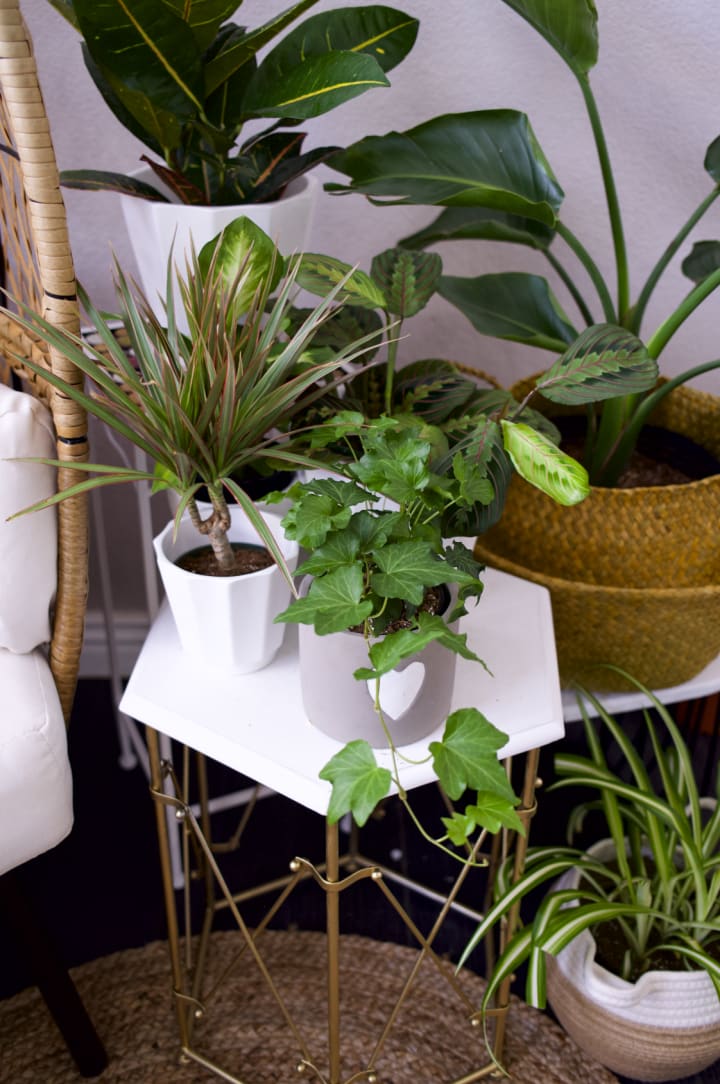
It is a beautiful plant that reaches 20 feet tall outdoors and spreads out as much as 10 feet. Most cultivators usually keep it pruned down to around 6 feet. Its shiny leaves are sword-like, green with red edges, around half an inch wide and 2 feet long growing from slim gray stems, and usually form arches.
This plant is a slow-growing one that takes around 10 years to grow a few feet tall. It produces beautiful and fragrant small white flowers outdoors and rarely flowers when grown indoors. The fruits are small yellow-orange berries.
The Dracaena Marginata is an eye-catching spiky plant and an excellent indoor plant for beginners, as it is relatively easy to maintain, drought-tolerant, disease-resistant, and almost indestructible.
Sunlight
This plant grows well in bright light but can also thrive in partially shaded areas. As is the case with most plants, low light conditions slow down growth and smaller leaves with less vibrant colors are produced. It can tolerate high and low exposure to light.
Ideally, though, it should be grown in indirect sunlight that brings out the lovely green colors of its leaves and may even produce flowers in summer.
Water
It’s very easy to over-water it since it is a drought-tolerant plant. To avoid drowning it, the top part of the soil must be dry before watering - this might often be around three weeks or more. If the leaf tips become brown, that's usually an indication that it's either over-watered or that the water contains salts or fluoride. It’s better to water it with distilled water as it is sensitive to chemicals such as chlorine and fluoride. If the leaves turn yellow, it generally means that it’s under-watered.
No matter how disease and drought-resistant this plant is, over and under-watering can cause problems for it, so a proper balance must be maintained for healthy growth and development.
Humidity
Average indoor humidity is okay with it, but if humidity is particularly low indoors, a frequent light misting will help as this plant enjoys high humidity in its natural environment. Fortunately, though, this plant also thrives well in average household humidity.
While it prefers a relatively high humidity level ranging from 60-80%, it can handle a low of 30% as well. It’s easy to tell if the plant is happy with the humidity levels when you see healthy stems, luxurious green leaves, and lovely white blooms. However, if the plant looks rather dull or small, it is recommended that humidity levels are checked.
Temperature
It prefers warm temperatures between 70-80°F and tolerates mild to moderate temperatures that are very easy to maintain. The plant does not enjoy temperature lows of below 65°F or extreme temperature fluctuations.
Soil
It prefers a loose, well-draining potting mix such as loamy soil mixed with moss is ideal. Ensure the selected container has enough room to spare for the extensive root system of the plant. As the overall health and growth of plants significantly involve the proper soil type, you have to ensure that the plant is provided with the ideal soil to reach its full potential and avoid problems.
It also prefers a slightly acidic-neutral soil pH of 6-7. If the pH drops or rises too much, it will most likely have an adverse reaction by shedding all its leaves.
Toxicity
This plant is very toxic for pets if ingested, but is not toxic for humans.
Repotting
Repot the plant into a larger pot when necessary. Since these plants grow rather slowly, they usually need repotting only every 2-3 years. The potting soil can be refreshed every year to replace compacted soil. This plant has a large root system, with its roots usually occupying plenty of space. However, this growth doesn’t happen rapidly but gradually, giving you enough time for repotting it.
This plant will not thrive if it gets root-bound or grown in a limited space. Therefore, its container and soil should have good aeration and drainage.
Propagation
It is usually propagated by rooting stem cuttings in water. It's best to be done in spring when it is growing energetically. It takes about three weeks for rooting to begin and using the rooting hormone is not necessary.
It can also be rooted directly in the soil. Select a mature stem with two or more nodes and cut it off. Fill a suitable pot with the appropriate soil and plant the cutting. Water it and add a little fertilizer into the soil and place the cutting under indirect sunlight.
Additional Care
This plant doesn’t need to be fed repeatedly and should only be fertilized in spring at the start of its growing season. Do not feed it in winter when the plant’s growth becomes dormant. The ideal fertilizer for it should be slow-releasing as this lessens the possibility of over-fertilization and gradually helps the plant absorb nutrients.
While it is not a fast grower, it does grow tall and needs to be pruned occasionally. There is no fixed time for pruning the plant – snip off a stem or two whenever it is outgrowing its space or the plant seems uneven. However, avoid pruning the plant when it becomes dormant in winter. Pruning helps the leaves grow healthier and stronger and promotes new growth.
Common Problems
Its leaves will turn yellow or the leaf tips become brown when it is not watered enough. Make sure you water the plant when notice this. Over-watering should also be avoided. While this isn’t a fussy plant, it is rather sensitive to its watering needs.
This is a rather disease-resistant plant. However, it may be targeted by various pests like scale, mealybugs, and thrips. Prune any dead or infected leaves/stems of the plant to eliminate and control pest problems. Spray the plant diluted neem oil, frequently reapplying until all indications of infection have stopped.
About the Creator
Keep reading
More stories from writers in Lifehack and other communities.
Review of 'Man on the Run'
My wife and I saw Man on the Run, a nearly 2-hour documentary on Amazon Prime, about Wings, Paul McCartney's group that flew around the world from shortly after The Beatles broke up in early 1970 to shortly after John Lennon was murdered at the end of 1980, making a Beatles reunion forever impossible.
By Paul Levinson6 days ago in Beat
Rachel Reviews: Lakefront Wolves by Joseph Deegan
Meet Finn. He's an 18 year old kid who has potential. He's bright with great school scores and he's also an athlete, a footballer of some prowess. He has it all going for him, it would seem, and yet, he's determined to send what could be a well-planned, stable existence firmly off the rails. He drinks, he smokes, he takes drugs, he has violent tendencies and he's in danger of losing not only his mind but all that he holds dear.
By Rachel Deeming5 days ago in BookClub


Comments
There are no comments for this story
Be the first to respond and start the conversation.