
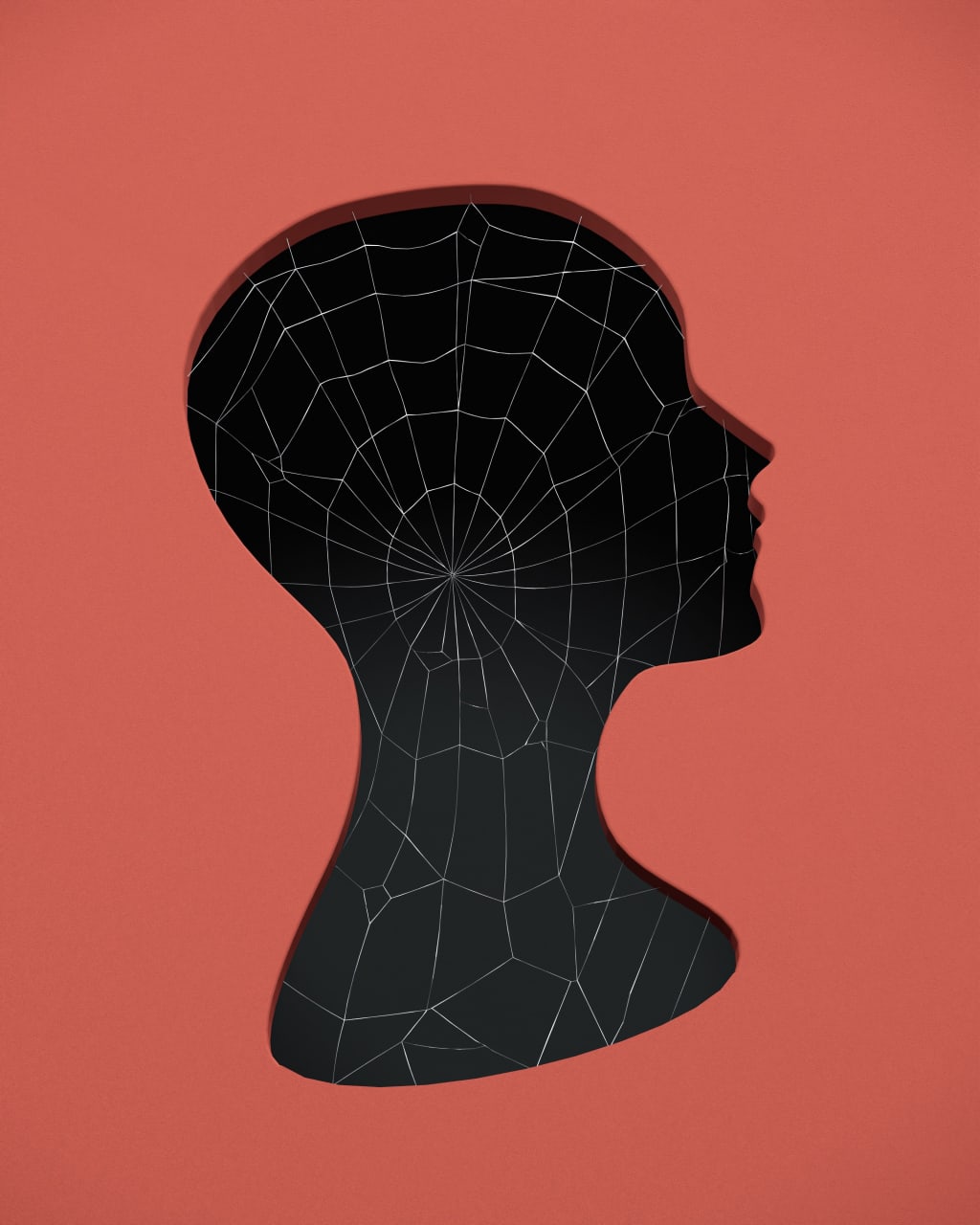
### **Inside the Cloud: The Science of How Clouds Work**
Clouds are fascinating formations in the Earth's atmosphere, playing a crucial role in weather, climate, and even the water cycle. But what exactly happens inside a cloud? Let’s dive into the science behind them.
---
## **1. What is a Cloud?**
A cloud is a visible mass of **tiny water droplets or ice crystals** suspended in the air. They form when **water vapor cools and condenses** around microscopic particles called **cloud condensation nuclei** (like dust, pollen, or pollution).
---
## **2. How Do Clouds Form?**
Cloud formation involves three key steps:
1. **Evaporation** – Sun heats Earth's surface, turning liquid water into vapor.
2. **Rising Air** – Warm, moist air rises and expands, cooling as it gains altitude.
3. **Condensation** – When air cools to its **dew point**, water vapor condenses into droplets around tiny particles, forming clouds.
---
## **3. The Inner Workings of a Cloud**
Inside a cloud, complex processes occur:
### **A. Microphysics: Water Droplets & Ice Crystals**
- In **warmer clouds** (low altitudes), tiny water droplets (~10–20 microns) float and collide.
- In **colder clouds** (higher altitudes), **supercooled water** (liquid below 0°C) and ice crystals coexist.
- **Bergeron Process**: Ice crystals grow at the expense of water droplets, leading to snowflakes.
### **B. Updrafts & Downdrafts**
- **Updrafts** (rising air) keep droplets suspended.
- **Downdrafts** (descending air) can pull droplets down, leading to rain.
- Strong updrafts in thunderstorms can create **hail** by cycling ice pellets up and down.
### **C. Precipitation Formation**
- **Collision-Coalescence** (warm clouds): Droplets merge until too heavy, falling as rain.
- **Ice Crystal Growth** (cold clouds): Ice crystals grow large enough to fall as snow or melt into rain.
---
## **4. Types of Clouds & Their Secrets**
Different clouds reveal different processes:
- **Cumulus** (puffy) – Strong updrafts, often growing into thunderstorms.
- **Stratus** (flat layers) – Steady, light rain or drizzle.
- **Cirrus** (wispy) – Made of ice crystals, high in the atmosphere.
- **Cumulonimbus** (thunderheads) – Towering clouds with intense updrafts, hail, and lightning.
---
## **5. Lightning & Charge Separation**
Inside storm clouds:
- Ice crystals collide, creating **positive and negative charges**.
- The separation leads to **lightning**—a giant electric spark between clouds or to the ground.
---
## **6. Why Study Clouds?**
- **Weather Prediction**: Understanding clouds helps forecast storms.
- **Climate Impact**: Clouds reflect sunlight (cooling) but also trap heat (warming).
- **Aviation Safety**: Turbulence and icing inside clouds affect flights.
---
### **Final Thought**
Clouds are **dynamic, ever-changing systems** where tiny droplets and ice crystals interact with air currents, leading to everything from gentle rain to violent storms. Next time you look up, remember—there’s a lot of fascinating science floating above you!
Would you like a deeper dive into any specific aspect, like lightning formation or cloud seeding? ⚡☁️
The phrase *"inside the cloud"* can have different meanings depending on the context. Here are a few possible interpretations:
### 1. **Cloud Computing (Technology)**
"The cloud" is a technical term for data centers and remote servers that store and process data over the internet rather than on local devices. - "Inside the cloud" may refer to: - The infrastructure, which includes servers, storage, and networking, that underpins cloud services like Microsoft Azure, AWS, and Google Cloud. - The applications and data that are stored in cloud environments. - The inner workings of cloud-based systems (security, virtualization, and load balancing) ### 2. Weather (meteorology) "Inside a cloud" literally means to be within the visible mass of airborne ice crystals or water droplets. - Pilots, skydivers, or hikers might experience this when surrounded by fog or high-altitude clouds.
### 3. **Figurative Significance** - *"In the cloud(s)"* can imply being distracted, daydreaming, or not fully present (e.g., *"His head is in the clouds"*).
- On the other hand, it could represent mystery or something that cannot be seen (for instance, "The secrets hidden inside the cloud"). ### 4. **Music & Pop Culture**
- The expression is used as a metaphor in songs, movies, and books (for example, "Living inside the cloud" could represent a digital or ethereal life). ### Which meaning are you referring to?
Let me know if you'd like a deeper dive into any of these! ☁️
This breakthrough in **atom-resolved microscopy** represents a significant leap in our ability to observe and study quantum interactions at the atomic level. Here’s a breakdown of the key innovations and implications:
### Important Developments: 1. **Direct Imaging of Atomic Interaction:** - Traditional methods (like absorption imaging) only reveal the bulk shape of an atom cloud, analogous to seeing a fog but not the water droplets.
- This new technique captures **individual atoms** while they interact in free space, providing unprecedented spatial resolution.
2. **Freezing Quantum Motion:**
- The researchers first trap atoms in a loose laser beam, allowing them to interact naturally.
- A sudden **optical lattice** (a grid of laser light) freezes the atoms in place, preserving their positions mid-interaction.
- A second laser induces fluorescence, revealing each atom’s exact location.
3. **Non-Destructive Detection:**
- A major challenge was imaging atoms without destroying them with excessive light (akin to "using a flamethrower to see a snowflake").
The team devised methods for maintaining atom stability in the lattice while simultaneously collecting sufficient fluorescence. ### **Why This Is Important:** - **Quantum Mechanics Visualization:**
Atoms obey quantum laws, meaning their position and momentum can’t be precisely known simultaneously (Heisenberg’s Uncertainty Principle). This method **freezes** atoms in place, offering a rare snapshot of their quantum states.
- **Studying Strong Interactions:**
Scientists can examine quantum entanglement, superfluidity, and quantum phase transitions in real time by imaging atoms in the middle of an interaction. - **Beyond Previous Limits:**
Earlier methods (e.g., scanning tunneling microscopy) required surfaces, while this works in **free space**, enabling studies of ultracold gases and exotic quantum matter.
### Potential Future Uses: - **Simulations at the quantum level:** Simulating complex materials (e.g., high-Tc superconductors) by engineering atomic interactions.
- "Precise Measurements:" Improved atomic clocks or sensors by tracking individual atom dynamics.
- "Quantum Computing:" Better control and readout of qubits in neutral-atom arrays.
Zwierlein’s analogy of "seeing a cloud vs. its water molecules" perfectly captures the leap this represents—from **statistical observations** to **single-atom quantum snapshots**. This could unlock new frontiers in understanding and harnessing quantum matter.
About the Creator
Keep reading
More stories from writers in Lifehack and other communities.
How to Deal With Rude Customers
Let me start by saying congratulations on your job! You’re probably excited but also a little nervous about dealing with customers. Don’t worry — anyone working in public-facing roles has to deal with difficult or impatient customers. It’s part of the job. But handling them doesn’t have to be stressful.
By Jakayla Toneya day ago in Lifehack
The Quiet Journey of a Piano Across Tulsa
In Tulsa, Oklahoma, a piano is rarely treated as a simple object. It occupies space not only in a room, but in the emotional life of a household. Many families can trace the presence of their piano through years of routine and change, remembering moments when music filled the air and others when the instrument stood silently, still meaningful simply by being there. When the time comes to move a piano across Tulsa, it often feels less like a task and more like a passage from one chapter of life to another.
By House Doctor4 days ago in Lifehack
I've Just Realized
The President doesn't understand music. There. It felt very good to write that; it's some thing I just realized today. Oh , yes; he plays it. He TRUMPets it in rallies and meetings, pumps it across the airwaves when he gathers up our minutes waiting for his late arrival.
By Judey Kalchik 5 days ago in Beat


Comments
There are no comments for this story
Be the first to respond and start the conversation.