
Illuminating Intelligence: Light-Powered AI Revolution
Brighter AI, Smarter Future: The Photonic Revolution

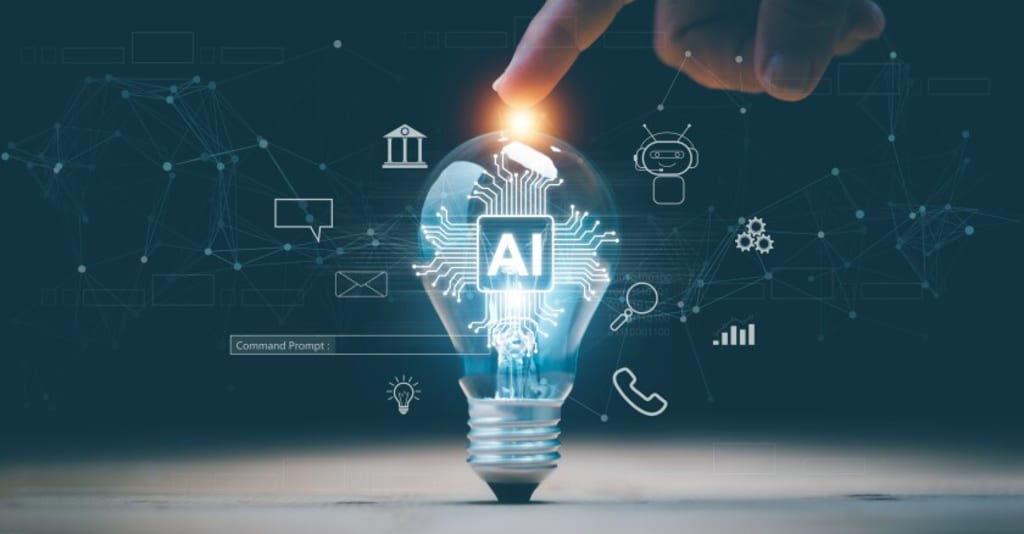
The rapid evolution of artificial intelligence (AI) has reshaped industries, from healthcare to finance. However, the growing computational demands of AI systems have exposed critical limitations in traditional silicon-based electronics, including energy inefficiency and heat generation. Enter the light-powered AI revolution, a groundbreaking paradigm that leverages photonics—the science of light—to redefine how machines learn, process data, and innovate. This article explores the mechanics, benefits, and future of light-powered AI, offering insights into why this technology is poised to transform the world.
How Light-Powered AI Works
Light-powered AI, or photonic computing, replaces electrons with photons (light particles) to perform computations. Here’s a simplified breakdown:
Photonic Integrated Circuits (PICs):
These circuits use lasers, waveguides, and modulators to transmit and manipulate light. Unlike silicon chips, which rely on electrical signals, PICs encode data in light pulses, enabling faster data transfer and parallel processing.
Optical Neural Networks (ONNs):
Inspired by biological neural networks, ONNs use light to perform matrix multiplications—the backbone of AI algorithms. Light’s ability to travel at 300,000 km/s and interact without interference allows for near-instantaneous calculations.
Energy-Efficient Design:
Photonic systems minimize energy loss as light generates negligible heat compared to electrons. This reduces the need for cooling infrastructure, a major cost driver in data centers.
Hybrid Systems:
Current implementations often combine photonic and electronic components, with light handling computation and electricity managing storage and control.
Why Light-Powered AI Matters
The limitations of conventional AI hardware are stark:
Energy Consumption: Training large AI models like GPT-4 can consume megawatt-hours of electricity.
Speed Bottlenecks: Electron-based systems struggle with latency in real-time applications.
Environmental Impact: Data centers account for ~1% of global electricity demand, contributing to carbon emissions.
Light-powered AI addresses these challenges head-on:
Speed: Photons enable computations at the speed of light, bypassing resistive-capacitive delays in wires.
Scalability: Optical systems can process vast datasets in parallel, making them ideal for AI’s exponential growth.
Sustainability: Reduced energy use aligns with global net-zero goals.
“The marriage of photonics and AI will redefine what machines can achieve.” — Nick Harris, CEO of Lightmatter
Benefits of Light-Powered AI
Unmatched Efficiency
Photonic chips consume up to 90% less energy than electronic counterparts, drastically lowering operational costs. For instance, a photonic tensor core can perform AI tasks at 1,000x higher efficiency.
Real-Time Processing
Applications like autonomous vehicles, robotic surgery, and fraud detection require split-second decisions. Light-based systems eliminate latency, enabling true real-time analytics.
Scalability for Advanced AI
As AI models grow (e.g., trillion-parameter systems), photonics’ parallel processing capabilities ensure scalability without proportional energy increases.
Environmental Sustainability
Google’s data centers alone used 15.5 TWh of electricity in 2023. Transitioning to photonics could cut this demand by half, significantly reducing carbon footprints.
“Light-based computing isn’t just an alternative—it’s the next evolutionary step for AI.” — Dr. Jelena Vučković, Stanford University
New Frontiers in Research
Light-powered AI accelerates breakthroughs in quantum computing, material science, and brain-inspired neuromorphic systems.
Future Prospects
The fusion of photonics and AI is still in its infancy but holds immense promise:
Quantum Photonics:
Integrating quantum computing with photonic AI could solve problems deemed intractable today, such as drug discovery and climate modeling.
Edge AI Revolution:
Compact, low-power photonic chips will empower AI in remote areas (e.g., IoT sensors, disaster response drones) without relying on cloud infrastructure.
Brain-Inspired Computing:
Researchers are developing optical neuromorphic chips that mimic the human brain’s efficiency, enabling adaptive learning with minimal energy.
Democratization of AI:
Lower costs and energy needs could make advanced AI accessible to startups and developing nations, fostering global innovation.
Dr. Michal Lipson, a pioneer in silicon photonics at Columbia University, predicts:
“In 10 years, every major AI system will have a photonic component. Light is the future of computation.”
Challenges Ahead
While promising, hurdles remain:
Material Limitations: Current photonic materials (e.g., silicon nitride) lack the maturity of silicon.
Manufacturing Costs: Scaling production requires investment akin to the semiconductor industry’s growth in the 20th century.
Integration with Existing Tech: Hybrid systems need seamless electronic-photonic interoperability.
Conclusion
The light-powered AI revolution is not a distant dream but an imminent reality. By harnessing photons, we can build faster, greener, and more scalable AI systems that transcend today’s limitations. Governments, academia, and tech giants must collaborate to accelerate R&D, address challenges, and unlock photonics’ full potential. As we stand at the brink of this transformation, one truth is clear: the future of AI is luminous.
FAQ
Q1: What is photonic AI?
A: Photonic AI uses light instead of electricity to perform computations, enabling faster, more energy-efficient processing.
Q2: How does it differ from traditional AI hardware?
A: Traditional systems use electrons and silicon chips; photonic AI uses photons and optical components, reducing heat and energy use.
Q3: Are there real-world applications today?
A: Yes! Companies like Lightmatter and Intel are testing photonic chips for data centers, autonomous vehicles, and telecom networks.
Q4: What are the main challenges?
A: High manufacturing costs, material limitations, and integration with existing electronics.
Q5: When will light-powered AI become mainstream?
A: Experts estimate commercial adoption within 5–10 years as R&D accelerates.
The dawn of light-powered AI is here—and it’s shining brighter than ever. 🌟
About the Creator
Jacky Kapadia
Driven by a passion for digital innovation, I am a social media influencer & digital marketer with a talent for simplifying the complexities of the digital world. Let’s connect & explore the future together—follow me on LinkedIn And Medium
Keep reading
More stories from Jacky Kapadia and writers in Lifehack and other communities.
Supercharge Your Productivity: Top 10 Techniques That Actually Work
In today’s fast-paced world, productivity isn’t just a buzzword—it’s the key to achieving personal and professional success. Yet, with endless distractions, overwhelming workloads, and the pressure to “do it all,” many people struggle to stay focused and efficient. This article dives into 10 proven productivity techniques, backed by science and real-world success stories, to help you reclaim your time, energy, and results.
By Jacky Kapadia10 months ago in Lifehack
Marble Floor or Tile Floor: Which One Actually Works for Your Home?
You're renovating your home, the walls are done, the furniture is picked, and then you hit the floor decision. Suddenly you're standing in a showroom holding two samples: one gorgeous slab of marble and one sleek porcelain tile, completely stuck between choosing a Marble Floor or Tile Floor.
By Brijesh Agarwata day ago in Lifehack
Zojirushi BB HAC10 vs BB SSC10: Which One Should You Buy?
Choosing between the Zojirushi bb hac10 vs bb ssc10 can feel confusing when both promise great homemade bread in a compact size. I like how each model focuses on small 1-pound loaves, which fit typical U.S. households and reduce waste.
By Mohammed mamun4 days ago in Lifehack


Comments (1)
This is fascinating. I wonder if there are applications for stringing together different apps across space or do they have to be contained in the same machine. I am thinking of superfast internet as long as the light has a straight line from node to node.