
I Thought an iPad would make me read more; it didn’t.
I Thought an iPad would make me read more; it didn’t.

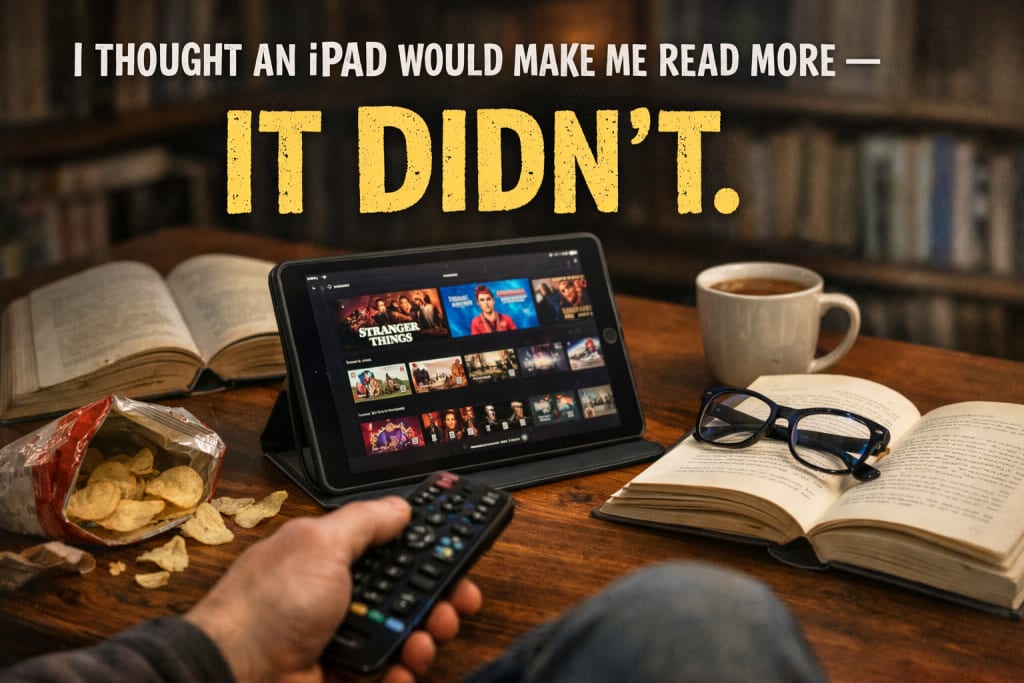
I Thought an iPad Would Make Me Read More— It Didn’t
When I got my iPad, I sincerely felt it would alter one thing about my life.
I would read more.
Not emails.
Not messages.
Not short pieces.
Real reading.
Books.
Long-form writings.
Things that take time and care.
The screen was great.
The battery lasted all day.
Everyone online stated the same thing:
“An iPad makes reading enjoyable.”
So I purchased it with confidence.
A few months later, my reading habits looked precisely the same.
The Version of Ourselves We Shop For
Buying an iPad wasn’t about technology.
It was about intention.
I envisaged a calmer version of myself:
reading in the evening
emphasizing passages
completing books
This is how tech marketing works.
It doesn’t sell gadgets.
It sells identity.
The iPad wasn’t promising pixels or CPUs.
It was promising a better habit.
The First Week: Hope Feels Real
At first, it worked.
I installed reading applications.
Downloaded a couple books.
Adjusted brightness perfectly.
Reading was comfy.
No eye strain.
No hefty device.
For a few nights, I actually read more.
And that’s the dangerous part.
Because early success makes you assume the item caused it.
Then Life Returned.
After the adrenaline faded, something familiar occurred.
I opened the iPad to read.
But notifications were there.
The YouTube symbol was there.
The browser was one touch away.
Social applications waited quietly.
The same distractions that were on my phone now lived on a larger, better screen.
The iPad didn’t reduce distraction.
It updated it.
A Bigger Screen Doesn’t Create Focus
This is the unpleasant reality.
Reading isn’t restricted by screen size.
It’s limited by attention.
If attention isn’t safeguarded, no device can produce it.
The iPad makes reading pleasant—but comfort isn’t the same as commitment.
Without limits, behaviors don’t stay.
Why Reading Feels Harder Than It Used To
Reading requires:
stillness
patience
mental space
Modern tech teaches us the opposite.
Quick rewards.
Constant stimulation.
Endless scrolling.
So when you sit down to read, your brain resists.
Not because you don’t enjoy reading—but because you’re accustomed to quicker dopamine.
The iPad can’t reverse that training.
When the iPad Becomes “Just Another Screen”
At some time, I noticed something unusual.
I was spending more time on the iPad—but not more time reading.
Watching videos seemed easy.
Browsing felt lighter.
Reading felt tough.
The iPad didn’t fail.
It performed precisely what it was meant to do: give access.
What it didn’t do was restrict alternatives.
And limitations are crucial for habits.
Why Dedicated E-Readers Feel Different
This is when things become interesting.
People who read a lot frequently use e-readers, not iPads.
Why?
Because e-readers:
don’t have social applications
don’t push notifications
don’t tempt you continually
They remove choice.
And reducing choice makes habits easier.
The iPad provides you freedom.
Reading requires limitation.
The Emotional Guilt That Comes With “Unrealized Potential”
This section astonished me.
I didn’t simply stop reading more.
I felt guilty.
The iPad sat there—competent, underused for its “purpose.”
Every time I picked it up to view a video, a low voice said,
“You bought this to read.”
That guilt didn’t drive me.
It exhausted me.
Why Buying Tools Rarely Fixes Habits
We frequently believe, “If I buy the right tool, the habit will follow.”
It works occasionally.
But most behaviors arise from:
routines
environment
friction
The iPad reduced friction from reading—but didn’t provide structure.
Without structure, comfort alone isn’t enough.
When I Finally Stopped Blaming Myself
At first, I blamed myself.
“Why can’t I just read?”
“Why am I wasting this device?”
Then I discovered something important:
The issue wasn’t discipline.
It was design.
The iPad is intended for everything.
Reading requires a room built for one purpose.
What Actually Helped Me Read More
Not a new gadget.
But tiny changes:
fixed reading time
notifications off
fewer applications installed
Once reading had a safe place, it eventually returned.
The iPad didn’t create the habit.
The environment did.
Who the iPad Is Still Great For
This isn’t an assault on the iPad.
It’s a wonderful gadget if you:
already read regularly
require flexibility
appreciate digital notes
For some consumers, the iPad reinforces an established habit.
But if you’re expecting it to build the habit…
It probably won’t.
The Mistake Most Buyers Make
The error isn’t getting an iPad.
It’s expecting hardware to alter behavior.
Technology supports behaviors.
It doesn’t build them.
Once you accept it, disappointment evaporates.
Why This Story Resonates With So Many People
Because many individuals silently endure the same thing.
They purchased a tablet to read more.
They didn’t.
They wondered why.
When someone eventually says: “It wasn’t just me,”
People sense relief.
Concluding Remark
I didn’t purchase the incorrect gadget.
I got the proper equipment for the wrong expectation.
The iPad is great.
But reading isn’t about screens.
It’s about attention.
And attention is developed carefully—not bought.
Once I stopped expecting the iPad to alter me, it became what it always was:
An excellent tool.
Just not a habit maker.
About the Creator
abualyaanart
I write thoughtful, experience-driven stories about technology, digital life, and how modern tools quietly shape the way we think, work, and live.
I believe good technology should support life
Abualyaanart
Keep reading
More stories from abualyaanart and writers in Lifehack and other communities.
Don’t Feel at Home in Your Own Home? Interiors Expert Reveals Subtle Design Shifts That Instantly Elevate Your Space
Our homes are meant to be the place we love the most – yet many people feel disconnected from them. Approximately 36% of UK homeowners reported being unhappy with their current housing situation in 2025.
By Millie Bradbury7 days ago in Lifehack
Guard Your Battery
Why are some people so attractive just by standing there? It’s not because they are "likable," but because they don’t need everyone to like them. I realized later that truly charismatic people allow themselves to be criticized, but they never criticize themselves. They never try to please the world; instead, the world stops to watch them.
By Emily Chan - Life and love sharing3 days ago in Poets



Comments
There are no comments for this story
Be the first to respond and start the conversation.