
How to Prepare for Kilimanjaro
How to Prepare for Kilimanjaro


Climbing Kilimanjaro is one of the world’s great trekking adventures. At 5,895 meters, it is the highest mountain in Africa — and it calls to thousands of travelers each year. Yet success depends not on luck but on preparation. Getting ready means training your body, planning your time, packing correctly, and understanding what the mountain demands.
This guide explains how to prepare so that your journey up Kilimanjaro is safe, rewarding, and unforgettable.
Why Preparation Matters
Weekend hikes do not compare to climbing Kilimanjaro. The mountain brings long hours of walking, thin air, and rapidly changing weather — from tropical heat to icy nights. Those who prepare thoughtfully stand a much better chance of reaching Uhuru Peak, the summit.
Preparation is not just about equipment. It is about:
• Allowing your body to adapt to altitude.
• Knowing how long it takes to climb Kilimanjaro.
• Choosing the best time to climb Kilimanjaro.
• Training your fitness and your mindset.
How Long Does It Take?
The first question most climbers ask is: how long does it take to climb Kilimanjaro? The answer depends on the route.
• Marangu Route – Often 5–6 days, with hut accommodation.
• Machame Route – Usually 6–7 days, scenic and popular.
• Lemosho Route – 7–8 days, excellent for acclimatization.
• Northern Circuit – 9 days, the longest and highest success rate.
While shorter itineraries exist, most experienced guides recommend at least 7–8 days. More time allows your body to adjust to altitude, greatly increasing your chances of reaching the summit safely.
Best Time to Climb Kilimanjaro
The best time to climb Kilimanjaro is during the dry seasons:
• January to March
• June to October
These months bring clearer skies, less mud, and generally better conditions. However, they are also busier. The rainy seasons (April–May and November) mean fewer crowds, but the trails can be slippery and visibility lower.
Ultimately, the best time is the one that balances weather, crowd levels, and your personal schedule.
Training for the Trek
You don’t need elite athletic ability, but training is essential:
• Hike regularly on hills or stairs with a backpack.
• Build endurance with cardio (running, cycling, or swimming).
• Strengthen legs and core for long days of uphill walking.
• Practice “pole pole” — the slow, steady pace essential at altitude.
Breaking in your boots and carrying weight before your trip will make the trek far more comfortable.
Packing Gear for Kilimanjaro
Good gear protects you from both heat and cold:
• Clothing layers: moisture-wicking base, insulating mid-layer, waterproof outer.
• Footwear: durable hiking boots, already broken in.
• Essentials: warm hat, gloves, sleeping bag (rated for sub-zero), headlamp, sunglasses, sunscreen.
Your porters will carry the main bag, but your daypack should include water, snacks, a jacket, and a camera.
The Mental Game
Altitude challenges the body, but mental resilience is equally important. Summit night begins around midnight, climbing through darkness and wind. Tiredness makes many want to quit. To succeed:
• Focus on one step at a time.
• Repeat “pole pole” (slowly, slowly) to yourself.
• Use breathing and positive self-talk.
• Trust your guide’s experience.
Choosing the Right Company
By Tanzanian law, all trekkers must hire a licensed guide. Select a company with strong safety standards, fair porter treatment, and excellent client reviews. Ask about:
• Oxygen and first aid equipment.
• Itinerary length (avoid too-short routes).
• Food quality and dietary options.
• Success rates for past clients.
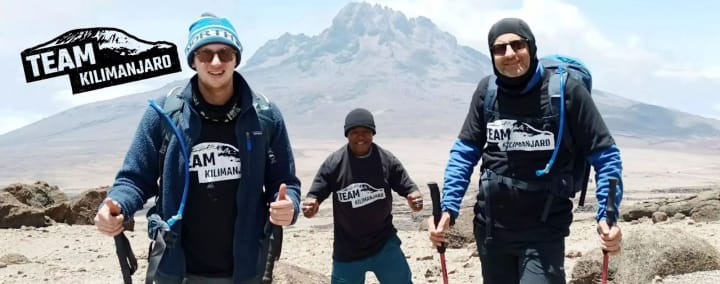
Reputable operators such as Team Kilimanjaro have guided thousands safely to the summit.
Food and Hydration
Expect hearty meals — porridge, soups, rice, vegetables, and occasional meat — designed for energy at altitude. Carry snacks you enjoy. Drink at least 3–4 liters of water daily; dehydration makes altitude sickness worse.
Summit Night and Beyond
Summit night is the hardest part: steep switchbacks, thin air, and extreme cold. Yet the reward is incomparable. As dawn breaks, you reach Stella Point or Gilman’s Point, then Uhuru Peak — with glaciers at your feet and the African plains stretching below.
Afterward, the descent is rapid, legs aching but spirits high. You return to the forest, receive your certificate, and carry home memories that last a lifetime.
Conclusion: Preparation Is Everything
How to prepare for Kilimanjaro?
• Learn about climbing Kilimanjaro.
• Understand how long it takes.
• Choose the best time.
• Train your body.
• Pack wisely.
• Trust experienced guides.
Do this, and the mountain will welcome you. Kilimanjaro is not just a climb — it is a story you prepare to write.
FAQs
Q1: Do I need technical climbing skills?
No — Kilimanjaro is a trekking peak, not a technical climb.
Q2: What is the success rate for summiting?
Longer routes (7–9 days) have success rates of 85–90%, while shorter routes are lower.
Q3: Can I climb without a guide?
No — Tanzanian law requires a licensed guide and support team.
Q4: How cold does it get at the summit?
Temperatures can drop below –10°C at night.
Q5: When should I book my trek?
At least several months in advance, especially for peak season.
About the Creator
Alex Winslow
A Good Writer, Always love to See the world in Peace Image.
Keep reading
More stories from Alex Winslow and writers in Lifehack and other communities.
Tanzania Safari & Tours: Wildlife Meets Culture:
Tanzania Safari A Tanzania safari is like an open dream. You go to land, and you see a wide place, full of animals, full of people smiling, and culture breathing. It is not like a small zoo. It is real. Lion walking. Elephants move slowly but strongly. Zebras crossing the field like paint on canvas. Giraffes stretch their necks high and higher. All this happened in one day.
By Alex Winslow5 months ago in Lifehack
Why Cold Exposure Is Gaining Popularity
From elite athletes to busy professionals, more people are stepping into tubs filled with icy water—and loving it. Ice baths, also known as cold plunges, have surged in popularity over the past decade. What was once a recovery tool reserved for professional sports teams is now a mainstream wellness practice.
By AnthonyBTV7 days ago in Lifehack
Moving a Piano in Chattanooga: What I Learned About Trust, Craft, and Care
The first time I watched a piano being moved, I expected noise, effort, and heavy lifting. What I didn’t expect was silence — careful, focused silence. Every movement was deliberate. Every step felt measured. It quickly became clear that moving a piano is not simply about strength. It is about responsibility.
By House Doctor7 days ago in Lifehack
Trickle Them Down, But Not Out
The thing about smart people is that they should know better, but alas, intelligence is not the same as wisdom. Not only do the mistakes of experts too short on vision—when they are not corrected—have the potential to do great and far-reaching damage, but they also undermine public confidence in the very notion of expertise. This is particularly so when expertise is wielded in defence of the rich and powerful as a cudgel against those laid low. As an academic, this lack of faith in “so-called experts” is painful to see as it plays out in the spread of dis-/misinformation, conspiracy theories, and anti-intellectualism writ large. But it is also an understandable impulse given the catastrophic failure of an economic ideology pushed by certain economic experts. Supply-side economics has shaped a broken system for the last half-century and has arguably done more to undermine the fabric of the American Dream than any policy framework of the past century.
By Cory Wright-Maley6 days ago in Humans


Comments
There are no comments for this story
Be the first to respond and start the conversation.