
How to Learn the Math Needed for Data Science?
Do I need to be a math genius to succeed?

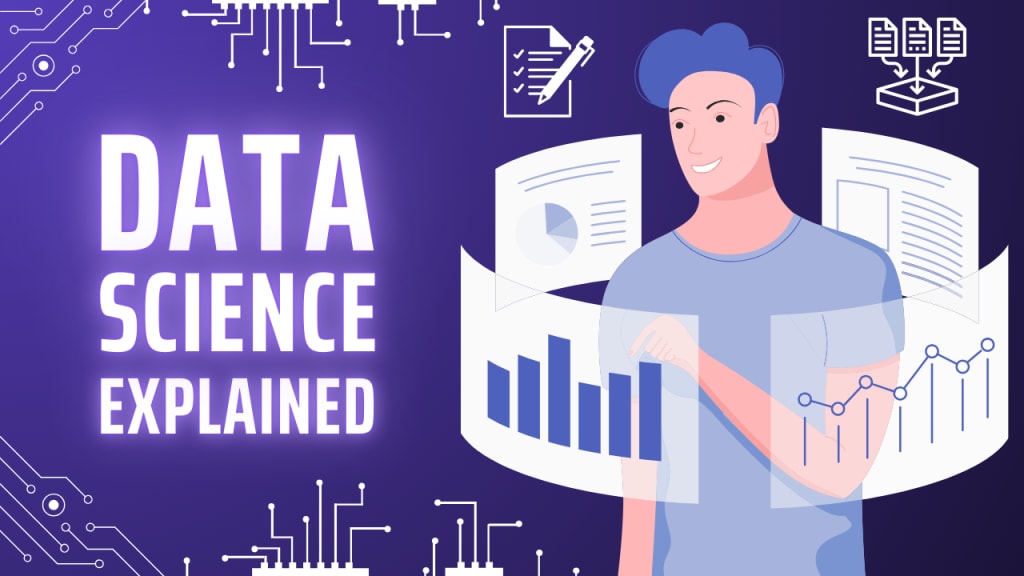
If you’ve ever considered diving into data science, you’ve probably wondered: Do I need to be a math genius to succeed? The short answer is no—but a solid understanding of key mathematical concepts is essential. Many aspiring data scientists feel intimidated by the math required, but the good news is that you don’t need to learn everything at once. Instead, a structured, practical approach will help you build the right foundation over time.
In this article, we’ll break down the core mathematical concepts needed for data science, share real-world examples of how they’re applied, and provide actionable strategies to help you learn effectively. Whether you’re a beginner or someone looking to strengthen your math skills, this guide will set you on the right path.
Why Math Matters in Data Science
At its core, data science is about analyzing patterns, making predictions, and extracting insights from data. To do this effectively, math plays a crucial role. Here’s why:
- Understanding Data: Statistical techniques help us summarize and interpret data meaningfully.
- Building Models: Machine learning and AI rely heavily on linear algebra, calculus, and probability.
- Optimizing Algorithms: Many algorithms depend on mathematical principles for efficiency and accuracy.
Now, let’s break down the key mathematical areas you need to focus on.
The Essential Math Topics for Data Science
1. Linear Algebra – The Foundation of Machine Learning
Linear algebra is the backbone of many machine learning algorithms. It helps us understand how data is structured and manipulated.
Key Topics to Learn:
- Vectors and matrices
- Matrix operations (addition, multiplication, inversion)
- Eigenvalues and eigenvectors
- Singular Value Decomposition (SVD)
Real-World Example:
Imagine you’re working on a recommendation system for an e-commerce website. Linear algebra helps in matrix factorization techniques, such as Singular Value Decomposition (SVD), to suggest products based on past user behavior.
2. Statistics & Probability – Making Sense of Data
Data science is about making data-driven decisions, and statistics is what makes that possible.
Key Topics to Learn:
- Descriptive statistics (mean, median, standard deviation)
- Probability distributions (normal, binomial, Poisson)
- Bayes’ Theorem and conditional probability
- Hypothesis testing and p-values
Real-World Example:
A marketing team wants to know if a new ad campaign increases sales. A/B testing—a statistical method—helps determine if the campaign's success is statistically significant or just due to chance.
3. Calculus – Understanding Optimization
While you don’t need to be an expert in calculus, understanding some fundamental concepts is beneficial, especially in machine learning.
Key Topics to Learn:
- Derivatives and gradients
- Partial derivatives (useful for neural networks)
- Gradient descent (used for optimizing ML models)
Real-World Example:
When training a neural network, gradient descent is used to minimize the error function. By calculating derivatives, the model learns the best parameters to make accurate predictions.
4. Discrete Mathematics – Logical Thinking & Algorithms
Discrete math helps in understanding algorithms, data structures, and combinatorial problems.
Key Topics to Learn:
- Graph theory (used in social networks and recommendation systems)
- Boolean algebra (helps in logic-based AI systems)
- Combinatorics (useful in probability calculations)
Real-World Example:
Google Maps uses graph theory to find the shortest route between locations. The same principles apply to social networks, where relationships are represented as graphs.
How to Learn Math for Data Science (Step-by-Step Guide)
1. Start with the Basics
If you’re a complete beginner, start with high school-level algebra and gradually move into more advanced topics.
Recommended Resource: Khan Academy (free and beginner-friendly)
2. Take Online Courses
Many platforms offer data science-specific math courses:
Coursera – Mathematics for Machine Learning (Imperial College London)
edX – Probability and Statistics in Data Science (University of California, Berkeley)
3. Learn by Doing
Theory alone won’t make you proficient. Apply what you learn through hands-on projects.
Project Idea: Analyze a dataset and calculate statistical insights (e.g., COVID-19 data, stock prices)
Tool: Use Python libraries like NumPy, Pandas, and Scikit-learn
4. Join a Study Group or Community
Learning math can be challenging alone. Engage with online communities to get support and motivation.
Join: Kaggle discussions, Reddit’s r/datascience, or Stack Overflow
5. Use Visualization Tools
Math can sometimes feel abstract. Use tools like Desmos (for calculus) and Geogebra (for linear algebra) to visualize concepts.
6. Practice Regularly
Math is a skill that improves with practice. Dedicate at least 30 minutes daily to solving problems.
Recommended Book: The Elements of Statistical Learning by Hastie, Tibshirani, and Friedman
Conclusion
Learning the math needed for data science may seem daunting, but with the right approach, it becomes manageable and even enjoyable. By breaking down complex concepts into practical applications, you’ll gain confidence and see real progress. Start small, practice consistently, and apply your knowledge in real-world projects.
Remember, data science isn’t about memorizing formulas—it’s about understanding concepts and knowing when to use them. Take your time, keep learning, and soon you’ll be solving data problems like a pro!
Are you currently learning math for data science? Share your experiences and challenges in the comments below!
About the Creator
John Arthor
seasoned researcher and AI specialist with a proven track record of success in natural language processing & machine learning. With a deep understanding of cutting-edge AI technologies.
Keep reading
More stories from John Arthor and writers in Lifehack and other communities.
The Truth About AI Bias: Should You Avoid DeepSeek?
Artificial intelligence (AI) is revolutionizing the way we interact with technology, from chatbots and search engines to complex decision-making systems. However, a growing concern among users and experts alike is AI bias—how some models may lean towards specific viewpoints, reflect societal prejudices, or provide skewed information. Recently, discussions around DeepSeek’s potential biases have surfaced, with some claiming that "DeepSeek is highly biased, don’t use it." But is that entirely fair? Should we avoid DeepSeek and similar AI tools altogether, or is there a more nuanced way to approach AI-generated content?
By John Arthorabout a year ago in Lifehack
Company Setup in Dubai: Complete 2026 Guide for Entrepreneurs
Starting a business in Dubai has become one of the most attractive opportunities for global investors. With zero personal income tax, world-class infrastructure, and access to international markets, company setup in Dubai offers strong potential for growth.
By Adnan Sheikh4 days ago in Lifehack
When the Role No Longer Fits
In the late fall of last year, Clair stood up from her desk in an office that looked out across the Hudson. She had worked in this role for several years. On paper, the job made sense. It offered stability, credibility, and a clear career path. As the light began to fade, the Statue of Liberty stood beyond the glass, pale against the darkening sky. Tugboats moved steadily along the river and larger yachts passed without hurry, carrying people who were not thinking about offices or job titles. Near the edges, the water darkened where the tide turned.
By Jane Horan6 days ago in Lifehack



Comments
There are no comments for this story
Be the first to respond and start the conversation.