
How To Get The Most Out Of The Sun
2 Primary Factors That Determine Solar Panel’s Energy Output
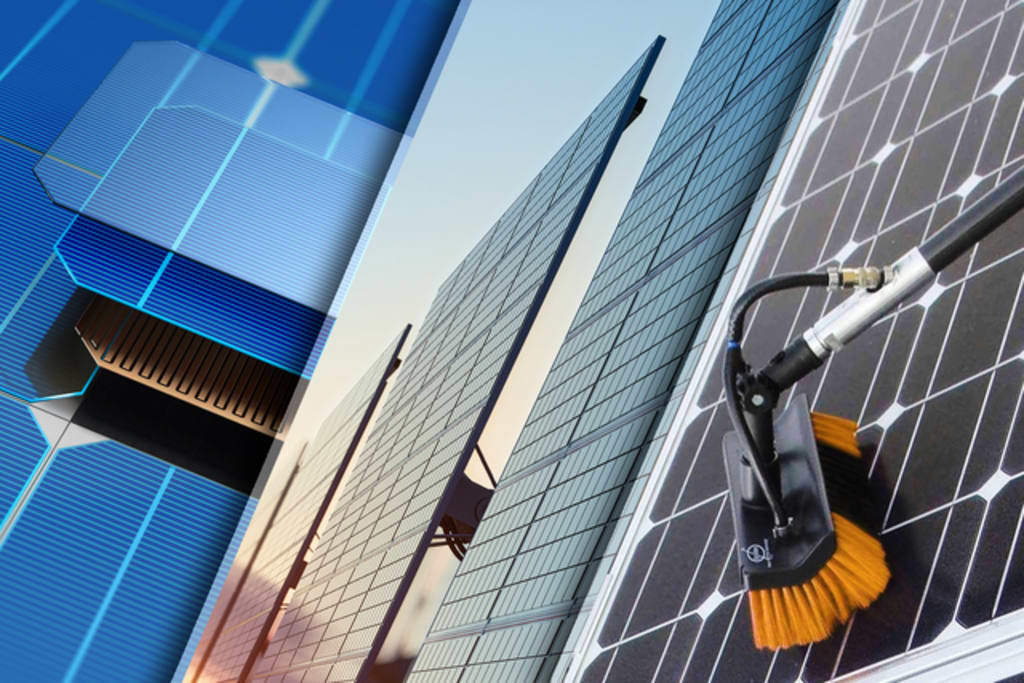
Have you ever wondered how you can use the sun to its maximum potential? Then, read along to find answers. When you switch to the consumption of the sun’s energy, solar panel output should be the primary focus of your attention. Why? It measures the amount of power a solar panel system generates, which sustains the energy supply to your house. That supply of power never stops as solar energy is an inexhaustible resource. Indeed, if you don’t want to run out of energy even with a limitless resource, then you should pay attention to solar panel output. Let’s move on with the article to see which factors determine it and how it can be maintained and even increased.
Efficiency
If we date back to the past, in comparison to the 1950s, photovoltaic (PV) panels’ rate of conversion of sunlight considerably increased. At that time, solar cells could barely convert 6 percent of solar energy into power. Today, the picture is different. For you to imagine it, a solar panel company like LA Solar Group may claim that a solar panel efficiency is 15 percent. Despite claiming, when consuming the sun’s energy, you get exactly 15 percent PV panel output - not more, not less. By the way, the PV panel’s efficiency depends on a panel’s material, wiring and busing, as well as reflection. The first metric - material, impacts the light conversion into power. Materials like monocrystalline silicon and polycrystalline silicon differently affect how the light gets converted into electricity. The second metric - wiring and busing, has a massive effect on the process of capturing and transferring power. That is why organizing wires and busbars in a detailed manner for maximum fit is essential. The third metric - reflection, defines the direction of reflected light. In the case of getting reflected away, the PV panel’s efficiency suffers a lot. These three primary metrics should be taken care of for high efficiency - high solar panel output.
Solar Panel Size
Despite a wide range of solar panel sizes, in terms of PV panel output, two measurements may be considered: 60-cell and 72-cell. Assumedly, 60-cell panels have a lower output of 300 watts and beyond. While 72-cell panels have a higher output of 350 watts and beyond. But choosing either one of them requires an understanding of which one is suitable for your roof. Let’s discuss scenarios to comprehend that detail, too. In the first scenario, you have a small and uniquely shaped roof. For this one, it is advised to give up on some portion of efficiency and get a bigger PV panel. With larger panels, you increase power output and shorten the time frame to meet your target output number. In the second scenario, you have a normal-sized roof, possibly with limited or shaded areas. For these cases, professionals of the field advise replacing bigger panels with smaller ones. Smaller PV panels will produce electricity in a more efficient way. Hence, you will be able to have the maximum possible power output and save money. Choose wisely to become friends with the sun.
Can Photovoltaic Panel Output Be Increased?
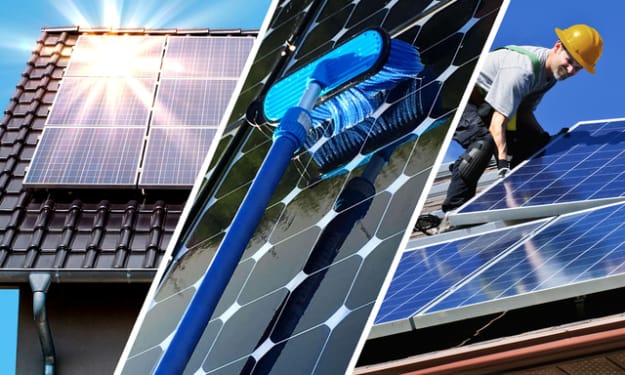
Solar science didn’t reach that level of proficiency in energy output. But I have good news! There is a way to maintain maximum power output at your house. As discussed above, efficiency is one of the two primary factors affecting solar panel output. By being attentive to PV panels and conducting routine cleaning at least once a year, you will prevent efficiency decrease. Clean solar panels work at high efficiency, which contributes to the high output of energy. Everything is this easy!
Take care of solar equipment, choose wisely, and the sun will be your lifelong friend!
About the Creator
Keep reading
More stories from Lana Gregory and writers in Lifehack and other communities.
The Secret Is Revealed: Increased Solar Panel Efficiency Is Possible
The solar industry has good news for you! From now on, you have the possibility to increase solar panel efficiency. People usually face challenges regarding reaching a target solar panel output. They basically don't know how to do that. I'd hurry to tell you that by increasing photovoltaic (PV) panels' efficiency, the power output increases, too. Why is that so? To answer that question, let's start with another one - what is solar panel efficiency? It is a metric measuring a PV panel's capability to convert the sun's energy into consumable power. What does it mean to increase efficiency? Increasing efficiency is bringing the solar equipment to its best state for maximum sunlight exposure. In that case, solar panels get the opportunity to supply energy to your house more efficiently - increased efficiency! Accordingly, solar equipment converts considerably more sunlight into electricity. Consequently, the solar panel output rises as a result of more efficient solar energy generation. See, increased efficiency - increased solar panel output. Now, let's proceed with the article to acknowledge how to increase the efficiency of a solar panel.
By Lana Gregory5 years ago in Lifehack
Why More Parents Are Choosing Organic Baby Clothes (and What It Means for the Future of Childhood)
Parenthood has a way of changing how we see the world — especially the small, everyday choices that quietly shape our children’s lives. From the food they eat to the toys they play with and the clothes that touch their skin, many parents today are looking beyond convenience and price tags and asking a deeper question: What’s actually best for my child in the long run?
By Car Detail Calgarya day ago in Lifehack



Comments
There are no comments for this story
Be the first to respond and start the conversation.