
How to Ease the Guilt of a Dead Houseplant
Don't worry, we have all been there


There is no doubt that our connection with Nature is the most important relationship that we have as a collective human race. Simply put, Nature is our foundation. From food and nourishment, shelter and warmth, medicine and emotional well being, to connection with the spiritual and the Divine, we have much to thank Nature for every single day. Especially now, at a time when we have become physically isolated from one another, we long for a meaningful connection that reminds us of our inherent interconnectedness.
It is no wonder why the houseplant trend has long surpassed being a mere fad and evolved into more of a way of life. Humans are reconnecting with Nature by bringing the natural indoors. By bringing plants into our homes, our plant friends will naturally adapt to our environment. With enough understanding and patience, a plant that naturally thrives in tropical regions can grow in an apartment in the Midwest. This means we must assume the responsibility of being the weather makers, the giver of water and nutrients, the bringer of light and love that is so necessary in their proper development. We must make sure they receive adequate sunlight, we must water properly and consistently, and we must check for pests.
Although we give them all our love, attention, and energy, still there will inevitably be times when we come face to face with death. That is simply the way of Mother Nature. With life there is always death. One cannot be without the other. Houseplants have adapted to our way of indoor life; our dry heated forced air, filtered sunlight from the other side of glass windows, our calcified tap water. Now we must adapt to their ways of death and regeneration.
It is very easy to get overwhelmed with plant death guilt. It manifests in ways like feeling as though you deeply messed up, like you did not do enough, like you failed or you’re not qualified to take care of plants.
I am here to reassure you that you are still very much a wonderful plant parent capable of growth, life, and a thriving plant space. You are fully worthy of caring for plants. I am here to tell you how to cope with the cycle of plant death and allow it to fuel life once again.
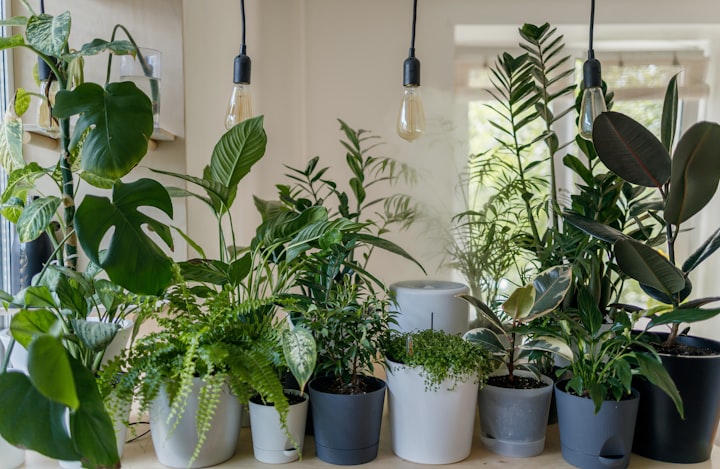
How I Learned the Acceptance of Life / Death Cycles From Houseplants
This winter was brutal. There was snowfall nearly every day, enough to blanket the city and freeze the sidewalks. Long gone were the pleasant days of mornings runs and evening walks as an outlet. There were many days in a row I did not go outside, not even once. If there was no sunshine, there was no point. So like the bare deciduous trees and the small woodland creatures, I hibernated.
Wanting to stay connected to Nature, I tended to my plants with an aching need to touch soil and green. I watered with little regard of the lack of sunlight and the abundance of cloudy days. I wanted to nurture, but there is such a thing of too much love.
To give you a proper idea, I care for over 150 houseplants within my two bedroom apartment. This was the first winter I experienced the intense debilitating combination of radiator heating and houseplants. I quickly learned the colder it was outside, the hotter it became in the apartment. It was so unbearable it got to the point where my partner and I were walking around the apartment in shorts and tanks as if it were summer, sweating so much our skin stuck to the couch. My plants drank like it was summer too. They were drying out so quickly I couldn’t keep up, and neither could they. I knew I had to water, their soil was dry, but there just wasn’t enough sunlight in the dark winter months to give them enough energy to drink that water. I was walking tightrope of under watering and over watering. While I usually have great intuition when it comes to what plants need, I was unbearably lost.
Then they started dying.
The first to go was my beloved String of Turtles (Pepperomia Prostrata). I had grown it from a wee cutting, given to me by a friend long ago. I watched it grow from just a few baby turtles plopping along the soil to a whole horde of turtles, dripping down the side of the pot as if they were in a little turtle parade. Eventually each little turtle shriveled and blackened and I couldn’t tell you where I had gone wrong. I left it on the windowsill with a quiet wish it would be okay. But others started failing too; another rare pepperomia, a Syngonium Erythrophyllum with dark leaves and pink undersides that was a fan favorite, all given to me by friends that I had not seen in a long while. I felt like I was letting everyone down; the plants, my friends, myself.
Plant care is my dream. Helping people with their plants is a true calling of mine. If I can’t even keep my plants alive how are people ever going to trust me to help them with their plants? I’m supposed to be good at this. If I’m not good at this, what am I good at? This mindset sent me spiraling.
I truly believe that your garden is a reflection of your state of mind. When I fell into a depression, more dead plants piled on my windowsill. My sadness deepened and the cycle continued.
I soon realized that this was no way I wanted to tend to my sweet indoor garden or the dizzying garden of my mind. I was dishonoring my plants by not acknowledging their decline, and I was doing myself no favors by allowing negative thinking consume me. I had to do something.

How to Handle Houseplant Death with Grace
1. Forgive Yourself
I purposefully did not title this article Easing the Guilt of Killing a Houseplant. I wanted to ease the blame. You did not kill your houseplant. You are not a plant murderer. Your plant died and that’s it. There are enough burdens in life as is, please don’t make this another one. Don’t think of yourself as a failure. Do not give up caring for plants. If we keep saying we killed houseplants there’s this enormous guilt and blame that comes with it. We are in relationship with plants. Of course we want plants to grow and succeed and thrive, just as they want the same for us. If we carry the blame, that weight will become so heavy that we may not trust ourselves to care for plants ever again. And that is a losing situation for everybody.
I can’t tell you how many times I have heard people tell me stories like “Oh I had beautiful houseplants once but I killed them and I gave up,” or “I kill everything I touch” or “I’m awful with plants” or “I have a black thumb.” Nonsense, there are no such things as black thumbs! In my book, all thumbs start out brown like the rich soil full of nutrients, waiting for seedlings to take root. With practice, education, and intentional listening, thumbs sprout and become newly green.
I will say it once more, and hear me well, my friend: Do not give up on caring for houseplants! Because houseplants are not giving up on you and neither am I. I promise you that. We must remind ourselves that this death does not define us. It is merely a learning process, an entry point to a new beginning, a crucial stage of the journey.

2. Identify the Possible Reason for Death
I fully believe that losing plants teaches us valuable lessons. Maybe you neglected it, like I did in my winter slump. Maybe you overwatered when there was too little sunlight. Maybe the radiators were too full force and it dried out every pot and you simply could not keep up. Maybe there were some overlooked pests that ran amuck. Maybe you have absolutely no idea at all what happened.
That is okay.
It is helpful to seek the advice of gardening professionals, like houseplant consultants, garden centers, houseplant books and, of course, the internet. This will help us rule out what may have led to the death. If we identify the issue, this will allow us to spot the same scenario in the future. This strengthens our plant abilities and intuition. Suddenly we go from a panicked place of, "Oh no, my plant is dying, I have no idea what is happening, why is this happening, what do I do?" to a reassured place of, "Oh, I have seen this before, maybe this is the reason. I know how it ended last time, but maybe if I try it this way..."
I highly recommend talking to people within your area. Plants living in one house in California need very different care from the same plant living in a Midwest home, so be wary of where your information is coming from.
Understanding where things may have gone wrong is like a compass, it will point us to a new direction.

3. Plan Future Remedies
Here are some examples of making focused future plans to solve plant issues.
A. I know my radiators are aggressive, intense, and dries everything out so next winter I will implement lots of humidifiers. I hope that the extra water in the air will help replicate my plants' natural humid environment and they can drink from the moisture in the air and be less dependent on me watering.
B. I know that the winter causes me to get depressed and when I’m depressed I can’t bring myself to water. I can ask my partner, my brother, or my sister to lend a hand with watering. There is no shame in asking for help. I get by with a little help from my friends.
C. Because of the lack of sunlight in the dark winter months, I need to enlist some grow lights with timers to supplement the extra light energy. This way I know they are getting all the light on a consistent basis and when I water, I know they will have more than enough energy to drink.
There are so many problems, yes, but there are so many more solutions! Be creative!
If you can’t identify the problem or find a viable solution, again, reach out to your local plant doctor or garden center. Talk it out and find the reason and the remedy. There is an immense amount of relief that comes with realizing the issue and formulating a plan for the future. Devising prevention and precaution techniques reinvigorate us and gives us much more trust that we can handle any problem that may come our way.
We are trusting in our abilities again.

4. Honor the Dead
To me, disposing the dead plants is by far the hardest part. I have an awful tendency to leave the sad plant on the windowsill, only getting sadder, only making me sadder and more guilty. This does no good for anyone.
Let us honor our plants that we have loved that are no longer with us. When I have a dead plant, I personally like to thank its spirit. I recall how and when I got it, whether it was a gift from a friend or purchased, how I felt when I first laid eyes on it, how I watched it grow, what I loved most about it.
Before disposing of it, thank your plant in whatever way you see fit. Intention is key here. Some simple things you can say to your deceased houseplant are:
“Thank you for being a wonderful part of my garden. Thank you for being my friend. Thank you for teaching me. Thank you for being with me. I am sorry I could not give you what you needed. May your teachings and memory help me love and care for all future plants.”
Make it your own. Whatever you need to say, the plant will be happy to be acknowledged. Dispose of it with love. Better yet, feed it to a compost pile, so new life may grow from it.

5. Begin Again
Now, go out there and get more plants! Yes, I mean it! Do not let this stop you from cultivating a beautiful and lush garden. You do not need permission, but here I am anyway giving you full permission to go out and find a new plant friend.
Make it your goal to learn and listen. Again, talk to your local plant professionals and learn what plants will thrive in your space and how you can make an environment that your plants will adore. Find a new plant friend that is suitable for your space and care style. There are so many potential plant friends waiting for you.
With death comes new life and new adventures. Carry on, my love. Plants want to have this relationship with us and they have so much to teach us. Listen to them. Learn from them. Trust in plants. Trust in yourself. Plants will lead the way.

I will end with this: I highly recommend plant consultants, professionals, and experts. Plants can be a beautiful, and sometimes confusing, learning experience, but it is so much easier and more fulfilling with someone by your side. I have found that plant people are some of the greatest people I have ever known. Plant connection leads to human connection, which leads to deeper plant connection, which in turn leads to deeper human connection, and so on and so forth.
One of the many reasons I love plants is their truly never ending field of learning. One person will never know it all, which is why we must seek out others and listen to their experiences, as well as share our own. In doing this, our relationship grows with one another, the natural world around us responds, and we strengthen and bask in the glorious interconnectedness of it all.
May you and your garden flourish and thrive always.
Thank you for being here. Plants love you and I love you too.
About the Creator
Jesenia
Houseplant Consultant, Renaissance Woman of the Universe, Garden Queen
Twiddling Your Thumbs: A Simple Habit That Offers Surprising Mental Health Benefits
Thumb twiddling has emotional benefits “Twiddling your thumbs” is an expression that means someone is doing nothing while passing the time away, or they are feeling bored or waiting. The phrase suggests wasting time or idleness but this simple repetitive motion of interlocking fingers and moving the thumbs together in a circular pattern is a self-soothing behavior that psychologists recognize as potentially beneficial for mental health well-being.
By Cheryl E Prestonabout 12 hours ago in Lifehack

Comments
There are no comments for this story
Be the first to respond and start the conversation.