
How to Choose the Right Fencing For Your Home
The right fencing around your front yard, backyard or the whole property can really set the stage for the environment you want to portray and the protection you really want.

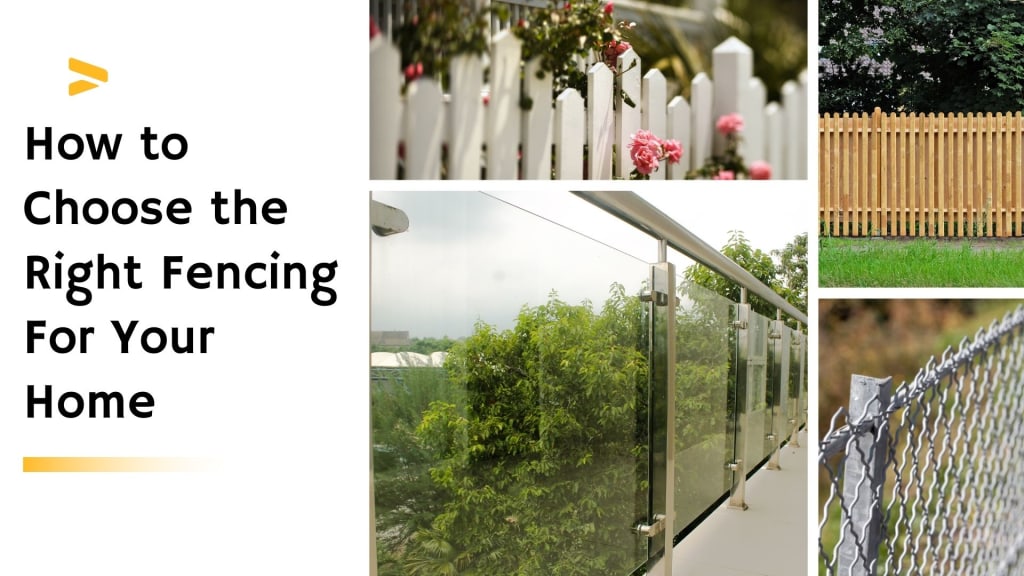
Throughout history, a home with an attractive white picket fence has been a symbol of “the American dream.” But today, this icon of the past is often replaced by fencing that adds privacy and security as well as “curb appeal” to a home.
If you are planning to embark on a fencing project, come up with a plan that reflects the purpose of your fence. For instance, will it be for privacy, to keep pets in, keep deer out, block wind or a street view, secure a swimming pool or simply add a decorative element to your home and add distinctive landscaping?
Fencing DIY?
If your fence is a do-it-yourself process project, you can find resources such as videos and manuals on the Internet or from suppliers of fencing materials.
However, taking on fence installation yourself can be fraught with problems; while you may save on the labor costs you may discover the frustration of spending your own time on the project, and dealing with unexpected issues would be counterproductive in the long run. Professional fence installers normally have teams of workers that can help the process go a lot smoother, quicker, and more efficiently.
More: Add Up to 10% of Your Home's Value With These Landscaping Hacks
The cost to install a fence average $2,822, with a typical cost between $1,665 and $4,062 according to HomeAdvisor using data reported by members. For the most common materials, costs range from $13 to $50 per linear foot, including professional installation. Labor and materials each make up fifty percent of the total budget.
Fencing Materials
When choosing fencing materials, there are a myriad of choices of pickets--evenly-spaced vertical boards attached to horizontal rails--and solid panels that can be installed as a decorative feature or for security and privacy.
The material you choose depends on the purpose of your fence.
Wood Fence
For example, if you are installing a security fence, flush boards and no horizontal rails on the outside can deter potential intruders from attempting to climb it. Picking a fence with small gaps between the boards or even a lattice-like design can allow some light in a security fence.
Most wooden fences are made from cedar as it withstands the weather and tends to last a long time but you’ll want to keep it off the ground by at least an inch so that the ground water and dirt doesn’t decay the wood faster than it should.
From there, the design elements are limitless. Slates, vertical, horizontal, crisscross or lattice can all add a unique charm to your yard.
Glass Panels
Glass panels provide unobstructed views of the surroundings while protecting from the wind. While these have high aesthetic appeal they of course, can be broken with a powerful thrust or wayward toddler. However, keeping the view unobstructed when that’s the selling point is a clear (no pun intended) reason to use glass.
Metal Fencing
Metal fencing clearly is the solid choice for a life-long fence. And you can get pretty decorative too with wrought iron, simple chain length perfect for keeping deer and animals out or even beef up the security with a barbed wire fence for animals or curled on top for added safety from intruders.
Rustic Fencing
Rustic can literally be anything you want. Old board? Sticks? Reclaimed wood? Whatever you want, but you do need to know you may be replacing it sooner than other choices. But rustic is really ideal for decoration only. It is tough to keep critters out and pets in with a rustic fence, albeit ever so charming.
Related: How to Add a Touch of Summer to Your Home
With proper planning, selection of the right materials and sturdy construction techniques, an attractive fence can add value to your home and be a source of pride for your American dream home--even if it doesn’t have that nostalgic picket fence surrounding it.
Side Note: Check with HOA rules as some have specific on how high a fence can be in the front yard and/or the back yard; i.e. no higher than 3 feet in the front, no higher than 6 feet in the back.
Special thanks to Clearwater Beach condo specialist John Kinnunen and Gregg Camp , Scotts Valley Realtor®
About the Creator
Tammy Emineth
Writer, blogger, content marketing, wife and mom! Helping folks increase traffic and leads to their websites since 2004.
Keep reading
More stories from Tammy Emineth and writers in Lifehack and other communities.
5 Forgotten Costs to Buying a Home
So, you think you’ve budgeted to buy a house, but have you thought of everything? Hopefully the answer is yes, however, for many home buyers, especially first-time buyers there may be a few hidden, or unexpected fees that creep their way into your budgets, and if not planned for, could be detrimental to either your buying journey altogether, or cause you financial hardship.
By Tammy Emineth5 years ago in Lifehack
The First Rainbow Baby
Pitter-patter, pitter-patter. The rain fell in rhythmic splatters, slowly slowing, but still constant. Mira rolled onto her side pulling the blanket tight against her ears, but still she could hear chitter-chatter and scurrying feet of the creatures that refused to sleep in the lower decks.
By A. J. Schoenfeldabout 20 hours ago in Fiction




Comments
There are no comments for this story
Be the first to respond and start the conversation.