
How AI Is Revolutionising Vehicle Safety and Performance
Beyond Human Limits: Exploring AI's Role in Enhancing Vehicle Protection and Efficiency

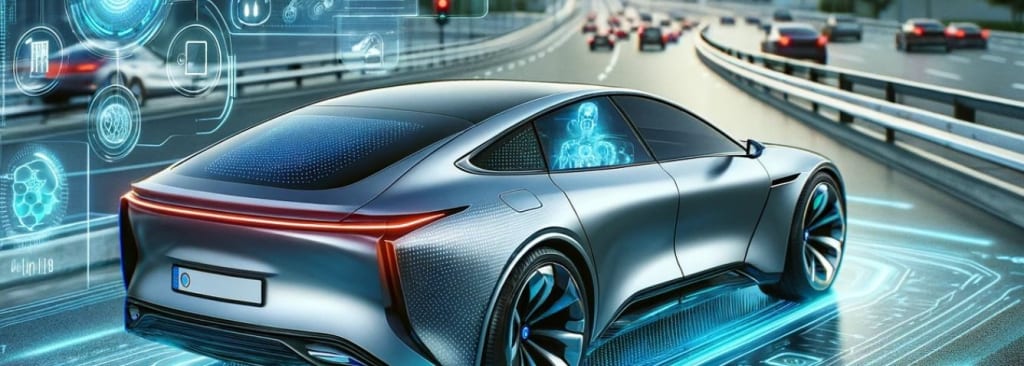
In an era of rapid technological advancement, artificial intelligence (AI) is no longer confined to the realm of science fiction. Its influence is expanding into virtually every industry, and the automotive sector is no exception. From enhancing vehicle safety to optimizing performance, AI is fundamentally transforming how cars are designed, driven, and maintained. For drivers and passengers alike, these innovations promise a future of safer roads and more efficient, responsive vehicles.
For decades, car manufacturers have sought to improve safety through mechanical and structural enhancements. However, AI introduces a new dimension to this pursuit, offering proactive and predictive capabilities that far surpass traditional methods. Similarly, the quest for optimal vehicle performance has historically relied on engineering prowess. Now, AI is adding an intelligent layer, enabling vehicles to adapt and learn in real-time, leading to unprecedented levels of efficiency and responsiveness. In this article, we'll delve into the various ways AI is revolutionizing both vehicle safety and performance, exploring the technologies at play and the benefits they bring to the automotive landscape.
AI's Impact on Vehicle Safety
The most significant and immediate impact of AI in vehicles is arguably in the realm of safety. AI-powered systems are designed to perceive, analyze, and react to driving conditions with a speed and accuracy that human drivers simply cannot match. This leads to a dramatic reduction in accidents and a more secure driving experience for everyone on the road.
One of the primary ways AI enhances safety is through Advanced Driver-Assistance Systems (ADAS). These systems utilize a combination of sensors, cameras, radar, and AI algorithms to monitor the vehicle's surroundings and provide warnings or even take corrective action. Examples include:
- Lane Keeping Assist (LKA): AI-powered cameras recognize lane markings and can gently steer the vehicle back into its lane if it begins to drift unintentionally. This significantly reduces the risk of head-on collisions or veering off the road due to driver distraction or fatigue.
- Automatic Emergency Braking (AEB): Using radar and camera data, AI can detect potential collisions with other vehicles, pedestrians, or obstacles. If the driver doesn't react in time, the system can automatically apply the brakes, often preventing or mitigating the severity of an accident.
- Blind Spot Monitoring (BSM): Sensors monitor a vehicle's blind spots and warn the driver of approaching vehicles, preventing accidents during lane changes. AI algorithms filter out false positives and accurately identify threats.
- Driver Monitoring Systems (DMS): These AI systems use cameras to track the driver's gaze, head movements, and even blink rate to detect signs of drowsiness or distraction. They can then issue alerts to encourage the driver to remain focused or take a break, directly addressing a major cause of accidents.
Beyond these common ADAS features, AI is also driving innovations in predictive safety systems. These systems analyze vast amounts of data, including real-time traffic conditions, weather forecasts, and even driver behavior patterns, to anticipate potential hazards before they occur. For instance, AI could predict icy road conditions based on temperature and humidity, or identify a high-risk intersection based on historical accident data, and then provide warnings or adjust vehicle settings accordingly.
Furthermore, AI is crucial in the development of autonomous vehicles. While fully self-driving cars are still in their nascent stages, the underlying AI technology is constantly being refined to ensure maximum safety. These systems must process immense amounts of sensory data, make complex decisions in milliseconds, and adapt to unpredictable environments, all while prioritizing the safety of occupants and others on the road. The rigorous training and testing of AI algorithms are paramount to achieving this level of reliability.
AI's Contribution to Vehicle Performance
Beyond safety, AI is also playing a transformative role in optimizing vehicle performance, leading to greater efficiency, responsiveness, and a more enjoyable driving experience. This encompasses various aspects, from fuel economy to dynamic handling.
One key area is engine and powertrain optimization. Modern vehicles generate a wealth of data on engine temperature, fuel consumption, transmission performance, and more. AI algorithms can analyze this data in real-time to make minute adjustments, ensuring the engine operates at peak efficiency. This can translate to improved fuel economy and reduced emissions, benefiting both the driver's wallet and the environment. For electric vehicles, AI plays a critical role in optimizing battery management, extending range, and enhancing charging efficiency.
Predictive maintenance is another significant application of AI in performance. Instead of relying on fixed service schedules, AI systems can monitor the health of various vehicle components. By analyzing sensor data, they can detect subtle anomalies that might indicate impending failure, such as unusual vibrations in the transmission or slight drops in engine performance. This allows for proactive maintenance, preventing costly breakdowns and extending the lifespan of the vehicle. For example, an AI system might recommend replacing a specific part before it fails completely, saving the driver from being stranded or incurring more extensive repair costs.
AI also enhances driving dynamics and handling. In high-performance vehicles, AI can dynamically adjust suspension settings, steering response, and torque distribution based on real-time road conditions and driver input. This creates a more responsive and engaging driving experience, allowing the vehicle to adapt seamlessly to different terrains and driving styles. For instance, AI could stiffen the suspension during spirited driving on a winding road, or soften it for a more comfortable ride on a bumpy surface.
Furthermore, AI is instrumental in developing smart navigation and traffic optimization. AI-powered navigation systems go beyond simply providing directions. They can analyze real-time traffic patterns, predict congestion, and even suggest alternative routes based on historical data and current events. This not only saves time for drivers but also contributes to smoother traffic flow across entire networks, reducing overall commute times and fuel consumption.
Finally, the personalization of the driving experience is being revolutionized by AI. Modern infotainment systems and in-car assistants leverage AI to learn driver preferences, from climate control settings to music choices and even frequently visited destinations. This creates a highly personalized and intuitive environment, where the vehicle anticipates the driver's needs and adjusts accordingly, making every journey more comfortable and convenient.
The Future of AI in Automotive
The integration of AI into vehicle safety and performance is an ongoing journey. As AI technologies continue to mature, we can expect even more sophisticated and integrated systems. The development of more powerful processors and advanced sensors will further enhance the capabilities of AI in vehicles, leading to even greater levels of safety, efficiency, and autonomy.
The automotive industry is in a period of unprecedented transformation, and AI is at the forefront of this revolution. From preventing accidents to optimizing every aspect of a vehicle's operation, AI is not just improving cars; it's redefining what they can do. For consumers, this means a future of safer roads, more reliable vehicles, and a driving experience that is increasingly intelligent, efficient, and tailored to individual needs. As AI continues to evolve, the possibilities for innovation in vehicle safety and performance are truly limitless.
Written by: Matt Lewis Automotive Expert at Best Cash For Cars Melbourne
Location: 14 Drovers Pl, Pakenham VIC 3810, Australia
Call Us: 0422 009 009
About the Creator
Matt Lewis
Hi, I’m Matt Lewis, an Automotive Expert here at Best Cash For Carz in Melbourne. With years of experience in the automotive industry, I’m dedicated to helping people get the best value for their cars.
Keep reading
More stories from Matt Lewis and writers in Lifehack and other communities.
The Truth About Car Removal Services in Melbourne vs. Private Selling
When it comes time to part ways with your vehicle, you're usually faced with two main options: sell it privately or go through a car removal service. Both approaches come with their pros and cons, and the best choice depends on your priorities—whether that’s getting the highest price, saving time, or avoiding hassles. While private selling allows you to negotiate directly with buyers, car removal services offer speed and simplicity. Understanding how each works is key to making a smart decision.
By Matt Lewis9 months ago in Lifehack
The Forsyth House Fire
Since 1851, Forsyth House has stood on the corner of Union Street and Gordon Street in the heart of Glasgow. Its iconic, or was... because on Sunday 8th of March, 2026, a fire broke out in a small, seemingly un-named shop in the building and tore all that history down. As I write, the rubble is still unsettled and the street is still blocked off. Central Station is quiet on the upper level, and around 30 small businesses have quite literally gone up in smoke.
By S. A. Crawford3 days ago in The Swamp




Comments
There are no comments for this story
Be the first to respond and start the conversation.