
How AI is Changing
The Future of Search Engine Optimization
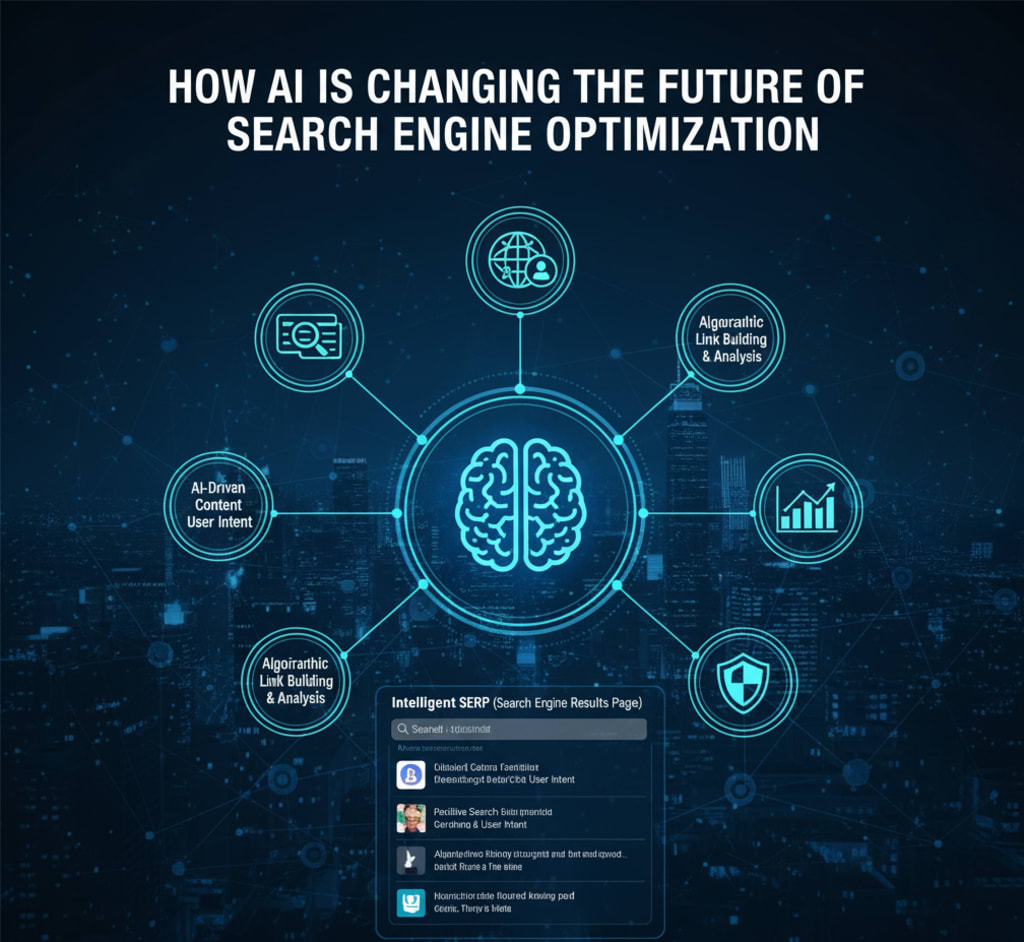
Search engine optimization (SEO) has always been a moving target. What worked five years ago is outdated today—and the next five years will bring even bigger changes. The driving force behind this rapid transformation? Artificial Intelligence (AI).
In the digital age, where every click, search, and swipe leaves a data trail, AI is completely reshaping how we understand and execute Digital marketing. From smart algorithms to personalized experiences, AI is teaching search engines to think, predict, and connect with humans in ways we never imagined.
Whether you’re an SEO expert, a small business owner, or just curious about how AI affects your online visibility, this guide breaks down everything you need to know—simply, conversationally, and with real-world insights.
1. The Evolution of SEO in the Age of AI
Once upon a time, SEO was all about keywords. If you could stuff enough of them into your website, Google would reward you with top rankings. But as users became more sophisticated—and search engines smarter—those days disappeared faster than dial-up internet.
Then came the era of algorithms. Updates like Google Panda (to fight spam), Penguin (to stop keyword stuffing), and Hummingbird (to understand context) paved the way for AI-driven SEO.
Enter Rank Brain in 2015—Google’s first artificial intelligence system that helped the search engine understand queries it had never seen before. Suddenly, SEO wasn’t about how many times you used a keyword—it was about understanding why a user was searching in the first place.
Then came BERT and MUM, two AI-powered algorithms designed to interpret the meaning behind searches. For example, if you search “how to fix a leaking tap without turning off the water,” AI can now understand the intent—you want a practical, step-by-step solution—not just articles with those exact words.
This shift from keywords to intent marks a new era of SEO. And AI is the brain behind it all.
2. How AI is Reshaping Digital Marketing
Let’s talk about the bigger picture—Digital marketing. Today, marketing isn’t just about reaching people; it’s about reaching the right people at the right time with the right message. AI makes that possible.
In the UK, USA, and Canada, over 80% of marketers already use some form of AI tool in their campaigns (Statista, 2025). From automating social media ads to predicting which products will trend next month, AI gives marketers data-driven superpowers.
Take AI writing assistants like Chat GPT, Jasper, and Copy.ai—they help create blog posts, ad copy, and email campaigns that resonate with audiences. Or consider Surfer SEO and Clear scope, which analyze top-ranking content and suggest improvements based on AI-driven data.
AI also powers personalization—ever wonder why Netflix knows exactly what to recommend, or why that perfect pair of shoes follows you around the web? That’s AI analyzing your behavior in real time.
And for SEO? Tools like SEMrush, Ahrefs, and Google Analytics 4 now use machine learning to spot trends, predict rankings, and suggest optimization opportunities before competitors catch on.
It’s not just about automation—it’s about smarter decision-making. AI helps marketers understand audience emotions, predict needs, and create experiences that feel personal.
3. Smart SEO Strategies Powered by AI
So, how do you actually use AI for SEO? Let’s break down some strategies that are already changing the game:
A. Predictive Keyword Research
Instead of guessing which keywords will perform, AI analyzes millions of searches and predicts upcoming trends. For example, AI tools can spot rising topics—like “eco-friendly AI tools” or “local SEO for small businesses”—before they explode.
B. Content Optimization with AI
AI-based content editors now scan the top-ranking pages and identify patterns—like keyword density, tone, and semantic phrases—to help your content compete. They don’t replace human creativity, but they ensure your content aligns with what both users and search engines love.
C. Voice Search Optimization
“Hey Siri, where’s the nearest pizza place?” Voice search is booming—over 50% of all searches in the US are now voice-based. AI helps optimize content for natural, conversational queries. That means writing more like how people talk, not how they type.
D. Visual and Video SEO
AI can now read images and videos. With Google Lens and YouTube’s AI tagging, your visuals can appear in search results based on content—not just captions. Including descriptive alt text and structured data helps AI understand what your media represents.
E. Local SEO and AI
AI tools analyze location-based behavior to optimize for local searches. For example, Google’s “near me” searches rely heavily on AI to match users with relevant businesses. If you’re a small business in London or Toronto, AI helps you compete with national brands by improving visibility in your area.
4. The Role of Machine Learning in Search Algorithms
Let’s keep it simple: Machine learning is a type of AI that helps computers learn from data and improve over time—without being told what to do.
In SEO, machine learning allows search engines to understand not just what you say, but what you mean. It studies billions of data points to predict what users want next.
For example, if you type “best Italian restaurants near me,” machine learning looks at your location, your past preferences, reviews, and even time of day to show the most relevant results.
This means businesses must focus less on “gaming the algorithm” and more on providing genuine value. Because AI doesn’t just read words—it reads intent.
Tip: Focus on user experience (UX). Fast-loading pages, mobile responsiveness, engaging content, and natural language all signal to AI that your site is trustworthy and useful.
5. Challenges and Concerns: The Human Side of AI SEO
While AI brings incredible opportunities, it’s not all smooth sailing. There are real challenges every marketer and creator needs to understand.
A. Overreliance on Automation
When everything’s automated, creativity can fade. SEO tools can suggest topics, but they can’t tell your brand’s story the way you can. Human emotion, humor, and empathy still win hearts online.
B. Content Authenticity and AI Detection
As AI-generated content becomes more common, search engines are developing ways to detect it. Google’s guidelines require AI-generated content to be labeled as such, ensuring transparency for users.
The key isn’t to avoid AI—it’s to use it ethically. Think of AI as your assistant, not your replacement.
C. Data Privacy and Bias
AI learns from data, and if that data is biased, the results can be too. For example, a biased dataset might favor certain search terms or locations. Marketers must ensure transparency and fairness when using AI tools.
D. Keeping Up with the Speed of Change
AI evolves daily. What’s cutting-edge today could be outdated tomorrow. Continuous learning—through courses, webinars, and hands-on practice—is the only way to stay ahead.
6. Future Predictions: What’s Next for SEO Professionals
If AI can already write, analyze, and optimize—what’s next for SEO experts?
The answer: plenty.
AI won’t replace SEO professionals—it will empower them to focus on creativity, strategy, and storytelling. The future of SEO is about collaboration between humans and machines.
Here’s what to expect:
Hyper-Personalized Search Results: Search engines will customize results for each user based on browsing history, preferences, and even mood.
Zero-Click Searches: Google is already answering many queries directly on the results page. The challenge will be driving visibility through snippets, FAQs, and structured data.
AI-Powered SERPs: Search results will include more videos, visuals, and AI summaries—like Google’s Search Generative Experience (SGE).
Multimodal Search: Users will search using text, voice, and images together (e.g., “Show me eco-friendly jackets like this one”).
Ethical SEO Practices: Transparency, originality, and human input will become even more important.
About the Creator
Anas Ali
Anas Ali is an ambitious and creative individual with a passion for learning, growth, and making a positive impact, Building skills, or connecting with others, Anas values progress, integrity, and innovation in everything he does.
Keep reading
More stories from writers in Lifehack and other communities.




Comments
There are no comments for this story
Be the first to respond and start the conversation.