

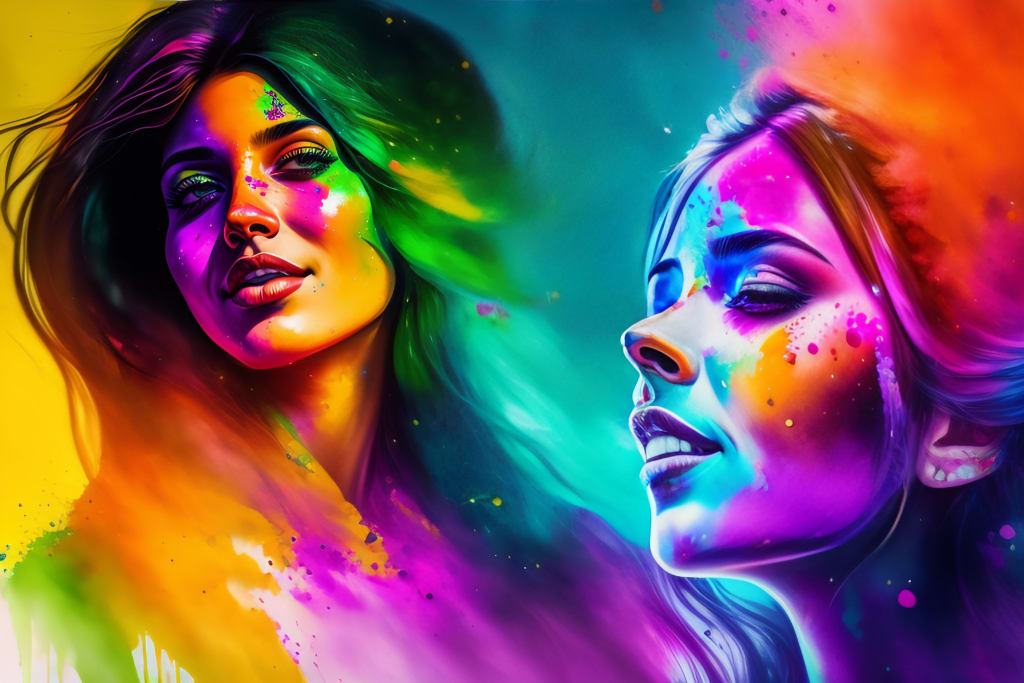
Holi is one of the most popular festivals in India, celebrated with great joy and enthusiasm by people of all ages and backgrounds in India. This festival is also known as the "festival of colors" or the "festival of love," as people smear each other with colored powders and water and express their love and affection for each other. Holi is celebrated in the month of March every year, and it usually falls on the full moon day (Purnima) of the Hindu lunar calendar.
The origins of Holi can be traced back to ancient Hindu mythology, where it is believed to have been celebrated in honor of the divine couple Radha and Krishna. According to the legend, Lord Krishna, who had a dark complexion, was envious of his beloved Radha's fair complexion. So, one day, he playfully smeared Radha's face with colors, and since then, the tradition of playing with colors during Holi has been followed.
The preparations for Holi begin weeks in advance, as people start shopping for colored powders, water guns, sweets, and other festive items. On the day of the festival, people gather in open spaces and start throwing colored powders and water on each other, shouting "Holi Hai!" (meaning "It's Holi!"). The atmosphere is filled with excitement, joy, and laughter, as people dance to the beat of drums and sing traditional Holi songs.
One of the most significant aspects of Holi is the message of unity and brotherhood that it conveys. Holi brings people from different communities and backgrounds together, breaking down barriers of caste, religion, and social status. The festival encourages people to forget their differences and embrace each other with love and affection.
Holi also has a significant spiritual significance, as it marks the victory of good over evil. According to Hindu mythology, the demon king Hiranyakashipu was blessed with the power of immortality and had become arrogant and cruel. His son Prahlad, however, was a devout follower of Lord Vishnu and refused to worship his father. So, Hiranyakashipu decided to kill his son, but each time he tried, Prahlad was miraculously saved by Lord Vishnu. Finally, Lord Vishnu appeared in the form of Narasimha (half-human, half-lion) and killed Hiranyakashipu, thus, saving Prahlad and restoring justice and righteousness. Holi is celebrated to commemorate this victory of good over evil.
Apart from playing with colors, Holi is also a time for indulging in delicious traditional sweets and delicacies. Gujiya, a sweet dumpling filled with khoya and dry fruits, is a must-have during Holi, along with other sweets like laddoos, rasgullas, and pedas. Thandai, a refreshing drink made with milk, nuts, and spices, is also a popular beverage consumed during Holi.
In recent years, there has been growing awareness about the environmental impact of Holi, as synthetic colors and plastics used during the festival can harm the environment and cause health problems. To address this issue, people are now encouraged to use natural colors made from flowers and herbs and to avoid using plastics and other harmful substances.
In conclusion, Holi is a colorful and joyous festival that celebrates the spirit of love, unity, and brotherhood. It brings people together, irrespective of their differences, and encourages them to embrace each other with love and affection. Holi also has a rich cultural and spiritual significance, as it marks the victory of good over evil and is celebrated in honor of the divine couple Radha and Krishna. As we celebrate Holi, let us remember its message of love, peace, and harmony and strive to spread these values in.
About the Creator
BUSHRA TANVIR
I am a poetess and article writer
Keep reading
More stories from BUSHRA TANVIR and writers in Lifehack and other communities.
TIPS FOR FRAGRENT HOUSE
There are several ways to keep your house fragrant and smelling fresh. Here are some tips: Open the windows: One of the easiest and most effective ways to freshen up your home is by opening the windows. This will allow fresh air to circulate, removing any stale or musty odors.
By BUSHRA TANVIR3 years ago in Lifehack
SEO Mexico Tequila: Crafting Digital Strategy from the Heart of Mexico
In the evolving landscape of digital marketing, search engine optimization has become far more than a technical discipline. For many organizations, it represents a way of communicating values, sharing expertise, and building long-term relationships with audiences. Within this broader transformation, initiatives like SEO Mexico Tequila illustrate how regional knowledge, cultural perspective, and digital strategy can intersect to create meaningful impact.
By House Doctor4 days ago in Lifehack
How to choose range hoods for noise reduction
When planning a kitchen renovation in Sydney, one of the most common questions we get from homeowners is: “How can I choose a range hood that reduces noise while still being effective?” The right range hood can significantly improve your cooking experience, reduce unwanted odors, and maintain a peaceful home environment. For anyone investing in a kitchen, bathroom, or home renovation in Sydney, understanding the balance between performance and noise is essential. This guide breaks it down for you.
By John Zhang4 days ago in Lifehack


Comments
There are no comments for this story
Be the first to respond and start the conversation.