
Here are five memory techniques to help you learn quickly and remember for a long time.
Do people who learn quickly have exceptional brains? No. By mastering the following five learning techniques, you too can learn quickly and remember for a long time.

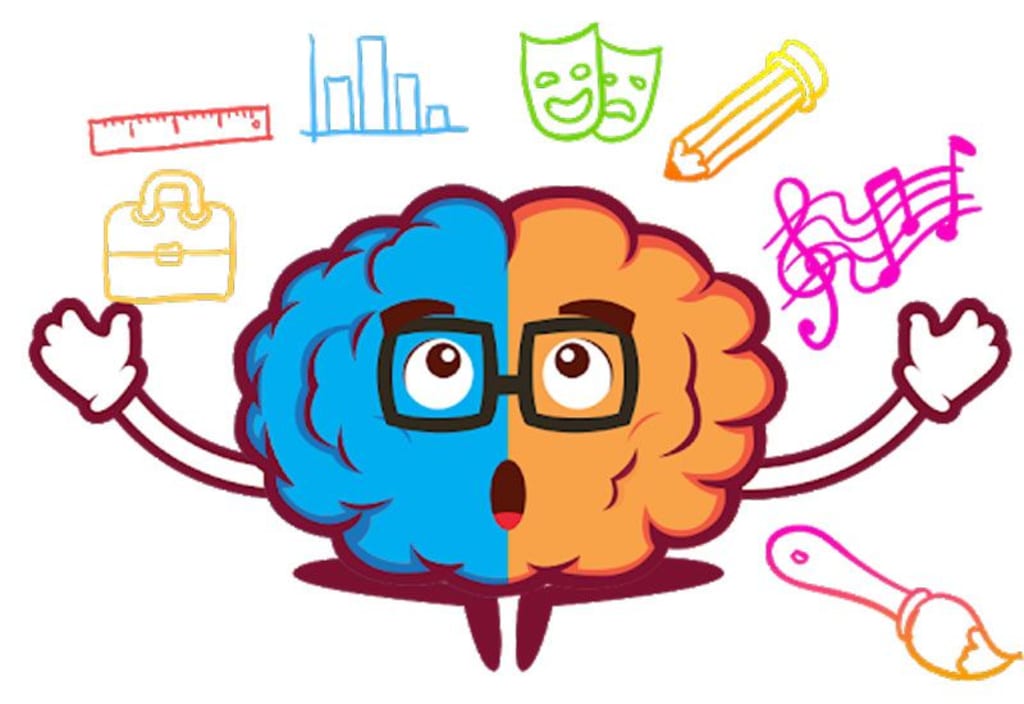
1. Visualization and Imagination
From a very young age, we learn through creative activities such as drawing, coloring, using vibrant colors, and visualizing—essentially all these activities stem from our imagination.
As we grow older and attend school, adults teach us to forget these methods and force us to memorize using our brains.
Of course, not everyone thrives with this method; many struggle and develop the mindset that they are "not as smart as others."
Connecting abstract concepts with concrete images is an effective way to help the brain understand better.
Don't hesitate to draw lots of colorful pictures and diagrams if they help you grasp abstract and dull concepts.
This method is not only useful for learning and understanding the relationships between concepts but also stimulates the brain and maintains your enthusiasm for studying.
2. Comparison and Association

The brain retains information better when you compare one concept to another. This is where the power of association comes into play, helping you understand and remember for longer.
Using one concept to illustrate another helps you perceive the relationship between them.
Therefore, you need to grasp the essence of key concepts to explain other abstract concepts.
For example, you can compare radio waves to ripples on water; electric current to water flowing through a pipe, etc. Associating new concepts with familiar ones will help you simplify complex things and remember them longer.
3. Association (Method of Loci)
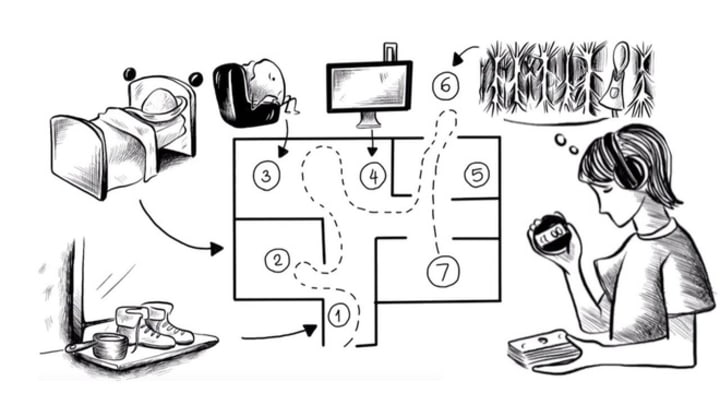
If you've ever met someone who can remember the random order of an entire deck of cards, it's not because they are smarter than others. It's because they use the method of loci to remember.
The method of loci requires you to use your own imagination, creating a 'story' and linking each item together to form a narrative.
If you want to remember a list of items to buy (such as oranges, milk, bananas, honey), you can imagine a man dressed in orange (orange) carrying a cow (milk) to a monkey (banana) who was stung by a bee (honey).
4. Knowledge Immersion
You might have heard of the method ‘language immersion.’ More broadly, knowledge immersion means putting yourself in an environment filled with the knowledge you want to acquire, allowing your brain to ‘bathe’ in that environment and gradually absorb it.
For instance, if you go abroad and no one speaks your native language, you will have to adapt to survive in the new environment.
This adaptation mechanism and constant repetition accelerate the learning process tenfold, as your brain must always remain active.
5. The ‘5-Year-Old’ Method
This is a great way to test how well you understand new concepts.
Imagine you have to explain a new concept to a 5-year-old child or someone completely unfamiliar with the topic!
You will need to simplify the knowledge you have learned and find alternative explanations so that even a 5-year-old can understand.
Whenever you learn something new, ask yourself if you can explain it to someone else.
If you can, it means you have mastered the knowledge. So, try to explain it in the simplest and most understandable way.
Often, we struggle to learn because we are not sure if we have fully grasped all the related concepts. This method will eliminate that worry.
Conclusion: Don't hesitate to return to your childhood and unlock your imagination; it will greatly benefit your learning.
About the Creator
Crucial Health and Safety Practices Every Employer Must Enforce
Creating a safe workplace isn't just about meeting legal obligations—it’s about building a sustainable, ethical, and high-performing business. When companies prioritize employee well-being, they reduce the risk of injuries, legal consequences, and operational disruptions. OSHA and other regulatory bodies have laid down clear guidelines to help employers maintain secure environments. These rules are designed to prevent accidents and illnesses, but their real value lies in protecting the people who keep businesses running.
By Dr. Todd Young5 days ago in Lifehack
The Truth in My Lab Report: How I Slashed My Triglycerides and Changed My Cholesterol for Good
My Lipid Wake-Up Call: How Untangling Triglycerides vs. Cholesterol Changed My Health (And Probably Saved Me) Let’s be real. For years, the words from my doctor’s office just washed over me. A mumbled monologue about “lipid panels,” “numbers,” and “cardiovascular risk.” I’d nod, see a few flagged results on my printout—usually something about triglycerides and LDL—feel a pinch of worry, and then… life would happen. I’d grab a quick sandwich, skip the gym because I was tired, and tell myself I’d deal with it later. The confusion itself was a comfort zone. If I didn’t truly understand it, I couldn’t be fully responsible for fixing it, right?
By John Arthor5 days ago in Lifehack




Comments (2)
Good content
Nice article