
Han Kang Wins Nobel Prize in Literature
Han Kang Wins Nobel Prize

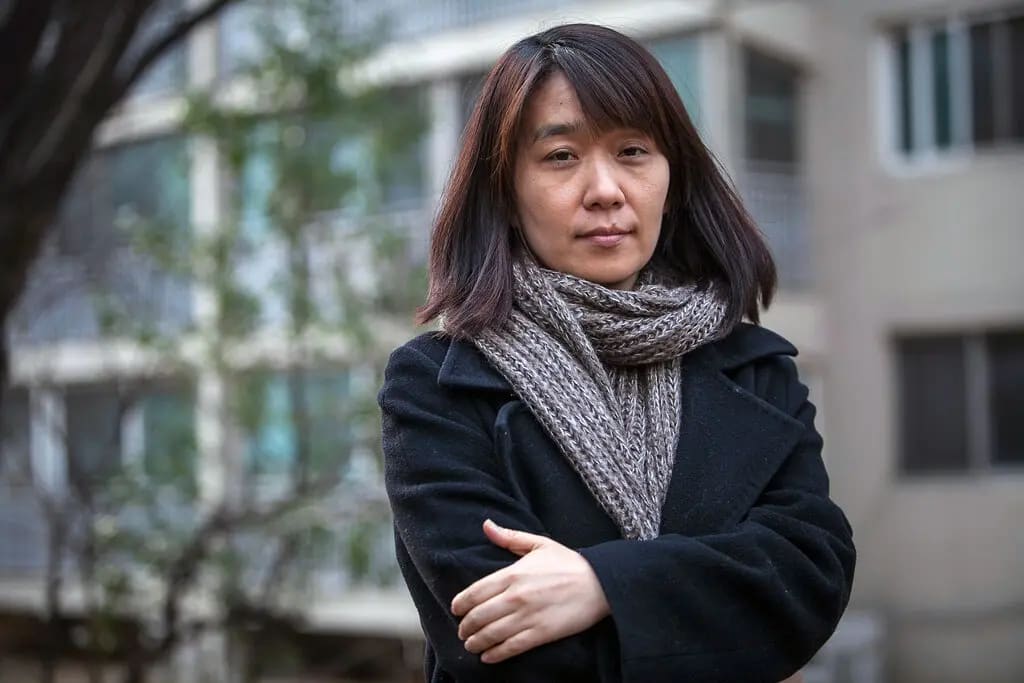
Han Kang Wins Nobel Prize in Literature
South Korean author Han Kang, known for her thought-provoking novel The Vegetarian, has been awarded the 2024 Nobel Prize in Literature. This prestigious recognition makes her the first South Korean writer to receive the Nobel in this category, marking a historic moment for her country.
The announcement was made by Mats Malm, the permanent secretary of the Swedish Academy, during a press conference in Stockholm. According to Malm, Han Kang was honored “for her intense poetic prose that confronts historical traumas and exposes the fragility of human life.” Her writing style, known for blending surrealism and poetic narrative, has been widely praised for its depth and emotional intensity.
Han’s novel The Vegetarian is one of her most well-known works. Published in 2007 in Korea and translated into English in 2016, it went on to win the International Booker Prize. The novel tells the story of a woman, Yeong-hye, who shocks her family by becoming a vegetarian, an act that later spirals into her refusal to eat altogether, ultimately wishing to become a plant. The book explores complex themes such as personal autonomy, rebellion, and the clash between societal expectations and individual desires. In a review by Porochista Khakpour for The New York Times, Han was celebrated as a visionary writer who challenges conventions in unique and often unsettling ways.
Han Kang’s Nobel win came as a surprise to many. Prior to the announcement, many experts had predicted that Chinese avant-garde author Can Xue would win this year’s award. However, Anders Olsson, chair of the Nobel committee, highlighted the distinct qualities of Han’s work, saying her writing reflects “a unique awareness of the connections between body and soul, the living and the dead.” Olsson added that Han’s poetic and experimental style has made her a leading figure in contemporary literature.
Born in 1970 in Gwangju, South Korea, Han Kang grew up in a family with literary roots. Her father was also a novelist, though not as successful. Despite facing financial challenges, Han found comfort and inspiration in books during her childhood. In a 2016 interview with The New York Times, she mentioned that although moving frequently during her early years was tough, reading provided her with solace and stability.
Han was deeply affected by the Gwangju Uprising, which took place in 1980 when she was just 9 years old. This violent pro-democracy movement, in which hundreds of protesters were killed by government forces, left a lasting impact on her worldview and has been a recurring theme in her writing. For instance, her novel Human Acts reflects on the brutality of the Gwangju massacre, following the aftermath of a police raid on activists.
Han studied literature at Yonsei University in South Korea, where she began her career as a poet before transitioning to fiction. Her debut novel Black Deer, published in 1998, is a mystery about a missing woman. However, it was around that time that Han developed the concept for what would eventually become The Vegetarian, a novel that brought her international recognition.
Han Kang’s writing is known for being emotionally powerful and politically charged. Her work often explores themes related to the body, gender, trauma, and power dynamics between individuals and the state. Despite its serious subject matter, her writing also maintains a playful, surreal quality, never becoming overly moralistic. Ankhi Mukherjee, a literature professor at the University of Oxford, has praised Han’s ability to fuse political themes with rich, imaginative storytelling. According to Mukherjee, Han’s writing is “relentlessly political” yet remains grounded in literary innovation.
In addition to The Vegetarian, Han has written several other notable works, including The White Book, which was shortlisted for the International Booker Prize, and Greek Lessons, which was published in English in 2023. In Greek Lessons, a woman who loses her voice seeks to reclaim it by learning ancient Greek. The novel was described by The New York Times as a “celebration of the ineffable trust to be found in sharing language.”
At 53, Han is relatively young for a Nobel laureate, though not the youngest ever. That title still belongs to Rudyard Kipling, who won the prize in 1907 at age 41. Han’s impressive body of work includes eight novels, along with novellas, essays, and short stories. Her influence in the literary world continues to grow, and winning the Nobel Prize only solidifies her status as one of the leading voices in contemporary literature.
The Nobel Prize in Literature is considered one of the most prestigious awards a writer can receive, bringing not only recognition but also a significant boost in book sales. Along with the honor, Han will receive 11 million Swedish krona, approximately $1 million. The Swedish Academy has faced criticism in the past for its lack of diversity among laureates, but in recent years, it has made efforts to include more voices from outside Europe and North America. Han’s win reflects this push for greater representation, following the awards to Tanzanian writer Abdulrazak Gurnah and French writer Annie Ernaux in recent years.
Han Kang’s Nobel Prize win is a major milestone for South Korean literature, and her work continues to inspire readers worldwide with its profound insights into human nature and society.
About the Creator
Sunil Christian
find here all type of news
Keep reading
More stories from Sunil Christian and writers in Lifehack and other communities.
Cedric Bixler-Zavala Criticizes Linkin Park's Decision to Hire Emily Armstrong
Cedric Bixler-Zavala Criticizes Linkin Park's Decision to Hire Emily Armstrong Linkin Park, one of the most well-known bands in the rock and metal scene, recently decided to start a new chapter. After years of inactivity following the tragic death of lead vocalist Chester Bennington, they chose to move forward by selecting a new lead singer. The band announced that Emily Armstrong, the lead singer of Dead Sara, would step into the role. This decision, however, has sparked controversy, with Cedric Bixler-Zavala, co-founder of The Mars Volta, publicly criticizing the hire.
By Sunil Christian2 years ago in Lifehack
The Secret High: How Euphoria Makes Life Feel Magical
Have you ever had a moment where the world suddenly felt lighter, your chest felt warm, and your heart raced for no reason at all? Maybe it was the first sip of coffee in the morning that was perfect, the sunlight spilling through your window, or a song that hit every note just right. That feeling—pure, almost electric joy—is euphoria. Not just happiness, but a rush that makes ordinary moments feel extraordinary.
By Alex Sterling 7 days ago in Lifehack
Phoenix, Arizona: The City That Learned to Grow With the Desert
When people first arrive in Phoenix, Arizona, the landscape can feel almost surreal. The vast Sonoran Desert stretches outward with towering saguaro cacti, rugged mountains, and wide skies that shift colors dramatically at sunset. At first glance, it seems like an unlikely place for a major metropolitan area.
By House Doctor4 days ago in Lifehack




Comments
There are no comments for this story
Be the first to respond and start the conversation.