
Goat Milk Market Trends & Summary
Rising Demand for Nutrient-Rich Dairy Alternatives Drives Steady Global Growth


The global goat milk products market continues to gain momentum as consumers increasingly shift toward natural, nutrient-rich dairy options that prioritize digestibility and sustainability. According to Renub Research, the value of the goat milk products market reached USD 12.34 billion in 2024 and is forecast to expand at a CAGR of 4.46% from 2025 to 2033, ultimately reaching USD 18.28 billion by 2033.
Growing health awareness, lifestyle changes, and rising intolerance to cow’s milk—combined with expanding product innovation—are key forces pushing this market to new heights. The Goat Milk Market & Forecast Report further explores growth by Product, Sector, Distribution Channel, Country, and Company Analysis, offering insight into how goat milk is evolving from a traditional staple into a global wellness-driven trend.
Understanding the Goat Milk Advantage
Goat milk has been consumed for centuries, but only recently has it emerged as a mainstream nutritional alternative. Its distinct structure—smaller fat globules, naturally homogenized texture, and lower levels of alpha-S1-casein protein—makes it significantly easier to digest than cow milk. This makes goat milk a popular choice for people with lactose sensitivity or milk allergies.
Alongside digestibility, it delivers a robust nutrient profile featuring:
Calcium for bone strength
Vitamin A for immunity
Medium-chain fatty acids for energy metabolism
Probiotics that support gut health
Today, goat milk is used across categories including fresh milk, cheese, milk powder, yogurt, butter, infant formula, and even skincare, showing its broad commercial and functional potential. Consumers’ growing preference for cleaner, healthier, and more sustainable diets positions goat milk as a rising star in the global dairy sector.
Key Growth Drivers in the Goat Milk Market
1. Rising Health Awareness Among Global Consumers
A major force accelerating market expansion is the surge in consumer awareness regarding goat milk’s health benefits. As digestive health becomes a global priority and incidence of lactose intolerance rises, more consumers are turning to goat milk.
According to the Food and Agriculture Organization (FAO), 65% of the world’s population is lactose intolerant. The highest rates occur in East Asia, where over 70% of people experience lactose sensitivity. The number of lactose-intolerant individuals globally is expected to rise from 1.1 billion in 2022 to 1.2 billion in 2024, fueling demand for gentler dairy options.
With goat milk being naturally easier on the stomach and rich in essential nutrients, the health-conscious population—especially millennials and Gen Z—is embracing goat milk products, sparking demand across beverages, cheese, supplements, and skincare innovations.
2. Expansion of Goat Milk Product Lines
One of the strongest contributors to market growth is the rapidly diversifying portfolio of goat milk-based products. What was once a niche category is now a global gourmet and functional food movement.
Newly popular goat milk products include:
Artisan and gourmet goat cheeses
Thick and creamy yogurts
Nutrient-dense infant formulas
Premium-grade milk powders
Specialty butters and ice creams
Goat milk-infused skincare and beauty products
Artisanal goat cheese, in particular, has become a culinary favorite, heavily influencing high-end restaurants and food enthusiasts worldwide.
The expansion into skincare—leveraging goat milk’s moisturizing and soothing benefits—has opened an entirely new revenue channel. From body lotions to soaps, goat milk beauty products now occupy their own shelves across specialty stores and e-commerce platforms.
3. Rising Focus on Sustainable Farming Practices
Sustainability is no longer optional—consumers are actively supporting brands committed to environmental responsibility. Goat farming has emerged as a more eco-friendly option compared to cattle farming. Goats require:
Less land
Less water
Lower overall feed resources
This positions goat milk as a more sustainable choice for dairy production. Governments and farm cooperatives are also stepping in to strengthen supply chains. For instance, in April 2022, Canada Royal Milk (CRM) partnered with the Ontario Goat Dairy Cooperative (ODGC) and the Producteurs de lait de chèvre du Québec (PLCQ), supporting nearly 120 goat dairy farms to boost sustainable production.
As sustainability becomes a key purchasing factor, goat milk is increasingly placed at the forefront of environmentally conscious dairy markets.
Challenges Hindering Market Growth
1. High Production Costs
Despite strong demand, goat milk production is cost-intensive due to:
Smaller herd sizes
Lower milk yield per goat
Higher care and maintenance requirements
These factors elevate the price of goat milk products, making them less accessible to price-sensitive consumers. Costs increase further when producers adopt organic, cruelty-free, or sustainable farming methods. Affordability continues to be a key hurdle, particularly in emerging markets.
2. Limited Awareness & Distribution
In many regions, goat milk remains underutilized due to limited consumer awareness and inconsistent distribution networks. Challenges include:
Insufficient cold storage facilities
Weak transportation links in rural or developing regions
Limited availability in mainstream retail stores
Increasing awareness campaigns, supply chain investments, and expanding into e-commerce can considerably improve global penetration.
Market Spotlight: Goat Milk Cheese
Goat cheese has become a global sensation thanks to its creamy texture, tangy flavor, and high nutritional value. It contains fewer calories and less fat than cow cheese, making it ideal for health-focused consumers.
Demand is especially strong across gourmet food markets, Mediterranean cuisines, and organic grocery sectors. The cheese segment is also supported by rising consumer interest in artisanal and small-batch dairy products.
Organized Goat Milk Market: A Growing Force
The organized goat milk market benefits from:
Structured supply chains
Standardized processing
Branded packaging
Strong distribution through supermarkets, e-commerce, and specialty stores
Consumers prefer branded goat milk products due to assured safety, hygiene, and consistent quality. As modernization expands in developing nations, the organized segment is expected to grow significantly.
Distribution Channels Driving Growth
Hypermarkets & Supermarkets
Large retail chains play a critical role in boosting goat milk’s visibility. By offering diverse product lines—from fresh milk to cheese, yogurt, and butter—supermarkets help familiarize consumers with goat milk and drive trial purchases.
Online Retail
The online goat milk market is witnessing rapid expansion due to:
Home delivery convenience
Wide geographical reach
Increased product variety
Strong digital marketing campaigns
E-commerce channels have made goat milk accessible even in regions where it is not widely available in stores, helping brands significantly widen their consumer base.
Regional Market Overview
United States
The U.S. goat milk market is strengthening due to rising lactose intolerance, growing health consciousness, and a booming artisanal cheese industry. Retail availability is increasing, with major chains embracing the category.
In October 2024, Kabrita, a leading goat milk formula brand, expanded into Whole Foods Market and Sprouts Farmers Market nationwide. It also became the top European infant formula company on Amazon, demonstrating accelerating demand.
United Kingdom
The UK is experiencing high demand for goat milk, especially within gourmet and organic segments. Goat cheese and yogurt remain especially popular.
In August 2024, Karnlea launched a groundbreaking goat milk product combining prebiotics, probiotics, and postbiotics, targeting both pets and consumers—a sign of the market’s creative evolution.
India
India’s goat milk market is unique due to its deep cultural significance. Goat milk has long been used in home remedies, traditional diets, and rural nutrition programs.
Urbanization is now expanding the market further. In October 2023, the Maldhari pastoral community in Gujarat began scaling goat milk collection, supported by government initiatives—bringing local products into formal retail channels.
Saudi Arabia
Saudi Arabia’s goat milk market is rising steadily due to:
Cultural reliance on goat dairy
Growing health awareness
Demand for premium dairy products
Increased sustainability initiatives
Urban consumers and expatriate communities are driving demand for cheese, yogurt, and packaged milk.
Market Segmentation Overview
By Product
Milk
Cheese
Milk Powder
Others
By Sector
Unorganized
Organized
By Distribution Channel
Hypermarket & Supermarket
Convenience Store
Specialty Stores
Medical & Pharmacy Store
Online
By Country (25 Markets)
North America – U.S., Canada
Europe – France, Germany, Italy, Spain, UK, Belgium, Netherlands, Turkey
Asia Pacific – China, Japan, India, Australia, South Korea, Thailand, Malaysia, Indonesia, New Zealand
Latin America – Brazil, Mexico, Argentina
Middle East & Africa – South Africa, Saudi Arabia, UAE
Key Companies Covered
Ausnutria Dairy Corporation Ltd.
AVH Dairy Trade B.V.
Goat Partners International
Granarolo S.p.A.
Meyenberg
Redwood Hill Farm & Creamery
St Helen's Farm
Final Thoughts
The goat milk market is transitioning from niche to mainstream as global consumers embrace natural, easily digestible dairy alternatives. With rising lactose intolerance, growing awareness of health benefits, and expanding product lines, goat milk is steadily establishing itself within global food, nutrition, and skincare markets.
Innovations in infant formula, functional beverages, gourmet cheeses, and e-commerce retailing are reshaping consumer demand. Meanwhile, sustainable farming practices and government support are reinforcing the long-term viability of goat milk supply chains.
As brands continue to explore new applications and expand distribution networks, the goat milk market is set to rise as a powerful force in the future of dairy.
About the Creator
jaiklin Fanandish
Jaiklin Fanandish, a passionate storyteller with 10 years of experience, crafts engaging narratives that blend creativity, emotion, and imagination to inspire and connect with readers worldwide.
Keep reading
More stories from jaiklin Fanandish and writers in Lifehack and other communities.
Non-Lethal Weapons Market Overview & Forecast (2025–2033)
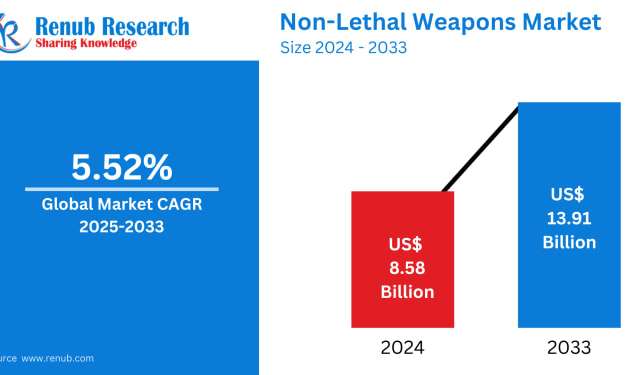
The Non-Lethal Weapons Market, valued at USD 8.58 billion in 2024, is entering a new era of growth as governments, defense forces, and law enforcement agencies accelerate their shift toward weapons that reduce fatality risks. According to Renub Research, the market is projected to grow at a CAGR of 5.52% between 2025 and 2033, ultimately reaching USD 13.91 billion.
By jaiklin Fanandishabout a month ago in The Swamp
How To Use Search Engines
Ah, search engines. From Google to Yahoo, Bing, and even more indie-styled ones such as DuckDuckGo, these popular websites can be very useful tools for finding information on various matters in life and in the world — even if they don’t necessarily have much information of solely their own to give.
By Snarky Lisa2 days ago in Lifehack
Let's Don't Do This
"I just can't do this anymore..." "Do what?" What can't you do? Put gas in your own car? I swear to God you make me take care of everything, don't you? You know I'm on my way to work right now but that never stops you from bothering me, does it?"
By Shirley Belk6 days ago in Fiction


Comments
There are no comments for this story
Be the first to respond and start the conversation.