
Fiber Reinforced Concrete (FRC): Introduction, Advantages, and Disadvantages
Civil Engineering

What is FRC?
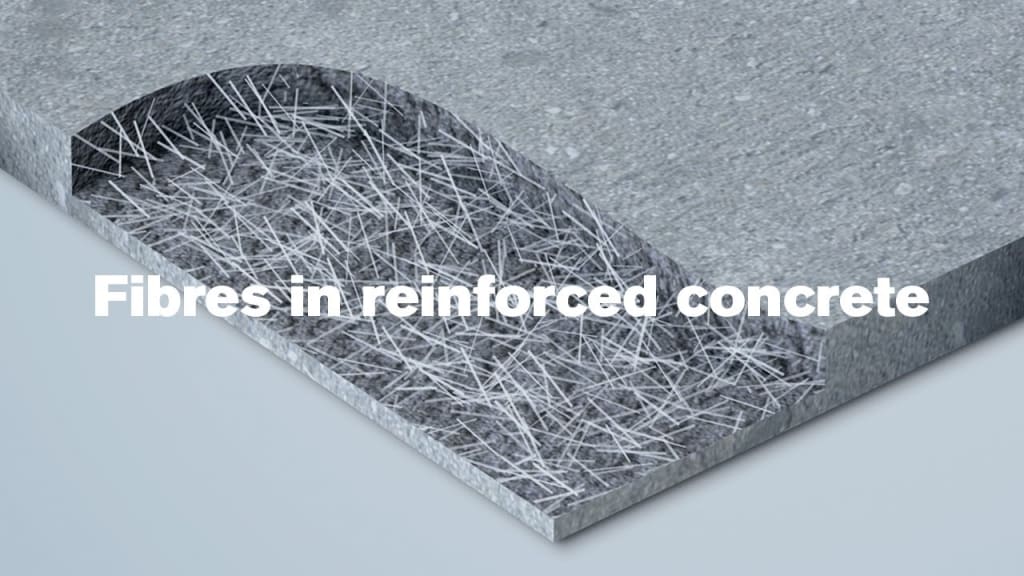
Fiber-reinforced concrete (FRC) is a type of concrete that contains fibrous material to improve structural strength. It is made up of short discrete fibers that are uniformly dispersed and orientated randomly. Steel fibers, glass fibers, synthetic fibers, and natural fibers are all types of fibers that give concrete different qualities. In addition, different concretes, fiber types, geometries, distribution, orientation, and densities modify the nature of fiber-reinforced concrete.
History
• Fiber has been utilized in Mesopotamia for at least 3500 years, when straw was used to reinforce sun-baked bricks.
• In a mortar, horsehair was utilized, and in mud bricks, straw was employed.
• Asbestos fibers were first utilized in concrete in 1900.
• The term "composite material" first appeared in the 1950s.
• For the past 30 to 40 years, steel, glass, and synthetic fibers have been employed to improve the qualities of concrete.
• Even today, research on novel fiber reinforced concrete is ongoing.
Why fibers are used:
• Fibers' primary function is to bridge cracks in concrete and increase the ductility of concrete parts.
• Because of both plastic shrinkage and drying shrinkage, the post-cracking behaviour of concrete improves significantly.
• They also lower the permeability of concrete, resulting in less water blending.
• Concrete with certain fibers is more resistant to abrasion and shattering.
• Provides increased impact resistance.
Types of fibers:
Steel fibers:
• 30 to 250 aspect ratio
• The diameters range from 0.25 to 0.75 millimeters.
• Exceptional structural integrity
• Improve durability by reducing crack width and controlling it.
• Improve abrasion and impact resistance.
• Used in Precast and structural applications, highway and airport pavement, refractory and canal lings, industrial flooring, bridge decks, and other applications.
Glass fibers:
• Tensile strength ranges from 1020 to 4080 N/mm2.
• Fibers with a length of 25 mm are commonly used.
• Impact resistance has improved.
• Increased flexural strength, ductility, and thermal shock resistance.
• Formwork, swimming pools, ducts and roofs, sewers, and other applications.
Synthetic fibers:
• Fibers were created by the petrochemical and textile industries.
• It's cheap and plentiful.
• Chemical resistance is high.
• Melting point is high.
• Elasticity modulus is low.
• Acrylic, aramid, carbon, nylon, polyester, polyethylene, polypropylene, and others are examples.
• Shotcrete and cladding panels are examples of applications.
Natural Fibers:
• Fibers were created by the petrochemical and textile industries.
• It's cheap and plentiful.
• Chemical resistance is high.
• Melting point is high.
• Elasticity modulus is low.
• Acrylic, aramid, carbon, nylon, polyester, polyetheylene, polypropeyllyene, and others are examples.
• Shotcrete and cladding panels are examples of applications.
Advantages:
The fundamental benefit of fiber-reinforced concrete, as previously noted, is that it reduces shrinkage and cracking. Impact resistance, tensile strength, and void reduction can all be achieved with the correct fiber-reinforced concrete. The following are the most significant benefits of fiber reinforced concrete:
• Prevents civil constructions from corroding to the highest extent possible.
• Cavitation damage in constructions such as navigational locks, bridges, piers, and sluiceways is reduced.
• Cracking and shrinking are reduced.
Disadvantages:
Fiber-reinforced concrete has the drawback of affecting workability, particularly in the case of steel fiber-reinforced concrete. It's important to have an even distribution of fibers throughout your concrete. There's also the possibility of fibers balling up during the mixing process.
Another disadvantage to be aware of is the weight difference between fiber-reinforced and non-fiber concrete. There's also the risk of rusting if you're utilizing steel fibers. Finally, fiber-reinforced concrete is more expensive than regular concrete, however, this difference may be compensated by other variables.
Conclusion:
In a typical building component, at least half of the concrete is utilized to protect the steel reinforcement from corrosion. The use of just fiber as a reinforcement in concrete can save concrete and thereby reduce the greenhouse effect. Designers and engineers have more versatility with FRC because it can be molded into a variety of shapes.
.
About the Creator
Nazir Bhatkar
I am a digital marketer and content writer.
Keep reading
More stories from Nazir Bhatkar and writers in Lifehack and other communities.
CONSTRUCTION ESTIMATES: TYPES & OBJECTIVES
What is Construction Estimate? Construction estimating is the process of identifying the pieces of work that make up a project, as well as the rate at which materials are used to complete the work. This method of predicting aids in comprehending the cost of constructing a building, dam, road, or other structure.
By Nazir Bhatkar4 years ago in Lifehack
Building Influence in a Remote Team
In traditional office environments, influence often developed naturally through proximity. People who spoke confidently in meetings, participated in hallway discussions, or regularly interacted with leadership often gained recognition and influence simply because they were visible.
By Bahati Mulishi4 days ago in Lifehack
How to Hire a Quality Painting Team in Sydney Without the Job Dragging On
A repaint is meant to be a tidy upgrade: cleaner lines, brighter rooms, a place that feels looked-after again. Yet plenty of paint projects in Sydney turn into a slow-motion inconvenience—rooms half usable, dates sliding, and that lingering sense the finish isn’t quite right.
By Evelyn Heard6 days ago in Lifehack



Comments
There are no comments for this story
Be the first to respond and start the conversation.